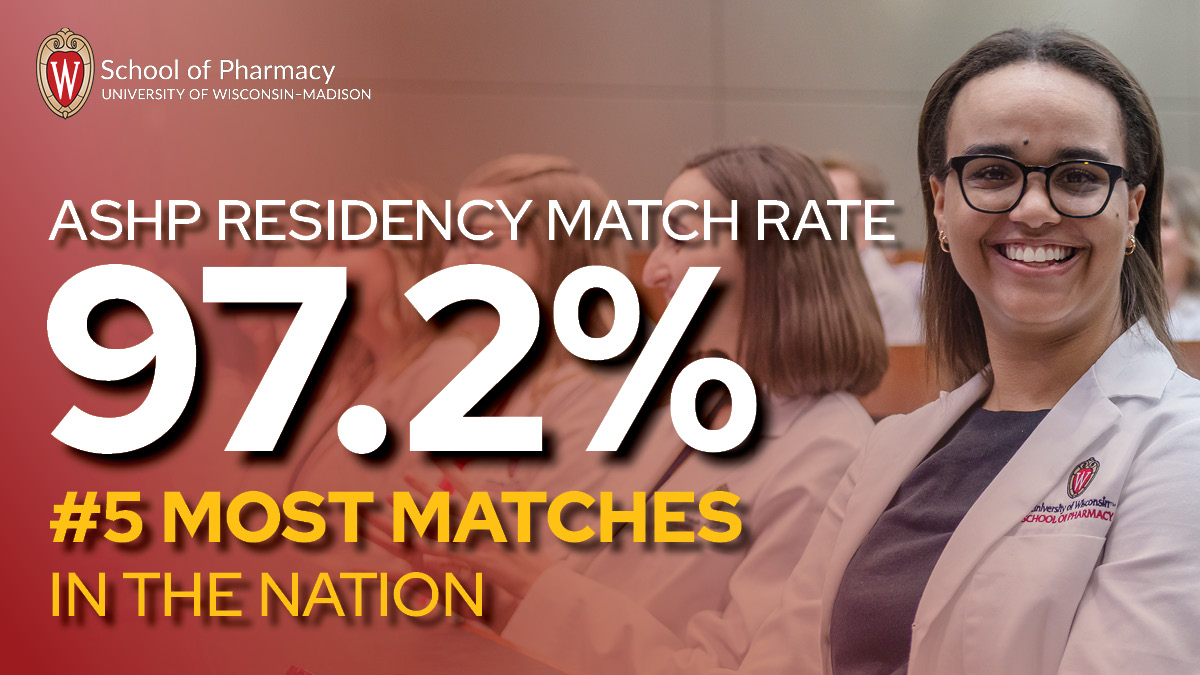
With a 97.2% ASHP residency match rate for 2026, the School outpaces national average and maintains a tradition of excellence
“Modern pharmacists are not just managing inventory or dispensing medications; they are clinical decision-makers,” says Professor Mel de Villiers, vice dean and associate dean for academic affairs at the University of Wisconsin–Madison School of Pharmacy.
And in this era of direct patient care and clinical services, pharmacy residencies are more valuable than ever. Like medicine, pharmacy has highly specialized branches, making residencies standard requirements to practice in environments like oncology, infectious diseases, critical care, pediatric pharmacy, or informatics.
“The job market for elite health systems, academic medical centers, and progressive managed care organizations is fiercely competitive,” de Villiers adds. “A residency provides the advanced clinical hours and credentialing required to get a foot in the door at these top-tier institutions.”
“A residency match rate of 97% is an elite milestone that places the UW–Madison School of Pharmacy at the absolute forefront of pharmacy education nationwide.”
–Mel de Villers
The UW–Madison School of Pharmacy has long maintained one of the highest placement rates for the American Society of Health-System Pharmacists (ASHP) Residency Match, and 2026 is no exception: The School achieved an outstanding 97.2% match rate, more than 10 percentage points above the national match rate of 86.5%. With 70 out of 72 participating graduates matched with a PGY1 residency, the School has the fifth highest number of matches in the country.
“A residency match rate of 97% is an elite milestone that places the UW–Madison School of Pharmacy at the absolute forefront of pharmacy education nationwide,” says de Villiers. “Achieving this year after year requires a deliberate blend of rigorous curriculum, clinical immersion, and strategic professional coaching.”
Clinical preparation
The School of Pharmacy’s PharmD curriculum integrates hands-on experiential education as early as the first year, allowing students to build progressive autonomy in high-stakes patient care environments. Clinical training takes place throughout the PharmD program, so students develop longitudinal clinical expertise.
The School also offers ways for PharmD students to personalize their education to help them reach their career goals faster.
“The Scholars in Pharmacy program is a massive differentiator for UW–Madison,” says de Villiers. “This program allows students to complete specialized, deep-dive tracks in areas such as antibiotic stewardship, health-system leadership, or research.”
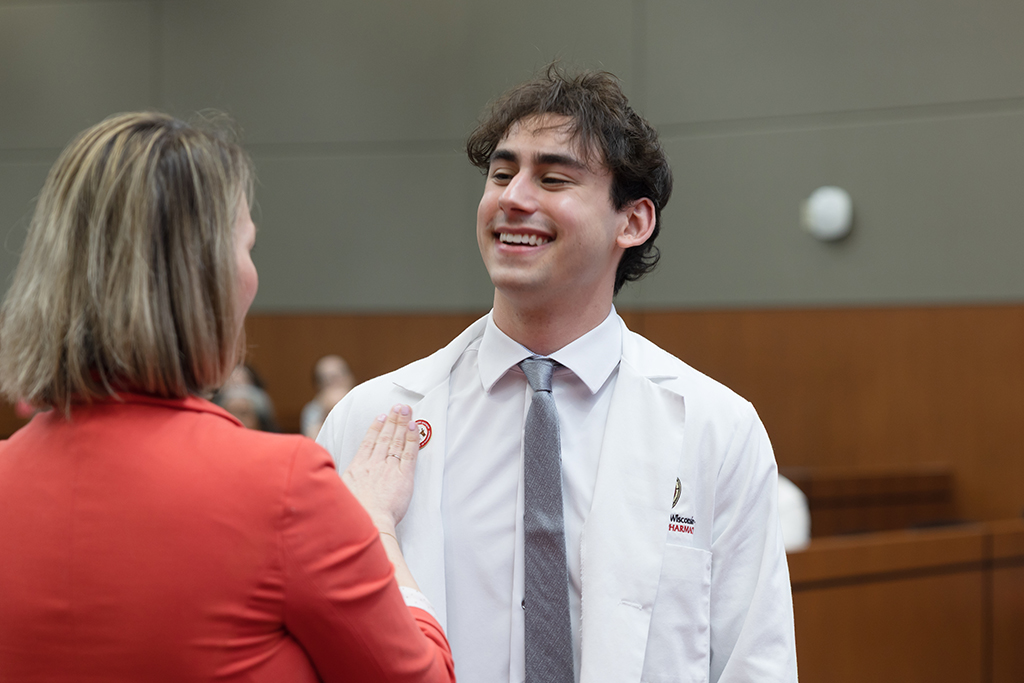
The School’s Scholars in Pharmacy paths offer nearly a dozen concentrations covering Applied Drug Development, Psychiatric Pharmacy, Antimicrobial Stewardship, Research, Rural Health, Pharmacy Operations and Technology Management, and more. And they’re seeing record enrollment.
“Because so many students participate in specialized tracks or research, they don’t just give boilerplate answers in interviews,” says de Villiers. “They can speak with nuanced authority about specific clinical protocols, workflow innovations, or disease-state management.”
This year, Anthony Rende (PharmD ’26) is beginning the combined PGY1/PGY2 Health-System Pharmacy Administration and Leadership (HSPAL) Residency and master’s degree program at UW Health. Throughout pharmacy school, he gravitated toward leadership organizations, business and entrepreneurship projects, research, teaching, and administrative Advanced Pharmacy Practice Experience (APPE) rotations.
“Throughout pharmacy school, I became really interested in the leadership side of pharmacy, and I saw how much impact pharmacy leaders can have on patient care, teams, and health systems as a whole,” Rende says. “An HSPAL residency felt like the best fit for my long-term goals and the type of work I enjoy most.”
He credits the opportunities he had as a student pharmacist, including the Leadership Development Track, time as a teaching assistant, an entrepreneurial co-curricular group to learn how to launch business ideas, and as a member of Phi Lambda Sigma, also called the Pharmacy Leadership Society.
“I think one of my biggest strengths was the combination of leadership involvement, initiative, and strong interpersonal skills,” he adds. “I also enjoy working with people, bringing different perspectives together, and helping move projects and teams forward, which I think aligned well with HSPAL programs.”
“Because so many students participate in specialized tracks or research, they don’t just give boilerplate answers in interviews. They can speak with nuanced authority about specific clinical protocols, workflow innovations, or disease-state management.”
–Mel de Villers
One of the School’s most popular specializations is the Residency-Track APPE, or APPE RT, which allows student pharmacists to complete six of their eight fourth-year APPE rotations within the same health system, which gives learners a deeper understanding of how the system operates and how to make change within it.
As a student, Tiffany Parham (PharmD ’26) completed the APPE RT at UW Health, which gave her a comprehensive understanding of that health system.
“I enjoy the collaborative environment of a hospital setting,” says Parham, who matched with a residency at the University of Louisville in Kentucky. “Working on interdisciplinary teams, everyone uses their own personal knowledge from their field, and we come together to do a puzzle and solve problems.”
Through her residency, she hopes to be even more prepared to best serve her future patients in a hospital setting, refining her skills and exploring diverse pharmacy specialties.
“With the APPE-RT and other programs, the School of Pharmacy doesn’t leave matching to chance,” de Villiers explains. “Students undergo aggressive professional preparation, including CV workshops, strategic application counseling, and rigorous mock interviews with faculty and alums who know exactly what residency directors look for.”
Research readiness
Being part of a world-class research institution gives students opportunities to work in labs and participate in clinical research, and their clinical training helps them develop the professional skills they will need in their careers.
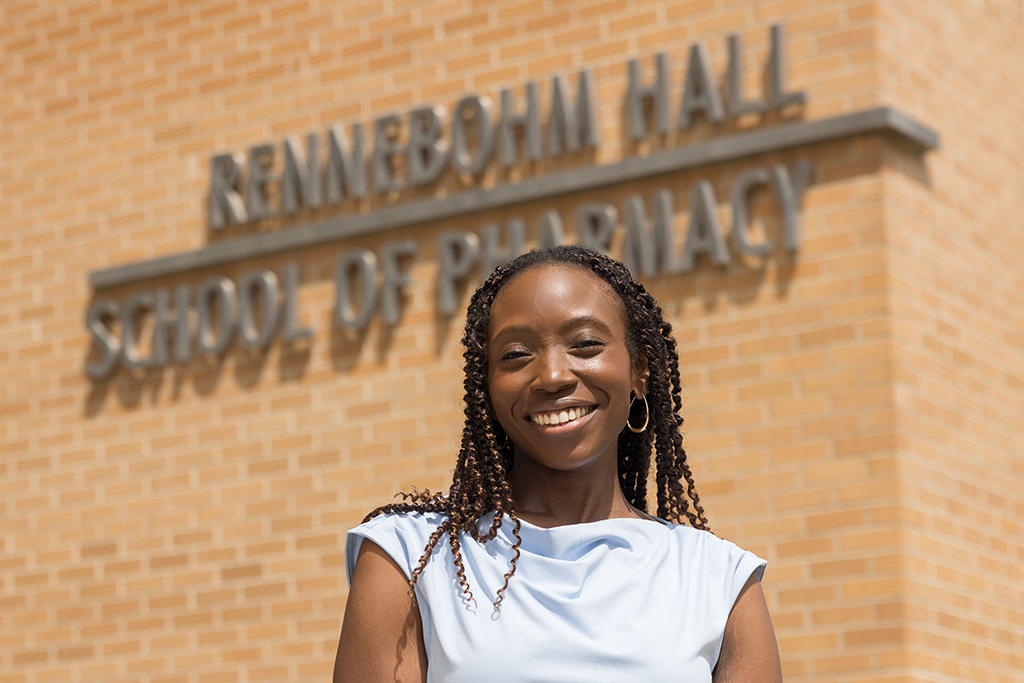
Parham also completed an internship with Associate Professor Ed Portillo (PharmD ’14), associate dean for advancement, working on COPD CARE — a pharmacist-powered care model to improve outcomes for recently hospitalized patients with COPD. Through that internship, she collected and interpreted qualitative data and drafted research papers.
“That’s a skill residency programs look for and one I’ll need,” Parham says.
She published three papers with Portillo and is currently working on a fourth with an oncology pharmacist at UW Health.
Graduates who have experienced interprofessional training and research alongside future physicians, nurses, and public health professionals at UW Health are prepared to step into complex medical teams on day one, without a learning curve.
“Grads finish the program thinking like scientists and innovators,” de Villiers says. “Pharmacy practice changes rapidly with new gene therapies, biological drugs, and AI-driven clinical tools. A 97% match rate proves the School is teaching the future of medicine, not its past.”
Leading in student outcomes
Residency matches are a key contributor to the School of Pharmacy’s 99% employment or placement rate within six months of graduation, with nearly all graduates landing residencies, jobs, and industry fellowships — an increasingly common and competitive path for graduating PharmDs, for which the School has recently created new resources.
“Our students’ clinical training is tightly aligned with real-world competencies, which is why Badger grads consistently achieve top-tier first-time pass rates on the NAPLEX licensure exam,” says de Villiers.
These impressive student outcomes underlie the School’s recent ranking as sixth best PharmD program in the nation by U.S. News and World Report.
“These exceptional outcomes do not happen by accident,” de Villiers says. “They showcase a dedicated network of faculty, preceptors, and alums who actively mentor, write competitive recommendations, and provide structural support to students during one of the most stressful periods of their academic careers.”
De Villiers says the School’s consistent near-perfect match rate acts as a definitive report card.
“Our students’ clinical training is tightly aligned with real-world competencies, which is why Badger grads consistently achieve top-tier first-time pass rates on the NAPLEX licensure exam.”
–Mel de Villers
“It proves that residency directors across the country respect and trust the UW–Madison name,” he says. “They know a Badger graduate is a reliable, practice-ready clinician who will elevate their health system.”
As two of the School’s most recent graduates, Rende and Parham are ready to put their preparation to work. Rende aims to become a health system leader, advancing practice.
“My long-term goal is to become a strategic pharmacy leader within a health system and help drive innovation and advancement in pharmacy practice,” he says. “I’m especially interested in areas like specialty pharmacy, infusion services, and business strategy.”
And Parham is heading into residency rotations in stem cell transplant and potentially outpatient oncology.
“I want to explore that and am looking forward to how much I’ll get to see,” she says.
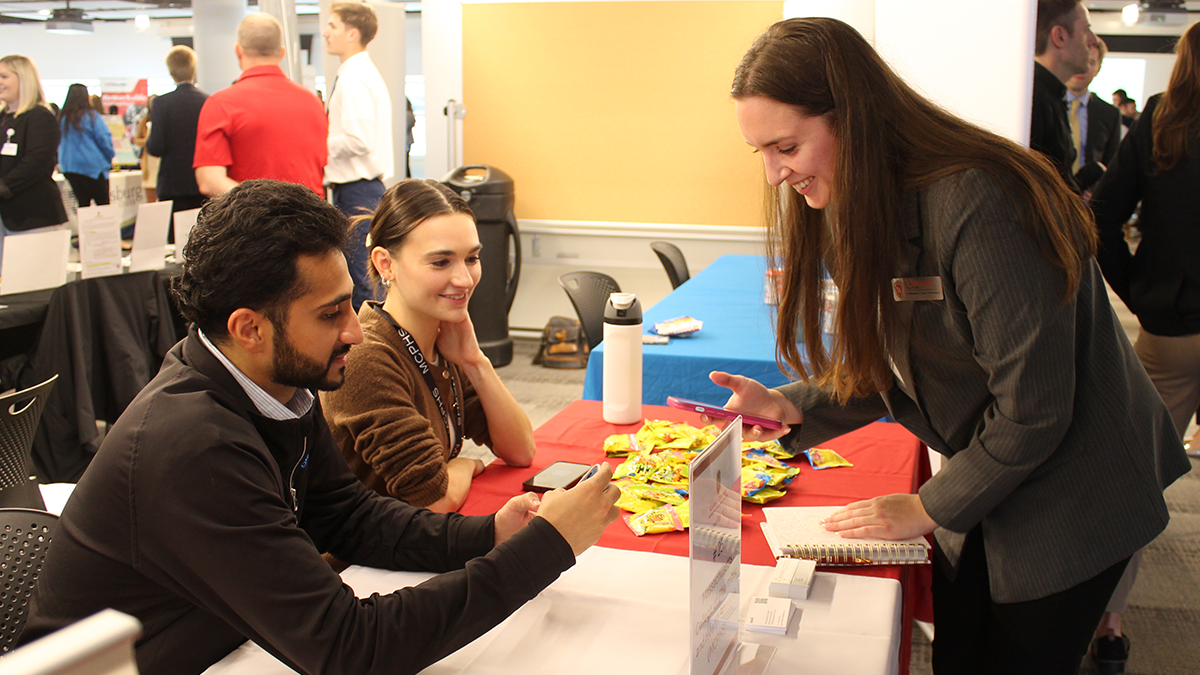
With industry fellowships on the rise, the School of Pharmacy is giving students the tools, networks, and training to compete.
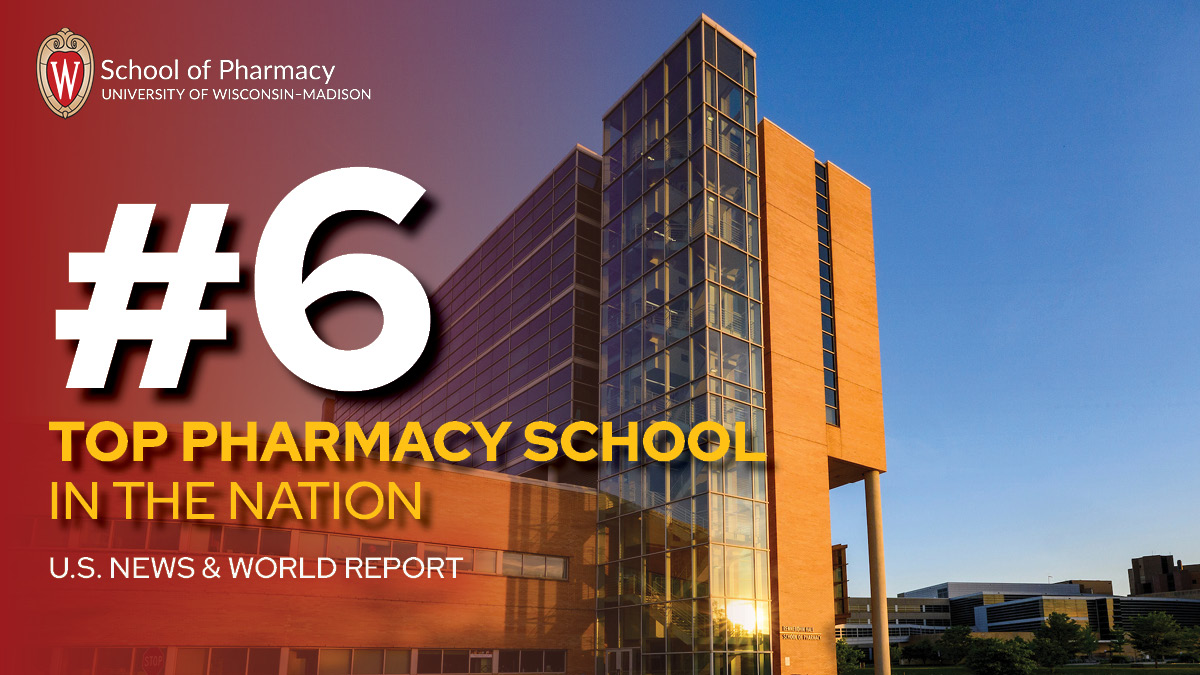
U.S. News & World Report ranks UW–Madison #6 Best Pharmacy School in 2026.