
UW–Madison Center for Psychedelic Research and Education receives historic investment for cutting-edge mental health therapies and new public outreach lab to transform brain health care
New funding from the Wisconsin Alumni Research Foundation (WARF) will accelerate psychedelic research at UW–Madison and advance brain health. As part of WARF’s $27 million investment across four research initiatives in brain health, quantum technologies, fusion energy, and national security, an estimated $7 million will go towards the development and clinical application of psychoactive medicines for mental health disorders.
“We want to offer knowledge that can be accessed by patients, providers, policymakers, and members of the public throughout Wisconsin, across the country, and around the world.”
–Cody Wenthur
UW–Madison researchers at the Center for Psychedelic Research and Education (CPRE), housed in the School of Pharmacy, are investigating psychoactive compounds such as psilocybin as potential therapies for post-traumatic stress disorder, depression, substance use disorders, chronic pain, and other conditions affecting millions of people in the U.S., including active military and veterans. Although early study results demonstrate great promise for psychedelics as medicines, research supported by the WARF investment is aimed at understanding underlying mechanisms and developing strategies to make these treatments even more effective.
New discoveries powered with interdisciplinary approach
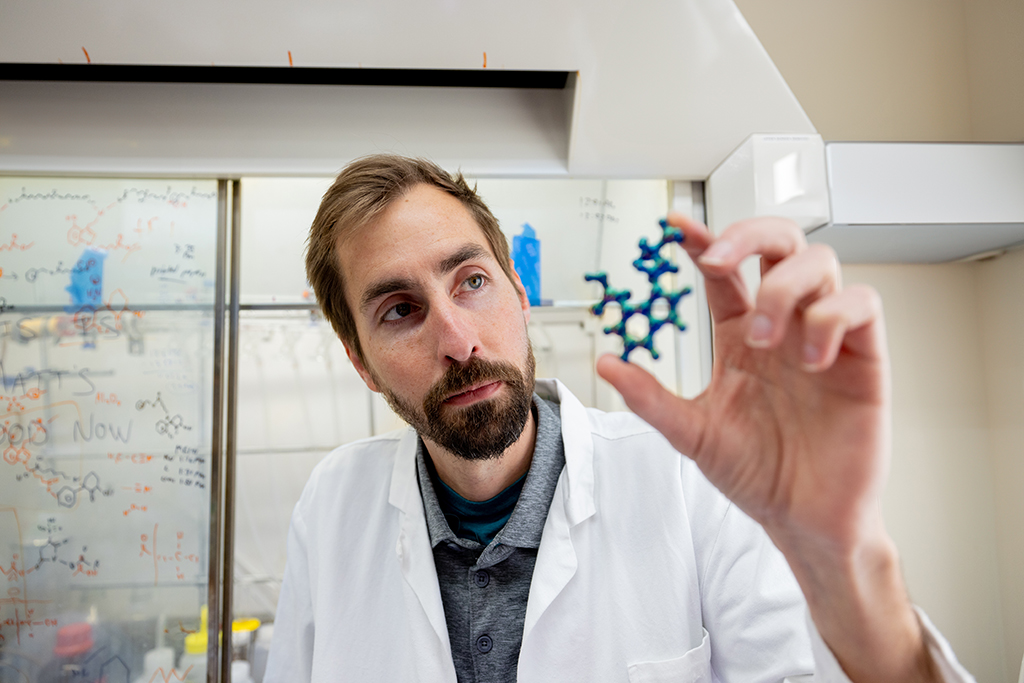
Established in 2021, CPRE brings together UW–Madison researchers across pharmacy, neuroscience, psychology, psychiatry, sleep medicine, neurophysiology, clinical research, and history at the School of Pharmacy, School of Medicine and Public Health, School of Nursing, School of Human Ecology, and School of Social Work.
“One of the most important and visionary aspects of this research is its focus on weaving together multiple interdisciplinary lines of research into a broader, unified program that is able to integrate information and generate insights that would otherwise be missed,” says Cody Wenthur, CPRE director and Thora M. Vervoren Professor for Research in Psychedelics at the School of Pharmacy.
“From impacts on the salience of autobiographical memories, to changes in sleep architecture, alterations in biochemical stress responses, and enhancement of neural plasticity, the effects of psychedelics are multifaceted — extending to clinical effects across disorders,” adds Wenthur. “Crucially, with support at this level, this project will now be able to examine those interconnected aspects not in isolation, but as interconnected parts of a complete response.”
The interdisciplinary research team will be better positioned to advance brain health and ultimately improve mental health for patients.

“With this combination, we have an opportunity to generate entirely new insights into brain plasticity,” says Anjon Audhya, vice dean for research in the School of Medicine and Public Health and professor of biomolecular chemistry. “Those discoveries could ultimately lead to new therapies, new intellectual property and new avenues for improving patient care.”
“The WARF investment will let us deepen and expand cross-disciplinary collaborations already in place at the university, extending work we’ve been doing on two of the most urgent questions facing psychedelics as they move toward FDA approval: how to make them work better, and how to make them work more safely,” adds Charles Raison, professor of human ecology and psychiatry in the School of Medicine and Public Health.
New public outreach lab
The WARF award also will enable the creation of an innovative lab within CPRE. The newly planned ECHOES Media Lab will focus on the development of podcasts, oral histories, digital exhibits, and outreach events to translate the work of the center for the public.
“As our societies re-examine the role of psychedelics in healthcare and beyond, we are committed to making sure that everyone has access to essential, up-to-date information about their risks and benefits, and feels empowered to actively engage in development of best practices in areas that impact their own lives,” says Wenthur. “We want to offer knowledge that can be accessed by patients, providers, policymakers, and members of the public throughout Wisconsin, across the country, and around the world.”
Advancing the Wisconsin Idea
The impact of the multi-million-dollar grant for psychedelic research will be significant.
“WARF funding gives us the ability to generate the preliminary data, specialized expertise, and operational infrastructure needed to pursue those opportunities now rather than years from now,” says Audhya. “We will be training students, developing future scientific leaders, engaging with the public, and translating discoveries into knowledge that can inform healthcare, public policy and clinical practice.”
The award strengthens UW–Madison’s leadership in the field of psychedelic studies.
“UW–Madison has been conducting clinical trials with psychedelic medicines for more than a decade, through both investigator-initiated studies and partnerships with industry,” says Christopher Nicholas, associate professor in the School of Medicine and Public Health. “This investment also allows us to build on that experience and pursue more ambitious clinical research across the conditions and populations where these treatments may have the greatest impact.”
In addition to the launch of CPRE, other innovations include programs in psychedelics education. The School of Pharmacy started first-of-its-kind Masters and certificate programs in Psychoactive Pharmaceutical Investigation. As the first in a pharmacy school, an alumna donor also established the Thora M. Vervoren Professorship for Research in Psychedelics earlier this year to further support pioneering research in this critical area.
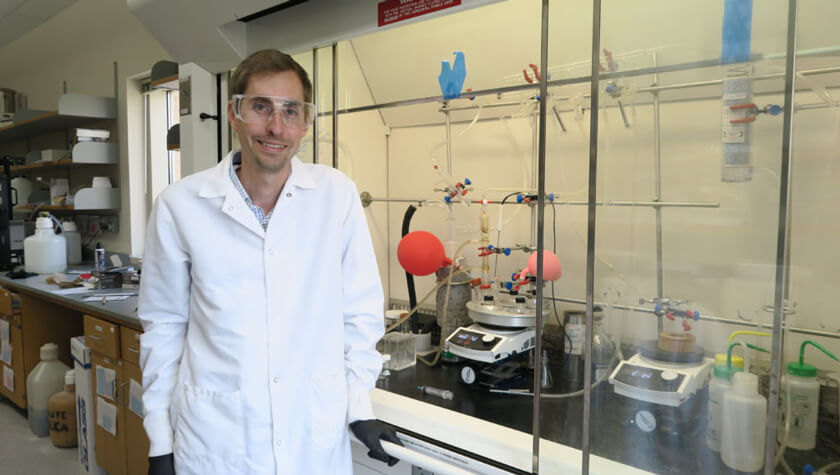
School of Pharmacy Assistant Professor Cody Wenthur and his team are shedding new light on the role of stress in psychedelic drug treatment for mental health disorders
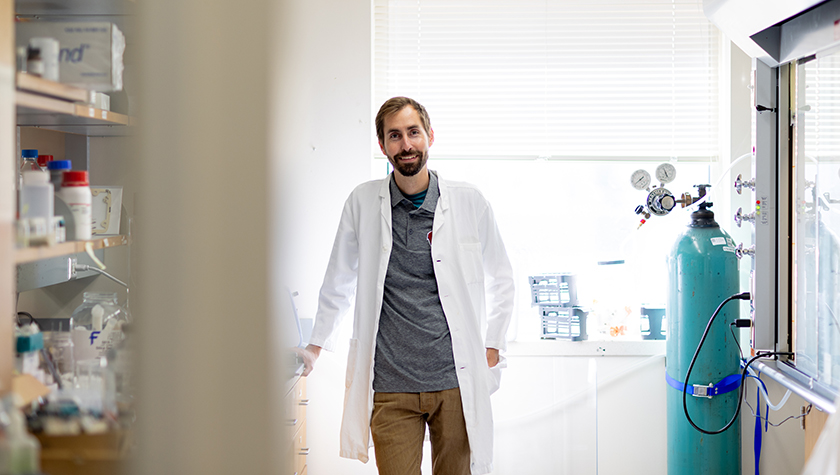
Listen to Associate Professor Cody Wenthur speak about the early stages of clinical trials using psilocybin and ketamine as treatments for challenging mental health conditions, as well as how the field is changing and growing
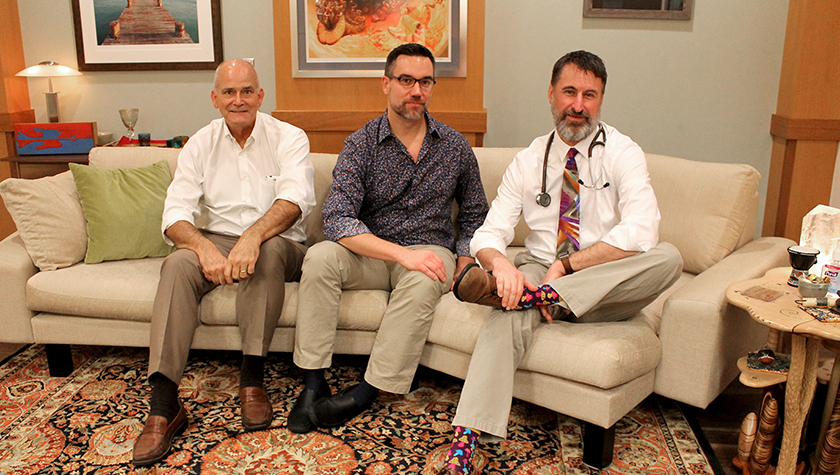
Professor Paul Hutson and collaborators in the Transdisciplinary Center for Research in Psychoactive Substances study psilocybin for opioid and methamphetamine use disorders