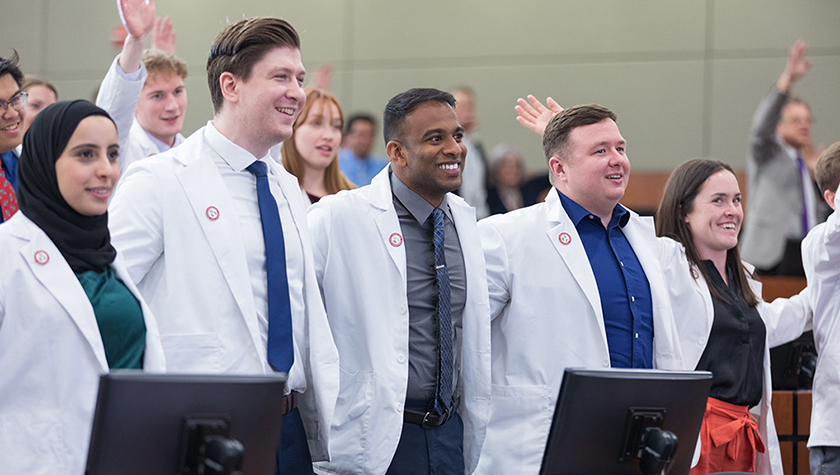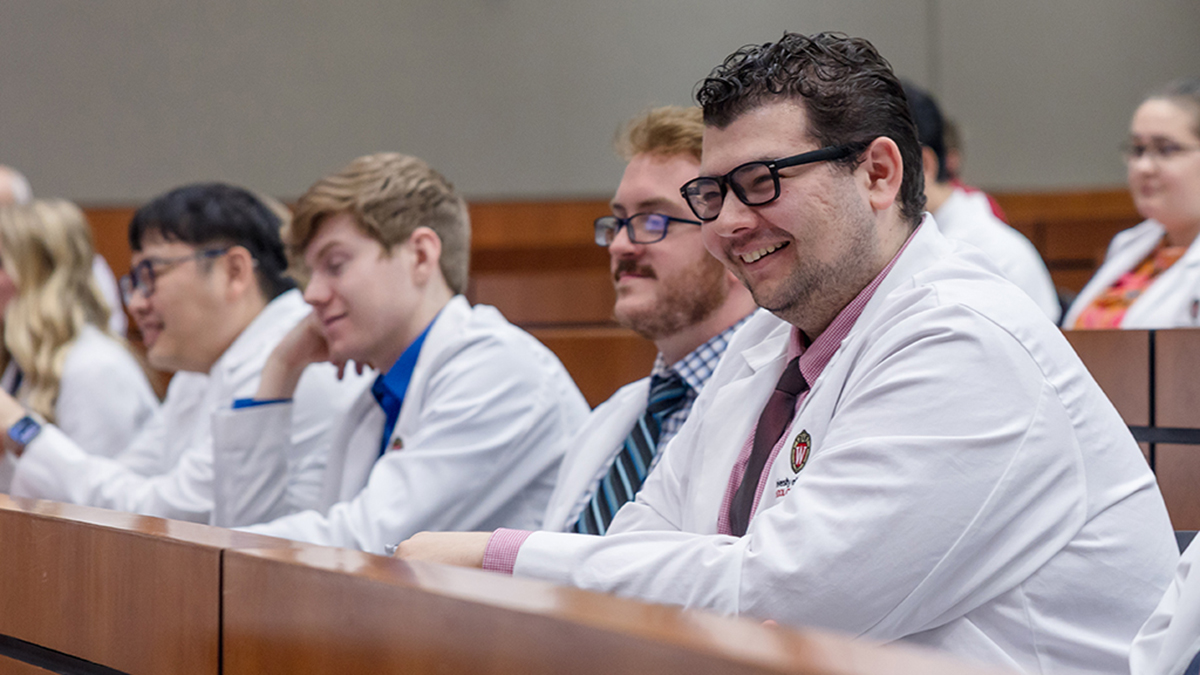
Record numbers of pharmacy students are pursuing specialized tracks at the School of Pharmacy and gaining a competitive edge
By Logan Underwood
One of the fastest ways pharmacy is evolving is through specialization. In 2008, there were just 3,000 pharmacists certified by the Board of Pharmacy Specialties, according to the American Journal of Health-System Pharmacy. By 2020, that number surged more than 1,200% to over 41,000. And as pharmacy practice becomes increasingly clinical, that number is poised to continue growing. Opportunities are also expanding outside of traditional pharmacy roles, including in managed care and industry.
At the University of Wisconsin–Madison School of Pharmacy, PharmD students are given the opportunity to jumpstart their careers across the field, gaining specialized experiences early through nearly a dozen Scholars in Pharmacy programs.
“The Scholars in Pharmacy programs at UW–Madison are essentially ‘fast track’ or honors-style enrichment pathways designed for high-achieving students,” says Professor Mel de Villiers, vice dean and associate dean of academic affairs at the School of Pharmacy, who oversees the programs.
“The [Scholars in Pharmacy] programs act as a ‘force multiplier’ for the School of Pharmacy, creating a distinct brand of graduates that residency directors and employers actively seek.”
—Mel de Villers
Through the programs — covering Applied Drug Development, Psychiatric Pharmacy, Antimicrobial Stewardship, Research, Rural Health, Pharmacy Operations and Technology Management, and more — PharmD students can take exclusive courses, gain hands-on opportunities, and connect with professors and industry leaders. And they’re growing in popularity: The School of Pharmacy is seeing a record number of PharmD students accelerating their careers with the specialized tracks. Last year, 83 students graduated with this honor, totaling 112 awards.
Whether launching directly into practice or industry or pursuing advanced training, the results speak for themselves: The School of Pharmacy has consistently ranked among the nation’s top programs for residency placement, achieving a 100% American Society of Health-System Pharmacists Match rate for the past two years. And what’s more, 99% of graduates found employment within six months of graduation.
“The popularity of our SIP programs — and the way they distinguish the School — stems from the competitive edge they provide in an increasingly complex health care landscape,” says de Villiers. “The SIP programs act as a ‘force multiplier’ for the School of Pharmacy, creating a distinct brand of graduates that residency directors and employers actively seek.”
Standout experience
The School of Pharmacy’s Scholars in Pharmacy programs are a constellation of specialized opportunities, each created with careers and student outcomes in mind.
“The SIP programs allow students to start ‘thinking like a pharmacist’ in a particular area of interest before their peers,” de Villiers says. “They get access to professional development workshops, networking events, and clinical observations that typical pharmacy students don’t see until much later.”
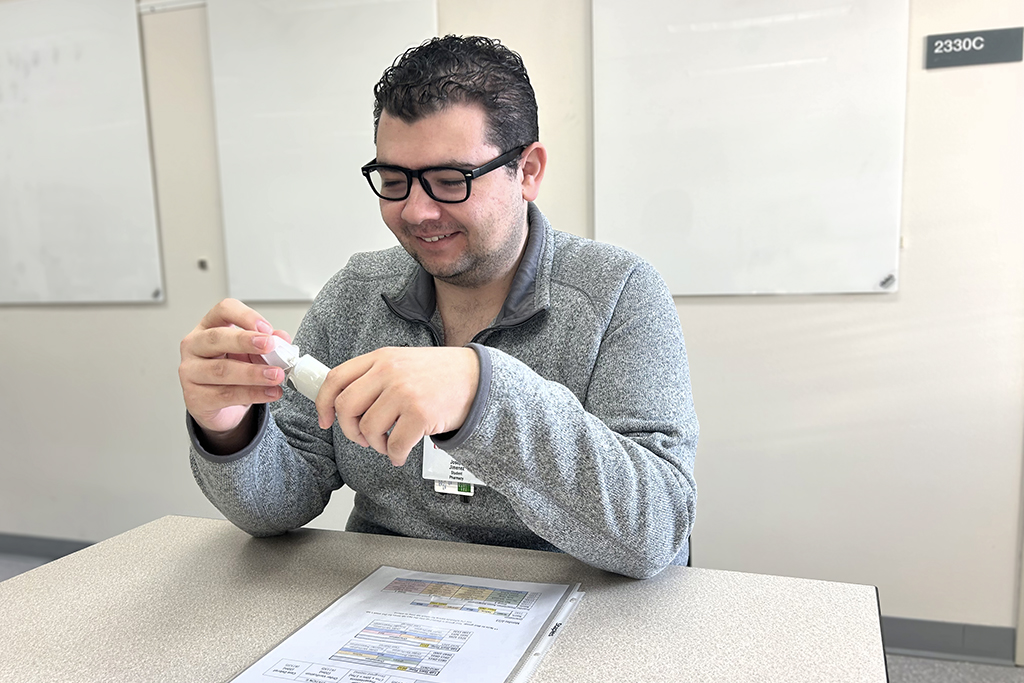
One of the most popular options is the Residency Track Advanced Pharmacy Practice Experience (APPE RT) — where student pharmacists spend the majority of their fourth-year clinical rotations in the same health system to gain a deeper understanding of how a health system operates and to spearhead a project to implement in the health system.
“This has been very beneficial in preparing me for residency by providing both structured mentorship and practical experience in scheduled sessions focused on professional development,” says fourth-year PharmD student Joey Jimenez, who is completing his APPE RT with UW Health. “I’ve had the opportunity to work longitudinally with two mentors and have had multiple sessions focusing on my CV, interviews, and preparing for professional conferences.”
Across his UW Health rotations, Jimenez has been working on a project to optimize anticoagulation management within the UW Health Anticoagulation Clinic and primary care clinics, including screening patients in clinics who could benefit from a reduced dose of their anticoagulant medication and reaching out to qualifying patients to gauge their interest.
“The project helped me build upon my communication skills and confidence in implementing changes in real time for patients, improving both safety and efficacy of therapy,” he says. “The APPE RT has helped mimic what life is like as a resident, and I feel very prepared transitioning to residency next year.”
“The education I got from these programs showed me how prepared I am for the next steps.”
—Nolan Thomas
But Jimenez didn’t stop there. He also completed the School’s Antimicrobial Stewardship (AMS) PharmD specialization, motivated by seeing the critical role that pharmacists played during the COVID-19 pandemic. Through the AMS program, he built advanced knowledge in how pharmacists can optimize antimicrobial use, including antibiotics or antivirals, to improve patient outcomes, prevent resistance, and reduce unnecessary health care costs — a crucial foundation as he positions himself for a career in specialty pharmacy.
“I added this into my education to challenge myself and make myself more comfortable,” says Jimenez. “Knowing which medications to choose, and which ones cover which types of infections, is really beneficial for my future patients.”
Early in her time in the School of Pharmacy’s PharmD program, Hanna Helling realized she wanted to do more with her pharmacy education. That led her to enroll in the dual PharmD/MPH degree program, pausing her PharmD after her third year to spend a year immersed in public health at the UW School of Medicine and Public Health, before returning to complete her final PharmD year of clinical rotations.
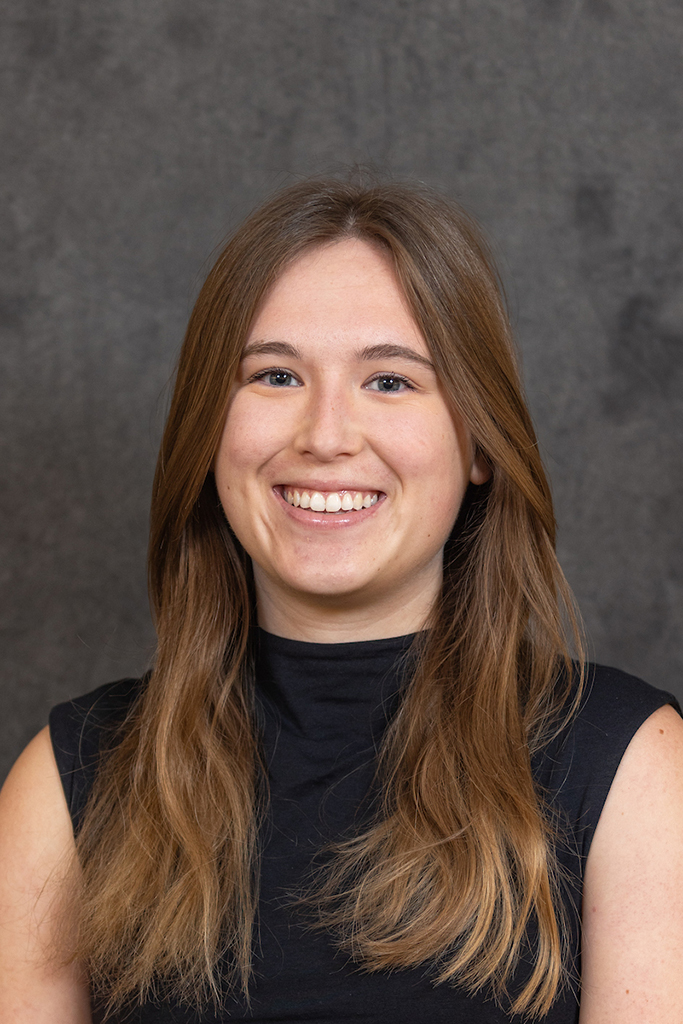
“What I really appreciate about the dual PharmD/MPH Program is that it’s giving me this year to really dive deep,” says Helling, who is also earning a certificate in global health. “I think it’s going to help me embrace and encourage public health perspectives in my work because I’ve had so much more exposure to practice these skills.”
Much like Helling, fourth-year PharmD student Kali Ramirez was motivated to expand her perspective as a pharmacist. While not from a rural community herself, Ramirez was interested in the critical role that pharmacists fill in these areas and applied to the School’s Rural Health specialization. Through that program, she’s gained insight into the unique challenges that rural pharmacists face, gotten hands-on experience leading a project to improve practice or workflow in a rural pharmacy, and met with rural pharmacists and alumni from across the state.
“The most impactful part was making connections and having a networking opportunity with rural pharmacists,” says Ramirez. “They really wanted to support us as best as they could to finish out the Rural Health program and get into some rural positions after graduation.”
By connecting with alumni from rural pharmacies, Ramirez learned more about how financial and spatial barriers prevent many patients in rural areas — as well as health care deserts in urban areas — from accessing health care. Ramirez aims to use this experience to complete a residency and then build a career in hospital pharmacy, focused on improving care for underserved populations.
“It’s something that I discovered that I really want to seek out in a career while in the program,” says Ramirez. “The end goal would be to work in a community hospital, whether that be in Madison or in a rural area, to help serve underserved patients.”
Launching careers
Amrit Kumar (PharmD ‘25) once stood where Ramirez, Jimenez, and Helling stand now. He chose to specialize his PharmD by completing the School’s AMS program, which helped him land his target residency: a PGY 1 and 2 administrative residency at Froedtert Hospital in Milwaukee.
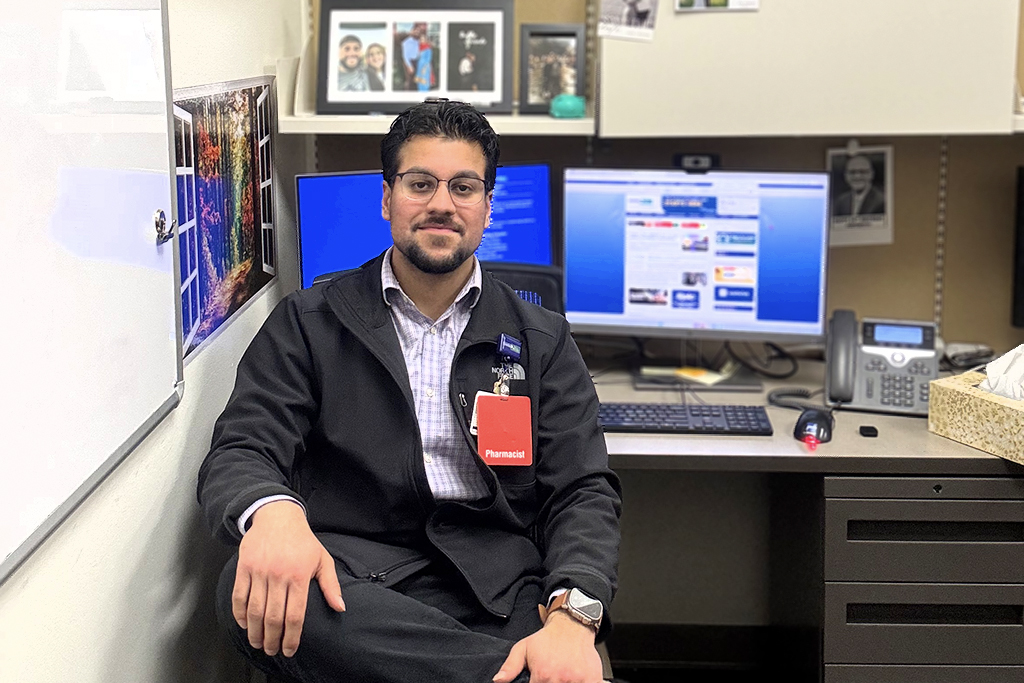
Since first helping to run his family’s business while growing up, Kumar knew he wanted to implement business and administration in his career. The AMS program helped solidify Kumar’s clinical skills, combining clinical leadership with his interest in administration.
“The AMS path gives you clinical perspective, but you also get a leadership aspect as well,” says Kumar. “We get a sense of how to implement a team that handles a lot of the problems that are happening with antimicrobials, like antibiotic resistance.”
The accumulation of hands-on practice helped Kumar stand out for residency placement and prepared him to succeed in his two-year residency, with the first year focusing on acute care and the second on administrative leadership and management.
“I’ve learned that AMS trickles into other areas, and I’m definitely using the stewardship aspects in my first clinic-heavy year of residency,” says Kumar.
For fourth-year PharmD student Nolan Thomas, his experiences in the Scholars in Pharmacy programs have already paid off. He completed the School’s Research and Applied Drug Development (ADD) programs simultaneously. While the Research path comprises a rigorous 540 hours of research activities, as well as publishing original research and presenting at professional conferences, the ADD program is designed to prepare students for roles in the pharmaceutical industry.
Professor Eric Buxton, director of the ADD program and chair of the School’s Division of Pharmacy Professional Development, says that interest among students continues to rise, and discussions are underway on how to expand or deepen the program. Around a quarter of new PharmD graduates are now seeking non-clinical industry roles, Buxton estimates.
“There’s a nationwide, directional shift for what pharmacy students are looking to do when they graduate. The PharmD is like a Swiss army knife — there are all kinds of things you can do with it.”
—Eric Buxton
“There’s a nationwide, directional shift for what pharmacy students are looking to do when they graduate,” says Buxton. “The PharmD is like a Swiss army knife — there are all kinds of things you can do with it.”
Thomas is one example of that shift in action.
“What I learned from taking those classes and making those connections is invaluable,” he says.
Nearing the end of his fourth-year rotations, Thomas has already accepted a position in early clinical operations at Takeda Pharmaceuticals — an outcome he attributes in part to the mentorship of Assistant Professor of Pharmacy Sin Yin Lim, who guided him through the fundamentals of early clinical operations and the basics of drug development during the ADD program.
“I would highly recommend other students to take the opportunities I did,” says Thomas. “The education I got from these programs showed me how prepared I am for the next steps.”