Alumni Updates
University of Wisconsin–Madison School of Pharmacy alumni are leading dynamic lives, gaining recognition, getting new jobs, or investing in their personal lives through family, friends, and hobbies. Stay in touch with your fellow UW–Madison School of Pharmacy alumni across the country by checking (and sharing) Class Notes in each DiscoveRx digital magazine issue.
- See our previous edition of Class Notes from the Winter 2025 issue.
- Submit your class note for the Summer 2026 issue.
New Jobs/Positions
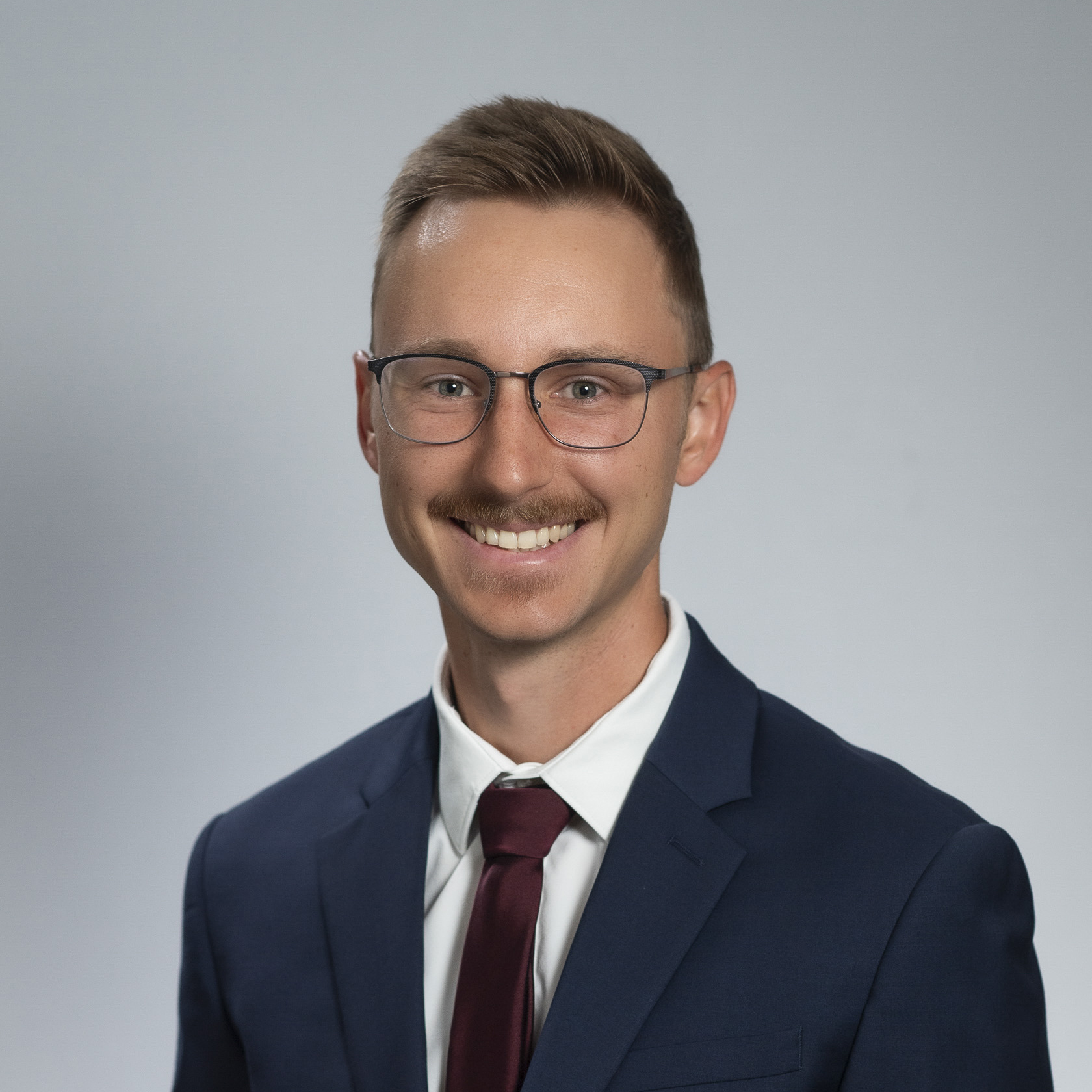
Tyler Jessel (BS ’17): “From the time I started clinical rotations in PA school in 2021, I always saw myself practicing critical care medicine. After gaining a few years of experience in cardiology following graduation, I was able to land my dream job in November 2025 as a critical care PA in the ICU at Aurora BayCare Medical Center in Green Bay, Wis.”
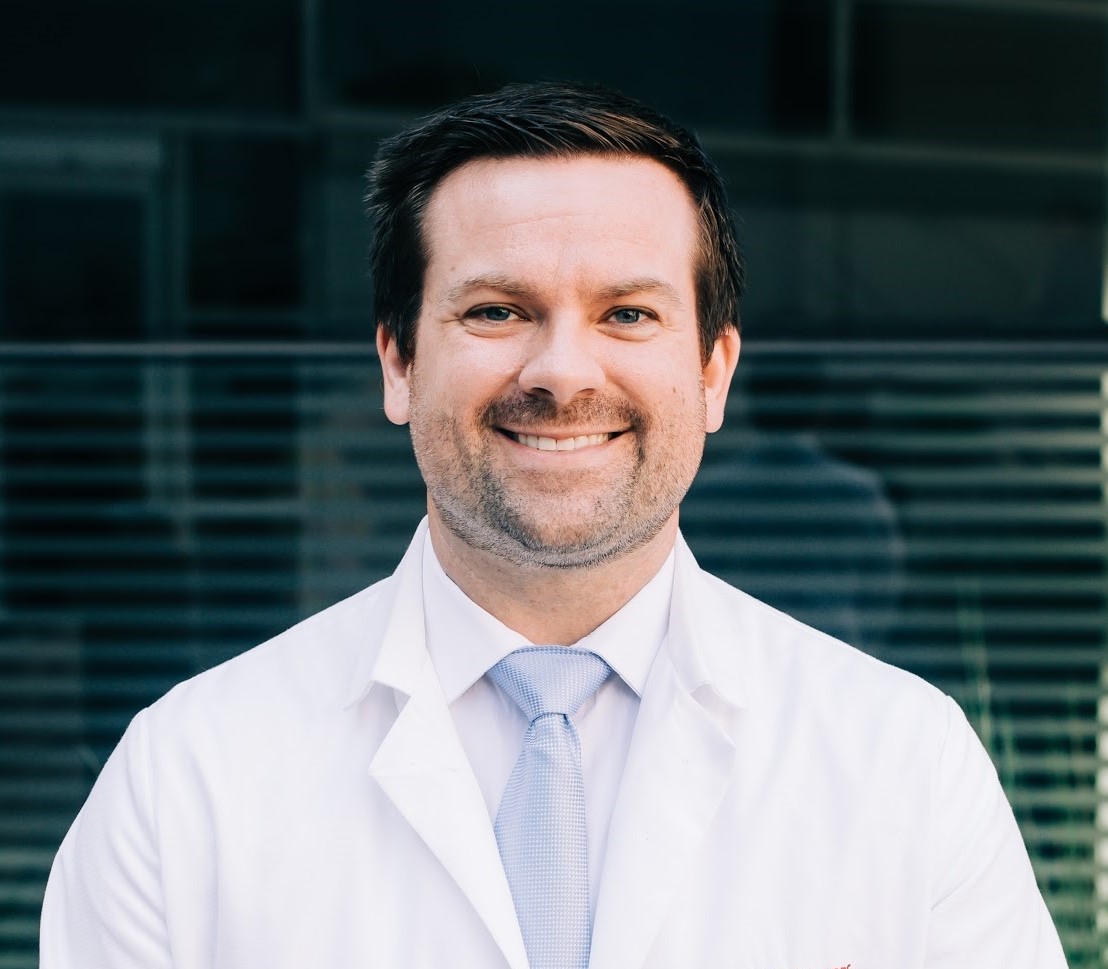
Tyler Liebenstein (PharmD ’11) started a new position in March 2026 as the medication safety and compliance coordinator at UW Health.
Accomplishments and Awards
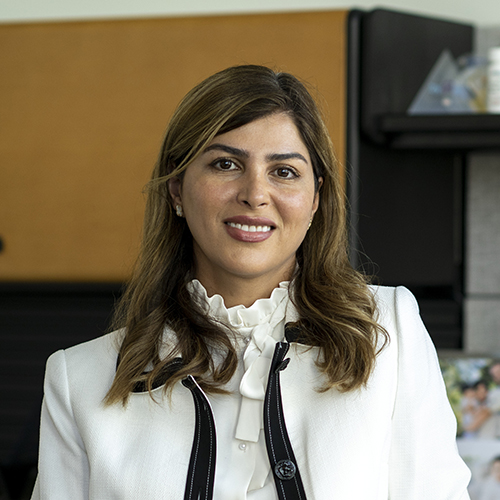
Elham Nejati (PhD ’12) has been included in Marquis Who’s Who biographical volumes for her expertise in the pharmaceutical sector.
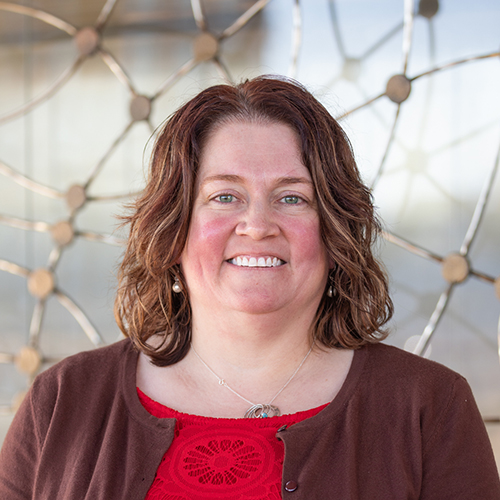
Amy Kennedy (PharmD ’08) is being honored with the Distinguished Achievement Award in Service by the American Pharmacists Association.
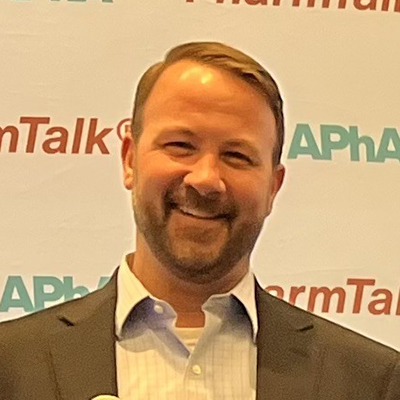
Joel Farley (BS ’97) is being honored with the Research Achievement Award in the Pharmaceutical Sciences by the American Pharmacists Association.
Personal Updates and Check-Ins
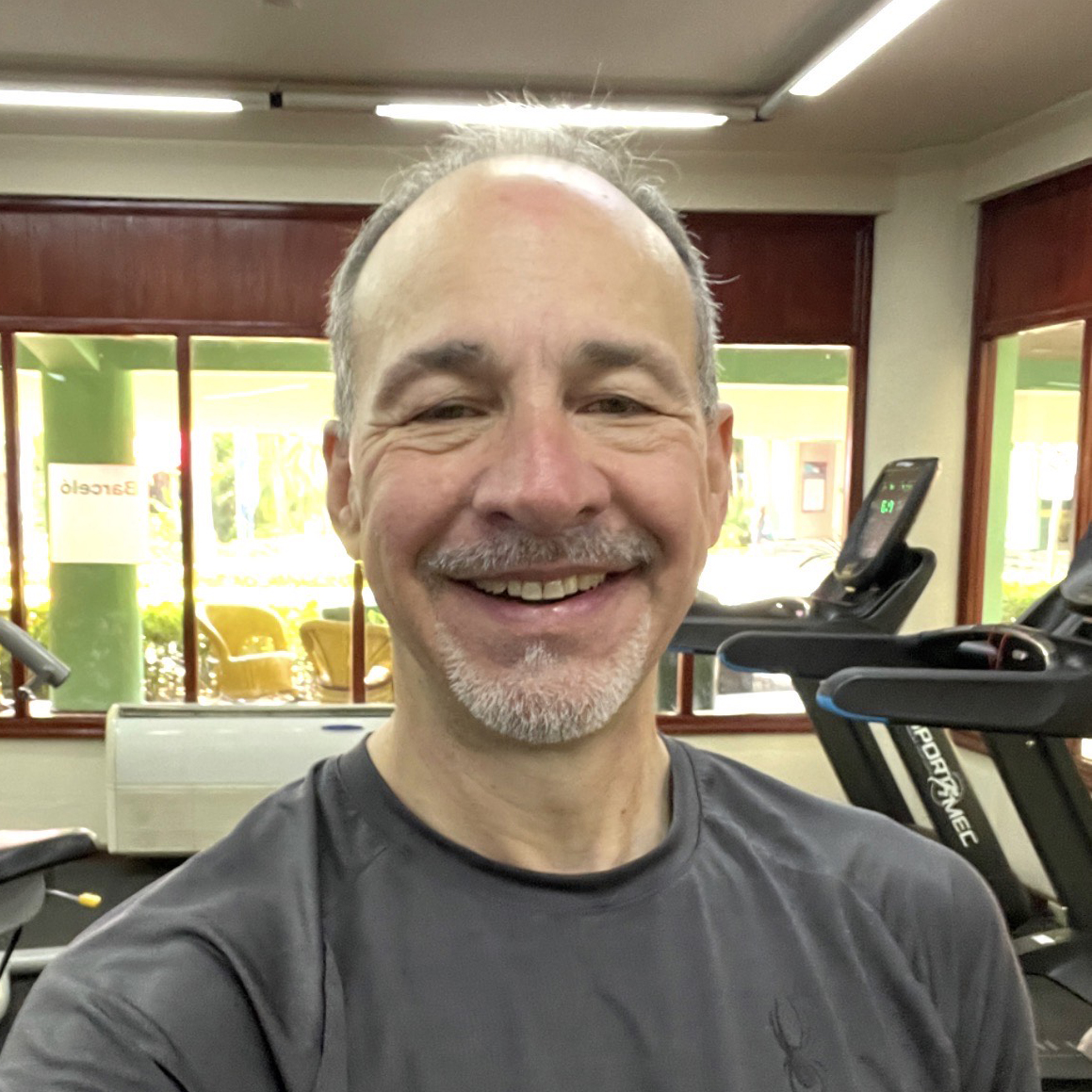
Anthony Ball (BS ’90): “This article is written from the point of view of a trilogy of my life called ‘Tony’s Life and Experiences.’ This is the second installment in that series and is titled ‘The Pharmacy Years.’
‘The Pharmacy Years’
When I graduated with honors in 1990 from the University of Wisconsin School of Pharmacy, I thought I understood what success looked like.
A stable job.
A growing family.
A steady paycheck.
A respected profession.
For many years, that definition worked.
This second book in ‘Tony’s Life and Experiences’ is not just about pharmacy. It is about the years when work, family, loss, reinvention, and geography all collided. It is about the space between who I thought I would become and who I am still becoming.
For 35 years, I stood behind pharmacy counters across the Midwest and the Southwest — counting pills, giving vaccines, calming anxious parents, counseling patients who were frightened, frustrated, or confused. Retail pharmacy changed dramatically during those decades. Insurance systems grew more complex. Corporate expectations intensified. Technology improved accuracy but often reduced human connection. Through it all, I tried to remember that every prescription had a person attached to it.
One pivotal moment came in 2009 during the H1N1 outbreak — the swine flu pandemic. That was the year I realized my true potential as a healthcare professional.
Pharmacists were trained to administer immunizations, and we began giving the new H1N1 vaccine. Almost overnight, it became clear that we were far more accessible than many traditional healthcare settings. Patients did not need appointments weeks in advance. They walked into their neighborhood pharmacy and received protection.
After that, the expansion was rapid. We were soon authorized to administer nearly every vaccination. What had once been limited to flu shots became a broad public health responsibility.
But this new responsibility was not without fear.
Many pharmacists were hesitant. Some worried they might hurt a patient. Others feared a needle-stick injury that could expose them to HIV, Hepatitis B, or other infectious diseases. Those concerns were not abstract to me. My father had contracted HIV and died of AIDS. The thought of facing a similar fate was deeply personal. In the beginning, I was very hesitant.
The first injections felt heavy.
But after that initial experience, something shifted. I realized how safe and straightforward the process truly was when done correctly. The fear slowly gave way to confidence. And confidence gave way to purpose.
For the first time, I felt that I was not just treating disease — I was preventing it.
One memory remains vivid. A 5-year-old boy stood in front of me, terrified of getting his flu shot. His mother tried to reassure him, but the more she spoke, the more he resisted. The pharmacy was busy. I had prescriptions to verify, phones ringing, technicians waiting for answers.
In the gentle chaos between mother and son, I administered the immunization almost seamlessly. By the time they realized it was done, the boy blinked in surprise.
‘That was it?’ he asked.
He hadn’t even felt it.
Moments later, he was proudly telling everyone waiting in line how good I was at giving shots and encouraging them to get their flu vaccine. His fear turned into triumph in seconds.
That was the moment I understood something profound: pharmacists were not just dispensers of medication. We were frontline public health providers.
Pharmacy gave me stability. It allowed me to raise two wonderful children. It allowed me to build and rebuild a life more than once. It taught me leadership, patience, and resilience.
But this book is also about loss.
It is about divorce after decades in Wisconsin.
It is about starting over in Arizona.
It is about losing my mother to pancreatic cancer and discovering that caring for her during her final seven months was one of the most meaningful seasons of my life.
Grief has a way of clarifying things.
It strips away illusion. It reminds you that time is not guaranteed. It forces you to ask whether you are living intentionally or simply maintaining momentum.
In 2019, I married Mariam, whose own life journey began in Nicaragua and carried her through upheaval, migration, and resilience. Through her, I rediscovered the courage to begin again.
In 2025, I visited Nicaragua for what felt like the first time with open eyes. I walked the colonial streets of Granada and León. I stood in awe at Masaya Volcano. I watched the surf roll into San Juan del Sur. And somewhere between the ocean breeze and the volcanic soil that produces such remarkable coffee and chocolate, I realized something simple:
Life is short.
Shorter than metrics.
Shorter than quarterly reviews.
Shorter than fear.
This book chronicles the moment when I began to choose purpose over predictability.
When I inquired about residency in Nicaragua in January 2026, an official suggested I consider serving as a consultant pharmacist in San Juan del Sur. The idea resonated deeply — not because it promised financial reward, but because it echoed the life of my father. He was a physician who served through the United States Public Health Service and the Centers for Disease Control and Prevention, dedicating his talents to underserved communities from Alaska to Florida and everywhere in between. He died a few months before I graduated from pharmacy school, but his example never left me.
This book is, in many ways, my attempt to follow him.
It is about moving from Florida to Wisconsin, from Wisconsin to Arizona, and ultimately to Nicaragua. It is about stepping down from positions of title and stepping into positions of meaning. It is about learning Spanish at an age when most people are settling into routine.
It is about becoming a student again.
If Book One was about becoming a pharmacist, this book is about becoming a man who understands that service is not a phase of life — it is its highest calling.
I do not know exactly what the final book in my Trilogy ‘Tony’s Life and Experiences’ will hold. I only know that I am no longer afraid of turning the page.”
Dave Draeger (BS ’71): “Little did I know back in 1971 that my career in pharmacy would not only be challenging but very rewarding. As an owner of an independent pharmacy for better than 35 years in Milwaukee, I had no idea on what it meant to serve a community that was desperate for customer service. My entire family was involved in the business — my children decided to go a different direction for their education, but my legacy to them was a strong work ethic, which they still display today. I am grateful to this day for the education and the blessings it has brought on our family in the retirement years.”
David Henning (BS ’67, MS ’69): “This past October my wife, Glenda, and I completed the entire 1,158-mile Ice Age Trail. It took us five years while hiking 20 miles most months. Of the 680 people that have ever done this, I am the fifth oldest and third oldest male (at age 81).”
In Memoriam
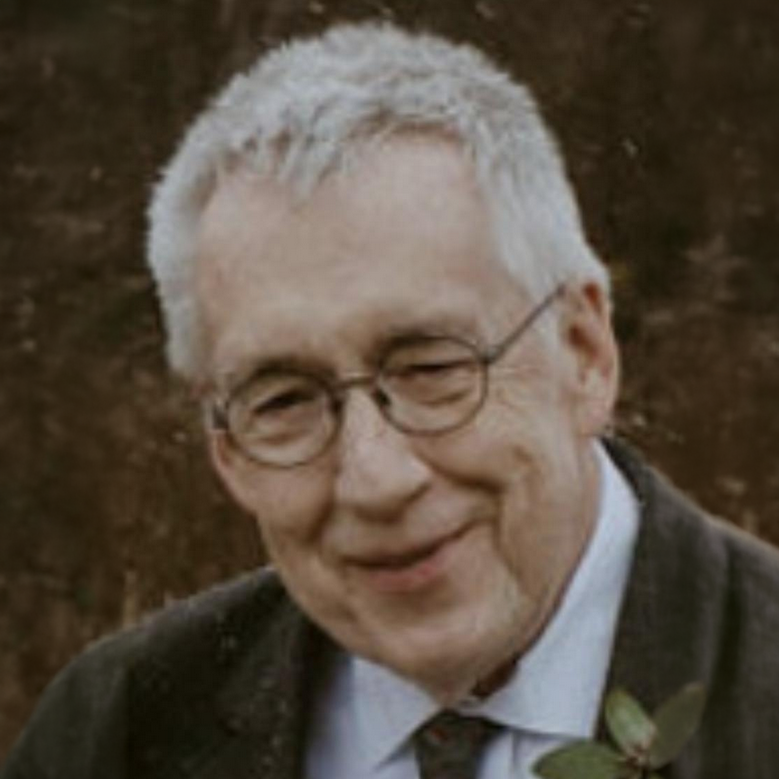
Jeffrey Van Fleet (BS ’77, MS ’81) passed away in December 2025.
James Sundby (BS ’56) passed away in February 2026.