
Successful applicants will spend the majority of their 12 consecutive month experience in one of our innovative community-based pharmacy practice sites. Residents will focus on the development and implementation of patient care services related to disease state management as well as preventive care. Communication skills will be enhanced through direct patient care and teaching opportunities. Additional skills will be developed under the mentorship of multidisciplinary teams and School of Pharmacy faculty. Throughout the year residents will build practice knowledge through a variety of projects highlighted by the completion and presentation of the residency research project at local, state, and national venues.
Resident’s Salary and Benefits
Current resident benefits include:
- Competitive resident salary plus travel benefits
- Health, dental, vision and liability insurance
- Life insurance and retirement savings options
- 5 paid approved professional leave days
- 10 paid personal/vacation/sick days
- 6 major holidays off
- Access to University of Wisconsin libraries, recreational facilities, and a UW email address
- Faculty appointment and teaching opportunities
- Business plan development and implementation with faculty mentorship
- Travel arrangements for professional meetings – two national and two state:
- PSW Annual Meeting — includes immunization training
- ASHP Midyear (recruiting purposes only)
- APhA Annual Meeting
- PSW Educational Conference
Lizzy’s Experience
In this video, Lizzy describes her day-to-day routine as a resident.
View captioned version of this video
Resident Insights
A look at our community based program from the perspective of past residents
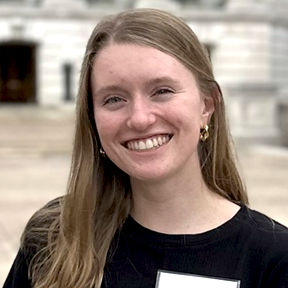
Lizzy Braun
Current Position: Pharmacist, Forward Pharmacy, McFarland, WI
Residency: Forward Pharmacy, Cottage Grove
(Part of a group of independent pharmacies that offers vaccines, medication reviews,
point of care testing, travel consults, and medication packaging services amongst others.)
Q: What experiences did you gain from a community residency instead of just jumping right into being a community staff pharmacist?
A: “For me, the big draw of a community residency was gaining mentorship during my first year of practice while being given the opportunity to create new services and complete projects. As a result, I feel I gained confidence and experience faster than if I jumped in on my own. I knew someone was always there as a sounding board for questions and the projects allowed me the chance to try new things from the beginning of my career.“
Q: How did you decide on and accomplish a community pharmacy residency? How was/is the experience of a community pharmacy residency: pros, cons, opinions, stories?
A: “I really liked the experience of a community pharmacy residency. I feel like the residency was flexible to my interests and needs. I was guided by the projects and my sites interests, but within that I had a lot of chances to work independently and find my style of approaching community pharmacy.”
Q: Were you able to have a balance between pharmacy responsibilities and educational or project time?
A: “Yes. My preceptor and I laid out a schedule each week for what I should plan to do each day of the week, with one day focusing on working in workflow, and the other four days being split between patient care focused project time and time for residency projects.“
Q: What was the relationship between the residents and staff pharmacists?
A: “Super positive and collaborative! Residents work alongside the staff pharmacists and really become integrated in the pharmacist team.“
Q: What types of research or quality improvement projects did you do?
A: “I evaluated the potential for a collaboration between an independent pharmacy and an independent physician’s office on a chronic care management service that was pharmacist-led.”
Q: Were there opportunities to teach pharmacy students or obtain a teaching certificate?
A: “Yes. I completed a teaching certificate while completing my residency. I also shared my interest in precepting with my preceptors during residency and precepted multiple students of different levels during residency.”
Q: What was the culture of the residency team, and how is work-life balance supported?
A: “I feel that the culture of the residency team is positive and the preceptors are always rooting for their residents to grow and become confident pharmacists. I felt that my work-life balance was supported during residency. I feel with clear communications and good time management work-life balance is very possible.“
Q: What made your program unique, such as specific community partnerships or innovative services?
A: “I feel like UW’s Community Pharmacy Residency program has such strong relationships between sites and with the school, and these relationships allow for great resources being available for the residents. I feel like whenever I ran into a problem with a project in residency, I knew my preceptors knew someone affiliated with the program who was an outstanding resource willing to help. This program felt connected amongst pharmacies, pharmacists, and the pharmacy school.”
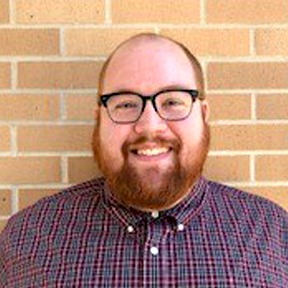
Will Wall
Current Position: Clinical Pharmacy Specialist Sentara Population Health, Virginia Beach, VA
Residency: Reedsburg Area Medical Center – Viking Pharmacy
Q: What if after doing a community residency I want to transition to ambulatory care, does the community residence provide enough of that Am Care experience where I could switch paths at the end if I wanted to?
A: “Absolutely, the skills learned during this residency program translate well to all outpatient settings. You learn motivational interviewing, how to stay up to date on guidelines, patient advocacy, clinical thinking, and prioritization skills.“
Q: What knowledge/aspects about running a business did you learn that you weren’t expecting?
A: “I was surprised about how many different factors go into a single decision/purchase for a business. Even projected revenue and predicted market growth for the service must be considered to accurately assess its value.”
Q: What were the staffing requirements (evenings/weekends) for your residency?
A: “Staffing requirements were during normal pharmacy hours for a certain amount of hours per week, usually about ~2/3 of your time.“
Q: Were you able to have a balance between pharmacy responsibilities and educational or project time?
A: “Yes there was time to balance, but you will have to find your own time management skills and techniques to get yourself there.“
Q: What was the relationship between the residents and staff pharmacists?
A: “The staff pharmacists in my experience were friendly and willing to help improve your pharmacy skills.”
Q: When reflecting on your experiences and career pathway, what advice do you have for student pharmacists?
A: “Pharmacy really is a small world, you may end up working with classmates again! Practice at your own pace and to your own expectations, never try to be a pharmacist you don’t want to be. You may bounce between jobs until you find your place in pharmacy!“
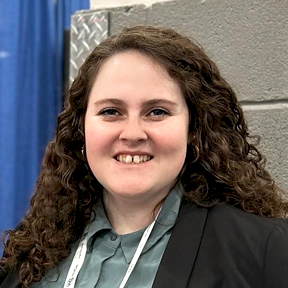
Emily Munig
Current Position: Ambulatory Care Clinical Pharmacist at Froedtert ThedaCare Health
Residency: Reedsburg Area Medical Center
(Rural health center with 2 outpatient pharmacies. As a resident I worked in both pharmacy locations
as well as in the diabetes education clinic managing patient medications for diabetes care)
Q: Describe a typical day.
A: “My typical day was different each day of the week. On staffing days I would work in the outpatient pharmacy from 7am to 7pm checking prescriptions, administering vaccines, following up on calls to providers, assisting with billing, and developing quality improvement interventions for workflows. On clinic days I would see diabetic patients for medication management and education. Initial appointments were scheduled for 90 minutes while follow ups were 60 minutes. On project days I had my own resident office space where I had privacy and quiet to work on my longitudinal project as well as other residency requirements.“
Q: What were the staffing requirements (evenings/weekends) for your residency?
A: “I was required to staff at least 8 hours per week, although I typically worked 7am-7pm. I was only required to work about every 7-8th weekend as only one of our pharmacy locations was open on the weekends and all pharmacists were part of the rotation for weekends.“
Q: Were you able to have a balance between pharmacy responsibilities and educational or project time?
A: “Yes, my residency site was very flexible in allowing me to structure my weekly schedule. I had every Monday reserved for project work time in my office. My teaching responsibilities also had protected time, as I would teach at UW for a full week and was not responsible for pharmacy duties during that time.“
Q: What was the relationship between the residents and staff pharmacists?
A: “I had great relationships with all of the staff pharmacists. They were all very willing to mentor and work with me even when they were not my direct preceptors.”
Q: What types of research or quality improvement projects did you do?
A: “My residency project was implementing a chronic care management program focused on performing comprehensive medication reviews for Medicare patients and managing chronic conditions. I connected with the family medicine providers in the clinic to generate referrals, then conducted patient visits both in person and over the phone.
I also implemented a QI project focused on decreasing errors by implementing a pharmacist check of new prescriptions prior to them being filled. This resulted in less reversed claims and less medication errors.“
Q: Were there opportunities to teach pharmacy students or obtain a teaching certificate?
A: “Yes, there are plenty of teaching opportunities. Although I did not personally complete a teaching certificate, this was offered. I did complete 4 weeks of teaching in the pharmacotherapy lab at UW. I also precepted IPPE and APPE students at my residency site.“
Q: What were the biggest strengths of your residency program?
A: “My program gave me the opportunity to practice in an ambulatory setting with support from my preceptors. This was a great steppingstone into my current career as I am ambulatory care pharmacist. I had the opportunity to complete several different projects including a business plan and quality improvement initiatives. I appreciated staffing in the outpatient setting as this allowed me to stay connected to my patients, I was also seeing in the medication management clinic. I also enjoyed the collaboration and connection with my co-residents at the different sites.”
Q: What made your program unique, such as specific community partnerships or innovative services?
A: “I had the opportunity to deliver educational programing to seniors at the local senior center connected with the clinic every other month. Topics were chosen based on interest and relevance to the audience. Some of the topic I covered included vaccination recommendations, over-the-counter cold and flu products, and medication used in different types of heart disease.“
Reflections from Former Residents
“I chose Hayat Pharmacy specifically because of the home visits which are unique to this program and allow you to help patients who may not be able to come to the pharmacy due to personal hardships. I also preferred the ability to tailor the residency to my personal interests, which UW-Madison offers. After meeting the Hayat Pharmacy team, the passion for progressing pharmacy and helping the underserved from each individual was evident and further emphasized that Hayat Pharmacy was where I wanted to be.”
– Resident, Hayat Pharmacy, 2021
“The UW-Madison residency had everything I was looking for. I wanted to be at a progressive, independent pharmacy that was partnered with a college of pharmacy for strong research support and a teaching certificate. The goals of Streu’s Pharmacy matched with mine and allows me the opportunities to work with chronic disease states, including diabetes and mental health, precept students, and take part in leadership roles. I also liked that the previous residents got along, and I wanted a program where I could make friends.”
– Resident, Streu’s Pharmacy, 2021
“Boscobel Pharmacy has a close relationship with many of its patients by providing services including comprehensive medication reviews and being closely involved with the surrounding community and healthcare providers. Many of the patients in this community seek our advice and are very eager to meet with us about their medications and health. I have found the surrounding area and the people very charming and am impressed with the scope of services provided here.”
– Ryan Fan, Resident at Boscobel Pharmacy, 2020
“First, I based my residency selection on my current career goals. I would like to work as a community pharmacist with a plan to implement ambulatory care services wherever I end up working. Southwest Health is the perfect place for this. I can staff in the community pharmacy and the anticoagulation clinic during my staffing days. Then, during my project days, I am able to think critically about how to implement chronic care to improve population health in Platteville. Second, I based my consideration for this residency program around work-life balance. I feel that I can work and stay involved by attending national and state meetings while having time to spend with my family and friends.”
– Matthew Huppert, Southwest Health Pharmacy, 2020