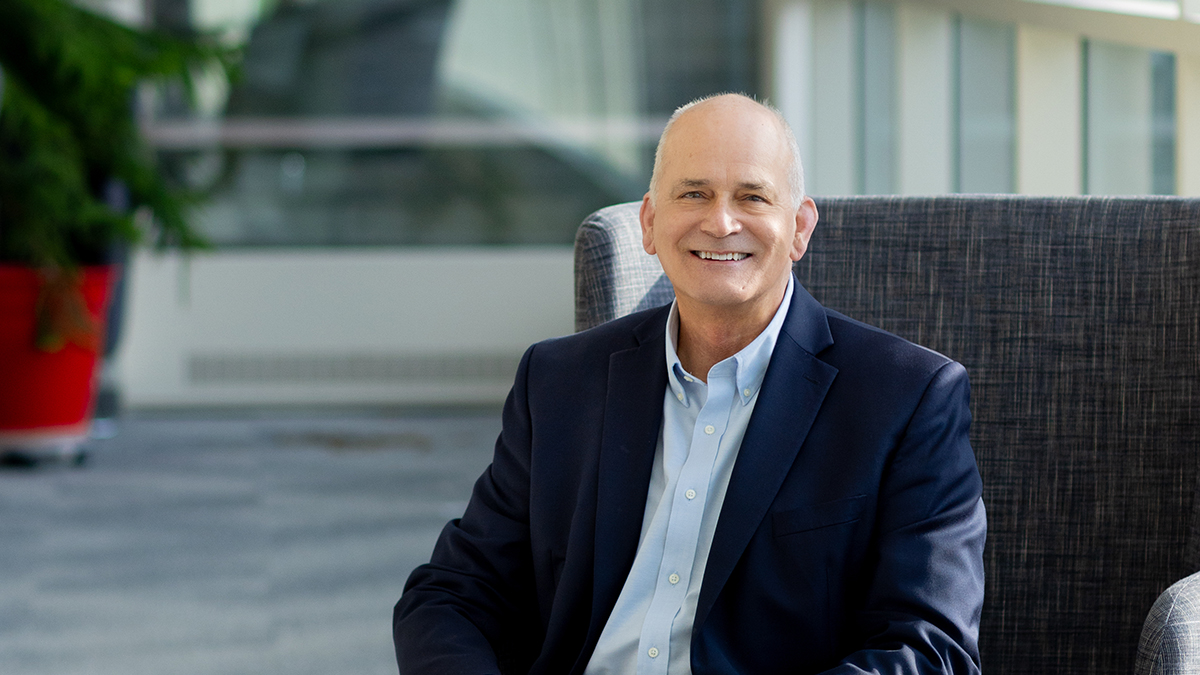
Nationally renowned for his trailblazing work on therapeutic psychoactive substances, Hutson spent nearly 40 years at the School of Pharmacy
Paul Hutson has spent the latter part of his career leading groundbreaking studies into the therapeutic potential of psilocybin and other psychedelic drugs and putting the University of Wisconsin–Madison School of Pharmacy at the forefront of psychedelic research.
For Hutson, the pull has always been toward uncharted territory — mapping the therapeutic frontiers of psychedelics from his lab, and the open sky from the cockpit of his two-seater kit-built GlaStar airplane. And now, after nearly 40 years as an educator and trailblazing researcher at UW–Madison School of Pharmacy, Hutson is retiring, with plans to pursue his flying passions and spend more time with his wife, Teresa.
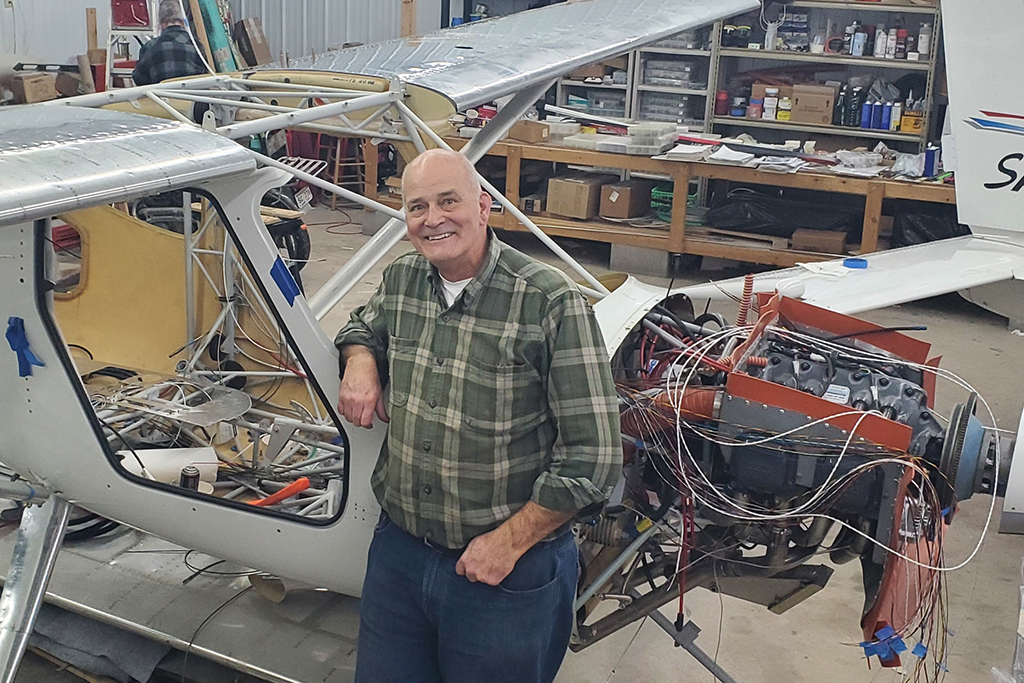
“I’m building an airplane, and one of my goals in retirement is trying to get it flying,” he says.
Reflecting on his decision to pursue a career in pharmacy, Hutson says, “I’m surprised I didn’t go into engineering, because I liked fixing things. I liked taking things apart and seeing if they would work after I tried to put them back together.”
But with a father who was a physician, and a mother who was a nurse, he was also attracted to the medical profession — and wound up applying the same curiosity to chemotherapy and psychedelics.
Transforming patient care through research
For nearly 30 years, Hutson studied chemotherapy drugs and traditional palliative medicine for people with cancer. He completed a fellowship in oncology and pharmacokinetics at St. Jude Children’s Research Hospital in Memphis in 1983 and spent five years on the faculty of the University of Illinois before joining the UW–Madison School of Pharmacy in 1988. He also became an associate member of the UW Carbone Cancer Center and worked in clinical practice with palliative care groups at UW Hospital and Clinics, where he conducted some of the first-in-human studies looking at pharmacokinetics alongside “some of the greats of cancer therapy, including Paul Carbone, George Wilding, and other oncologists here and nationally,” Hutson says.
He has served as the principal investigator for several other studies including one with the Eastern Cooperative Oncology Group.
As he moved into symptom management and palliative care, Hutson researched the potential of botanicals, “trying to relieve some of the toxicities associated with cancer chemotherapy and radiation,” he says. “The reason I moved into palliative care is because I was getting a little bit discouraged about the lack of progress of old chemotherapy regimens — they were mostly ablative or toxic mixtures.”
In 2014, Hutson was encouraged by Bill Linton, the co-founder of the Usona Institute, a Madison-based non-profit research organization exploring psychedelic drugs for medical use, to establish an interdisciplinary research team at UW–Madison to study whether psychedelics can treat depression in patients with terminal cancer.
“The thought was the FDA would be more tolerant of work with psychedelics if we were dealing with patients that had terminal cancer,” Hutson says. “After a few years the FDA turned around and said, ‘There’s no diagnosis of depression from cancer — it’s just depression. So if you want to treat depression, just treat depression.’”
Trailblazer in psychedelics
The FDA’s response to their research proposal opened up the field of study dramatically, according to Hutson. Hutson was named the principal investigator of the nation’s first-ever Phase 1 clinical trial of psilocybin to understand how high doses of the drug are metabolized by people, a significant foundation for further work in psychedelic research at UW–Madison and nationally.
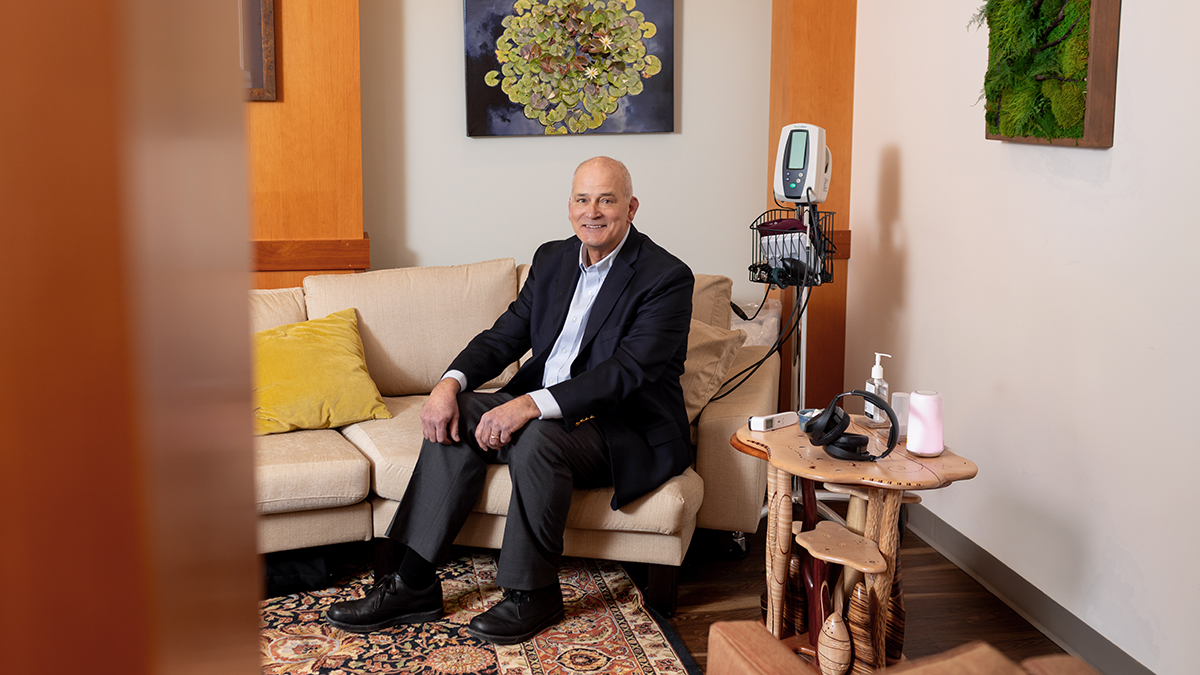
Cody Wenthur, associate professor of pharmacy at the School of Pharmacy and Hutson’s close collaborator, points to that study as one of the defining achievements of Hutson’s career.
“It was the first time this molecule had gone into humans with the intent of tracking how much we give to people, where it ends up, and whether we have to adjust weight-based dosing,” he says. “All of those questions, and the outcomes of that study, have been foundational to the additional clinical trials that have come out.
Hutson’s research team determined that a 25-milligram dose of psilocybin is safe for use in human subjects research, and that dosage is being used today in many Phase 2 and Phase 3 clinical trials.
“Most studies around the world are now using that dose, in that form, because of [Hutson’s] study,” according to Wenthur.
Hutson was also instrumental in establishing the UW Center for Psychedelic Research and Education in 2021, housed at the School, to consolidate and leverage the expertise from across the UW–Madison campus to accelerate research into the therapeutic applications of psychoactive substances. Hutson has since served as the center’s founding director and notes that facilitating the development of the CPRE, formerly known as the Transdisciplinary Center for Research in Psychoactive Substances, is one of his greatest professional achievements.
Through the CPRE, Hutson and collaborators launched two first-in-kind trials in 2022 exploring psilocybin for opioid and methamphetamine use disorders. And with the anticipated FDA approval of psilocybin on the horizon, the CPRE is poised to play a critical role in training practitioners.
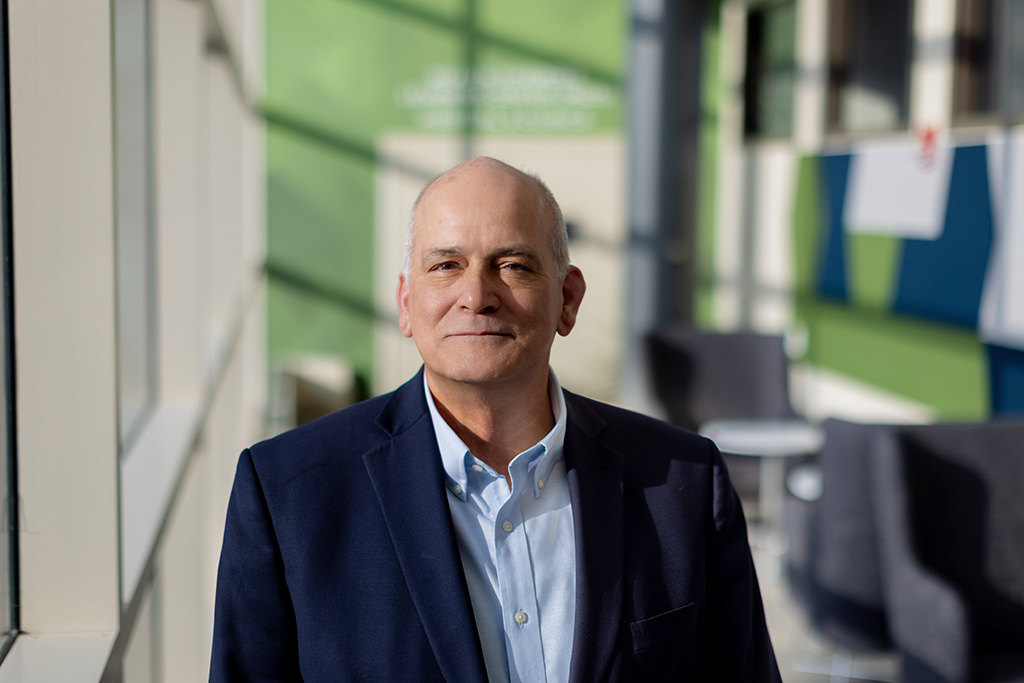
“The care that these drugs typically require — the preparation, the attendance and caregiving during the eight-hour dosing session, the debriefing — are going to be some of our challenges moving forward,” Hutson says. “But we’ve got a better balance of the basic science and the clinical implementation of psychedelics than any other U.S. university that I can think of.”
Earlier this year, Hutson marked another first: He became the inaugural Thora Vervoren Professor for Research in Psychedelics — the first pharmacy professorship of its kind.
“One of the things this professorship will do is continue to build recognition here at the School of Pharmacy,” Hutson says. “This will help us maintain and build the authority we need to persuade, inform, and lead the way in this field.”
With his retirement, Hutson is passing the torch to Wenthur, who will take over as director of the CPRE as well as step into the new Vervoren Professorship.
”Cody Wenthur is the perfect person to take on these roles. He is already involved with our clinical studies and also with his own laboratory-based research,” says Hutson. “He has the respect of colleagues within the UW CPRE, and under his guidance I expect that the best days of the center lie ahead.”
A mentoring legacy
Wenthur notes that Hutson’s mentorship has been key to the development of his own career. Wenthur worked with Hutson to develop the MS in Pharmaceutical Sciences: Psychoactive Pharmaceutical Investigation, launched in 2021 — the first-of-its-kind in the United States. Wenthur oversees the program.
“One of the amazing things about Paul is that he’s willing to reach across and help people and really help them grow — to let them take on their own roles and own ideas and allow them to thrive,” he says. “With his help I’ve really been able to grow into my own as an investigator.”
Liz Birkhauser, a current Health Services Research in Pharmacy graduate student at the School, was one of the first students to complete the PPI program. She was later an invited lecturer in the PPI program and took a position in the CPRE as a project manager. She echoes Wenthur’s sentiment about Hutson’s support. She remembers sitting in the inaugural Psychedelics in Science and Society course led by Hutson and admiring his teaching style and how he engaged with colleagues and students.
“One of the amazing things about Paul is that he’s willing to reach across and help people and really help them grow — to let them take on their own roles and own ideas and allow them to thrive.”
–Cody Wenthur
“He shows genuine interest. He’s kind, he cares,” she says. “He wants people to succeed, and he makes space to listen and to support students.”
Despite his rigorous teaching schedule and thriving research program, Hutson made time to meet with her and many other students on a regular basis.
“To have somebody like that, at that caliber, making space for me and being a champion for me, being a true mentor — I admire his ability to do that,” she says. “Paul’s mentorship and support changed my life.”
Working with students has been one of the big highlights of his career, Hutson says.
“It’s extremely gratifying to run into my students here in Wisconsin, but some of them are national in their practice,” he says. “I’m just so very proud to have been a part of their path and will miss that part of my role at the School very much.”

UW–Madison Center for Psychedelic Research and Education receives historic investment for cutting-edge mental health therapies and new public outreach lab to transform brain health care.
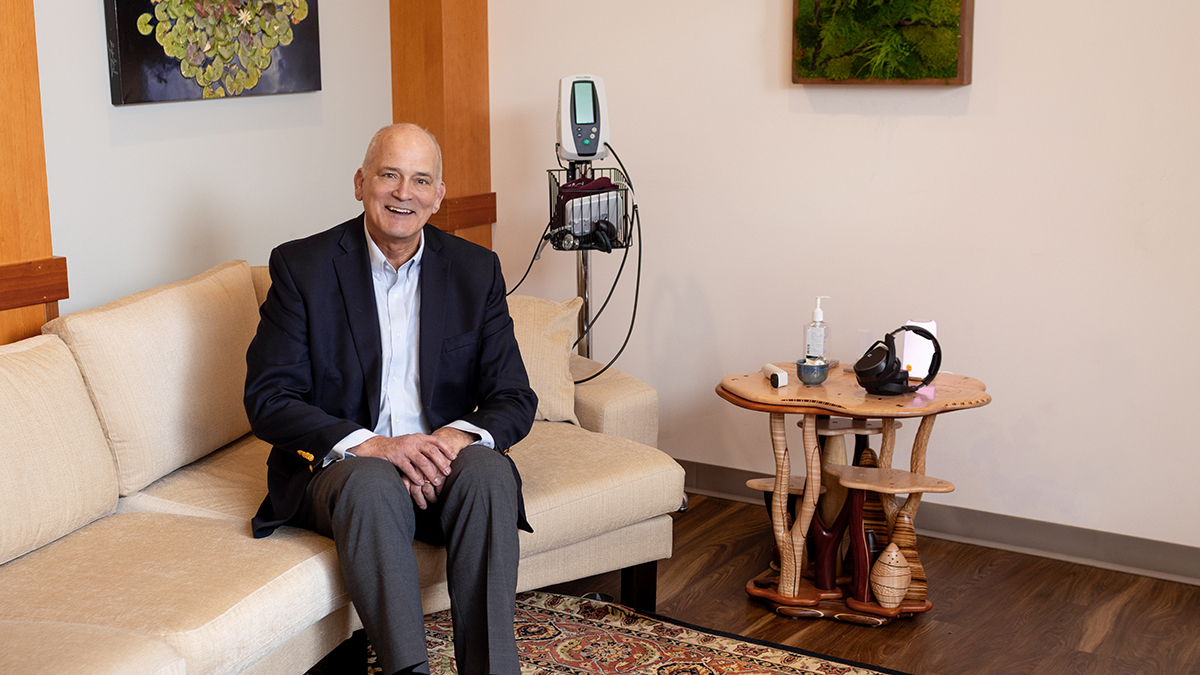
Professor Paul Hutson is named the inaugural Thora Vervoren Professor for Research in Psychoactive Substances — the first pharmacy professorship of its kind.