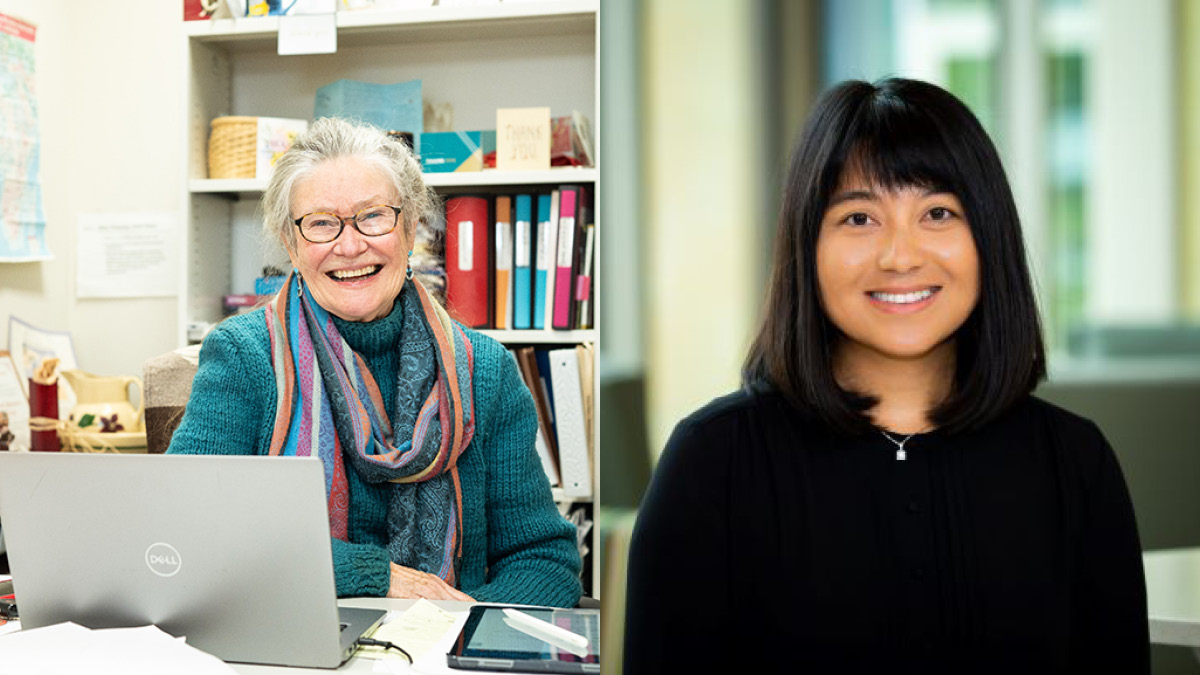
UW–Madison researchers, including School of Pharmacy Professor Betty Chewning, are developing culturally sensitive tools to empower Hmong and other caregivers
“It hurts like a chicken pecking.” A Hmong caregiver’s metaphor to describe a loved one’s pain might conjure vivid imagery but isn’t always easily translatable to a standard numeric pain scale — potentially leading to gaps in understanding that could affect a patient’s care.
Betty Chewning, a professor at the University of Wisconsin–Madison School of Pharmacy who specializes in patient-provider communication, and Maichou Lor, the Helen Denne Schulte Professor of Nursing in the UW–Madison School of Nursing, are working together to address those gaps by training bilingual Hmong caregivers on pain assessment. In April, Chewning and Lor published the results of Lor’s pilot study in Patient Education and Counseling. In May, they secured a new grant from the Universities of Wisconsin Ignite Grant Program to adapt their tool and training program for English-speaking caregivers of older adults.
“We want to especially help people who are in pain be able to communicate effectively with their health care providers.”
–Betty Chewning
“We want to especially help people who are in pain be able to communicate effectively with their health care providers,” says Chewning. “We’ve developed a tool that would facilitate the patient, the caregiver, and the provider to understand better the nature of the person’s pain, the intensity and location, and the duration.”
An evolving collaboration
The seed of the research was first planted a decade ago when Lor was a graduate nursing student in the Professional Certificate Program in Implementation Science and Community Health Outcomes, and Chewning was her advisor. Lor, who is Hmong, recruited some “aunties,” or respected matriarchs, from the local Hmong community to participate in a lab for Chewning’s Pharmacy Communication course. While observing the Hmong interpreters, Lor noticed that they weren’t communicating every sentence.
“I was assuming that interpreters were perfect, and I now realize how complicated their role is,” Chewning says. “They do a fantastic job, but in some languages — and Hmong is one of them — there aren’t words that can be translated perfectly.”
Chewning and Lor were surprised by what got left out during the complex interpreting task.
“They were leaving out almost every empathic statement that the students were saying to connect,” Chewning says. “Here I was training my students to build rapport, and the empathy statements are a critical element of that. So that just reinforced how important it was to try to do something about it.”
Lor agrees that empathy is the foundation for patient connection.
“The really core, essential component of ensuring that underserved marginalized populations get the care they need is trust, and empathy is core to building trust with patients and providers and interpreters.”
—Maichou Lor
“The really core, essential component of ensuring that underserved marginalized populations get the care they need is trust, and empathy is core to building trust with patients and providers and interpreters,” Lor says. “And when that’s lost, that’s where you see a lot of disparities in care.”
In 2015, Chewning and Lor published their results in the International Journal of Pharmacy Practice, laying the foundation for a series of other collaborative patient communication research projects.
“Betty’s amazing,” said Lor, a three-time UW–Madison graduate. “I will forever see Betty as a lifelong mentor.”
Developing culturally sensitive tools
Along the way, the researchers discovered the need for a tool that could help people from oral cultures communicate better with their health providers. Many existing tools that collect patient information require that people read and write in their native language or in English, but that’s not an option for many Hmong patients.
“We saw a problem which had to do with the difficulty with communication,” Chewning says. “But the question was how could that be addressed through a tool that could assist people who have difficulty expressing what their symptoms are or what their questions are about their medications or even just understanding how to manage their health problem.”
Lor focused her dissertation on creating a technology-based communication survey that uses color and pre-recorded audio to read the survey aloud to Hmong-speaking patients and caregivers. The results could be integrated into a clinic visit. In 2020, she began thinking about how to translate pain metaphors used in patient-clinician interactions, from the colorful “like a chicken pecking” to the cross-cultural phrase “pins and needles.” Working with clinicians, interpreters, and patients, she mapped out 12 pain metaphors and illustrated it in a visual, triplicate form so that patients, interpreters, and clinicians have a mutual understanding of the patient’s pain experience. The tool also includes full-body images so patients can mark pain location and a series of culturally appropriate faces to communicate pain severity.
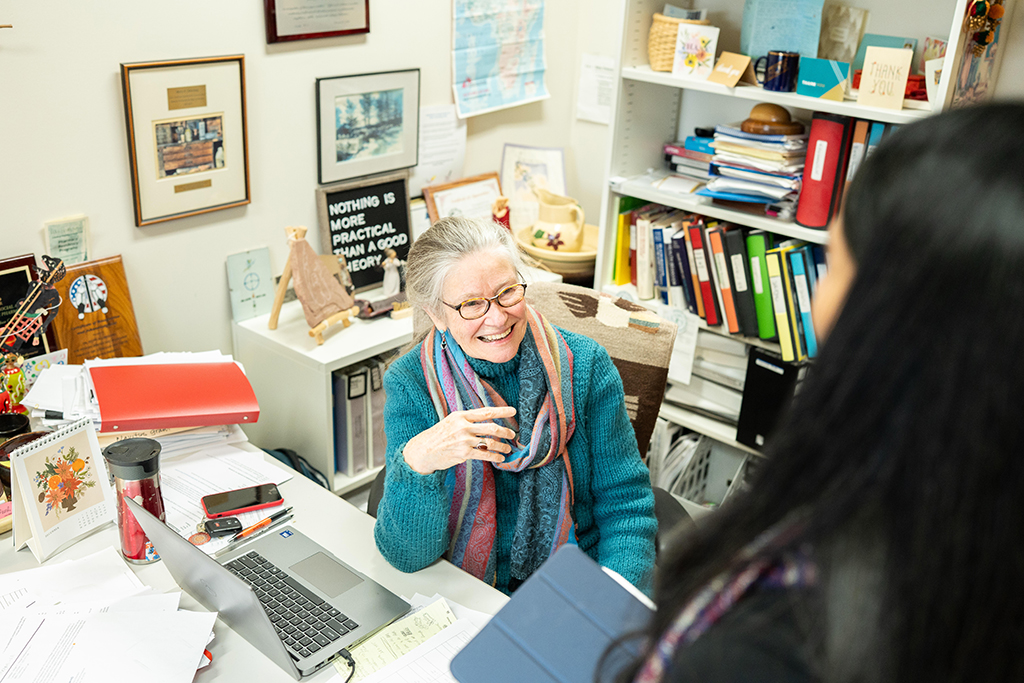
The new tool, titled Pain Assessment Information Visualization (InfoViz), was pilot-tested with 40 Hmong patients in 20 local clinics, and the research team published the results in Patient Education and Counseling in 2025. They found that the communication tool reduced visit time by an average of 7.17 minutes and facilitated more relational probing.
“There’s so much confusion without it because a clinician isn’t sure, and so then they have to spend more time assessing to identify the characteristics of the pain,” Chewning explains.
Initially interpreters were trained to use the tool to help facilitate the pain discussion, but it became clear they felt it was outside of the scope of their practice as an interpreter. In response, researchers adapted the online training for caregivers — educating them on both the tool and communication strategies. As a result of the intervention, caregivers reported increased confidence in health care communication after the training. In addition to Wisconsin, the online training has been used in other states with large Hmong populations, including Minnesota and California.
Expanding the reach to other patient populations
While the training study initially focused on Hmong patients and caregivers, English-speaking caregivers saw the study promoted on social media and began asking to participate as well.
“I was surprised that so many non-Hmong caregivers wanted training to do this better themselves — it was astonishing,” Chewning says. “I’ve been a caregiver myself, so I understand, and I’m very committed to that area. I’m really excited that we have an opportunity now to reach out to rural and urban areas where there’s a need for this. Maichou’s work is inspiring, and I’m very honored to work with her on it.”
With new funding from the Universities of Wisconsin Ignite Grant Program, Chewning and Lor will adapt the tool and training program for English-speaking caregivers of older adults.
While their initial focus is on Wisconsin, Chewning is excited about the potential for broader application.
“This is the Wisconsin Idea, and I believe in the Wisconsin Idea so much,” she says. “We’ve had support internally because this university believes in helping people with innovative ideas have a chance to test them. And now we can develop it here with implications throughout the country and beyond.”
This work was funded by the National Institute of Nursing Research of the National Institutes of Health under Award Number K23NR019289, a University of Wisconsin–Madison School of Nursing Intramural Grant, and WiSys and the Universities of Wisconsin applied research funding (Ignite Grant for Applied Research).
Associate Professor Edward Portillo, a leader in chronic obstructive pulmonary disease (COPD), is helping improve outcomes for patients around the world.

Professors Tim Bugni and Lian Yu are recognized with one of UW–Madison’s top faculty honors for their potent research.