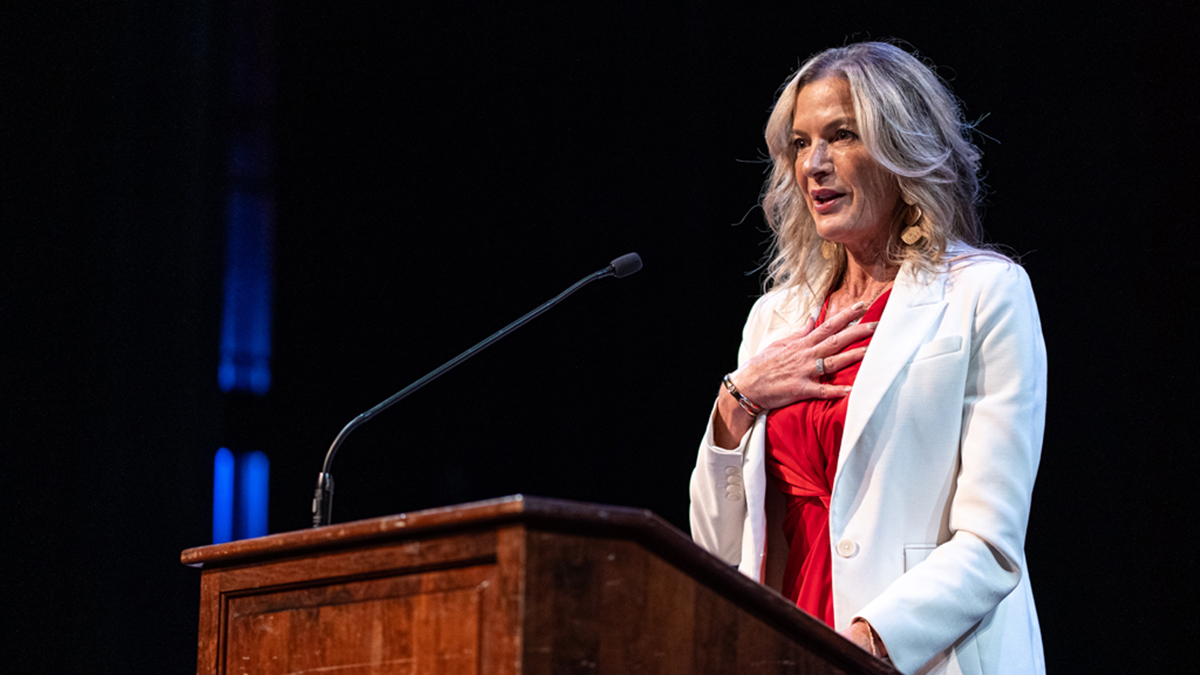
Alumni Trisha Ludwig and Jenny Moran are honored for their lasting impact on student pharmacists
Behind every skilled pharmacist is a chain of preceptors who helped shape their approach to care. For many practitioners, those early experiences during clinical rotations become defining moments that influence their careers.
Each year, the University of Wisconsin–Madison School of Pharmacy recognizes preceptors whose commitment to teaching and mentoring has made a lasting impact on student pharmacists.
This year, the School celebrates Trisha Ludwig (BS ’94, PharmD ’97), pharmacy manager for specialty clinics at UW Health, with the Larry Boh Preceptor Excellence Award — nominated by fourth-year PharmD students on their Advanced Pharmacy Practice Experience (APPE) rotations — and Jenny Moran (BS ’88), a general pediatric pharmacist with a current emphasis of pediatric oncology/bone marrow transplant specialty at Children’s Wisconsin in Milwaukee, with the Sustained Preceptor Excellence Award, which honors preceptors who have been nominated more than five times.
“Winning the Larry Boh Preceptor of the Year Award is an honor that carries deep personal meaning for me,” Ludwig says. “Larry Boh was a legendary figure at the UW School of Pharmacy, and he was my professor and preceptor. His ability to meet students exactly where they were and elevate them from that point shaped the way I learned, the way I practiced, and the way I teach. To be recognized with an award named after someone who shaped my own journey is incredibly special.”
“This award isn’t just a reflection of my work; it’s a reflection of the students who have trusted me to be part of their learning.”
–Trisha Ludwig
Ludwig says the award reinforces her motivation to precept — her passion for supporting the next generation of pharmacists.
“This award isn’t just a reflection of my work; it’s a reflection of the students who have trusted me to be part of their learning,” she says. “I’m grateful for each of them, and I’m excited to continue carrying forward the spirit of mentorship that Larry Boh embodied so well.”
Trisha Ludwig (BS 94, PharmD ’97)
Larry Boh Preceptor Excellence Award
Each fourth-year student who completes a six-week rotation with Ludwig in ambulatory care pharmacy management spends almost all their time with her, either in her office or rounding in the clinic. Ludwig centers her precepting approach around each student’s goals for their rotation and checks in with them weekly to see how things are going.
“Every student arrives with different backgrounds, strengths, interests, and aspirations,” Ludwig says. “I try to understand where they are starting and where they hope to go. From there, we build a plan together.”
Ludwig encourages curiosity and wants students’ growth to feel supported and achievable. She incorporates empathy and encouragement into every rotation.
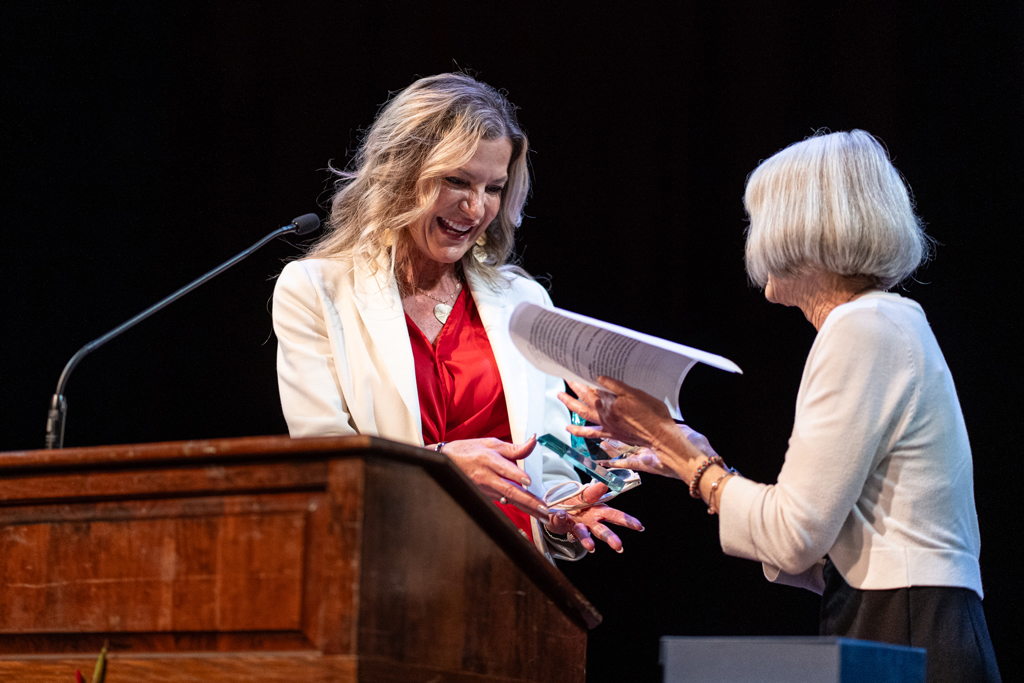
“Students are often balancing stress, uncertainty, and the pressure to perform, so I want them to feel seen and supported as whole people, not just as learners,” she explains. “I provide constructive feedback regularly, and I ask for feedback on myself as well.”
Ludwig uses the sandwich method to deliver feedback, celebrating successes before providing actionable feedback. She always asks if it’s a good time to give feedback and only proceeds when the answer is yes. Ludwig enjoys precepting because she loves learning, and her students bring fresh perspectives, new ideas, and questions that challenge her to think differently.
“They keep me sharp, they keep me humble, and they remind me why our profession matters,” she says. “The students I precept today will be my colleagues tomorrow, and investing in their development is one of the most meaningful parts of my career.”
Ludwig’s career has taken her through a variety of practice settings: She earned her Bachelor of Science in pharmacy in 1994 and worked as a pharmacy technician, intern, and pharmacist at Meriter Hospital in Madison, returning to the School of Pharmacy to earn her PharmD in 1995. During her PharmD program, she worked as a clinical pharmacist at UW Hospital, on the surgery and solid organ transplant units. After earning her PharmD in 1997, she moved to Washington State to take a clinical coordinator position, then returned to Wisconsin in 1999 and rejoined UW Health as an inpatient pharmacist.
For 15 years, Ludwig covered almost every area in the hospital, including cardiology, critical care, emergency medicine, cardiothoracic surgery, and the operating room. She moved to Vail, Colorado in 2014 and worked as an inpatient and community pharmacist for Vail Valley Medical. In 2015, she returned to UW Health and started at East Madison Hospital, ultimately becoming the manager there in 2016.
“Despite having very little knowledge of management, I loved being forced to learn many new things every day and was passionate about the team there,” she says. “I had a student every block, and we learned a lot together.”
From there, Ludwig transitioned into ambulatory care, first providing COVID therapeutics, then moving back into management. Ludwig is currently the pharmacy manager overseeing pharmacists and pharmacy services in specialty clinics at UW Health.
“One of my more exciting current roles is opening a new virtual, pharmacist-led UW Health Medication Management Clinic, designed to support providers with initiating, titrating, and monitoring medications,” Ludwig says. “All visits will occur via telehealth, with patients referred into the clinic and pharmacists operating under delegation protocols. The goals of the clinic are to improve patient access, enhance medication safety, strengthen care coordination, and optimize outcomes.”
“I want students to understand that their path doesn’t have to be linear to be meaningful. If they stay committed to learning about patients, about the profession, and about themselves, they will always find their way.”
–Trisha Ludwig
A student recently helped her implement billing for pharmacist visits to support a sustainable model for providing clinical services, and another student helped her write a business case to get additional pharmacist positions approved in specialty clinics.
Each environment in which Ludwig has worked has taught her something different, and each has shaped the way she mentors students.
“My varied career path also allows me to offer students a wide lens on what pharmacy can look like and how many directions their careers can take,” she says. “What I enjoy most about my current role is the opportunity to blend clinical care, patient relationships, and system‑level problem‑solving. It’s a space where pharmacists can truly impact long‑term health outcomes, and I love helping students see the breadth of what’s possible in ambulatory care.”
Ludwig hopes her students take away two things: the encouragement to reach for their dreams and to keep learning every day.
“My own career has changed significantly over the years because I stayed curious and open to new opportunities,” she says. “I want students to understand that their path doesn’t have to be linear to be meaningful. If they stay committed to learning about patients, about the profession, and about themselves, they will always find their way.”
Jenny Moran (BS ’88)
Sustained Preceptor Excellence
For Moran, precepting is inseparable from the work itself. At a teaching hospital where questions are encouraged and continuing to improve is expected, guiding the next generation of pharmacists is part of the culture.
“I am actually in awe that I received this huge honor from my previous students,” says Moran, who was honored with the 2024 Larry Boh APPE Clinical Instructor Excellence Award before earning this year’s Sustained Preceptor Excellence Award. “As always, I feel my students have taught me a lot more than they ever learned from me, due to their many questions about pediatric patient disease states and their new experiences in monitoring acute care patients.”
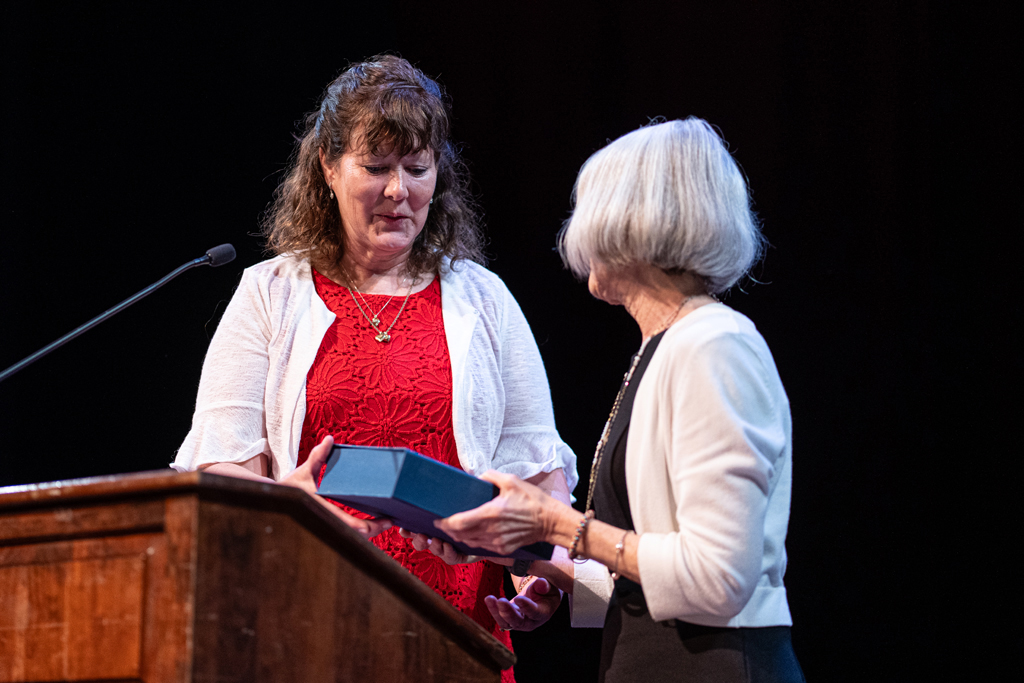
Moran has directly precepted nearly 400 of the School’s PharmD students during their Advanced Pharmacy Practice Experience (APPE) rotations, typically taking two students at a time so they can learn from each other. She begins each rotation by getting to know her students individually — their backgrounds, their career goals, the kinds of patients they expect to see in their futures — and tailors the experience accordingly.
“Each student who comes through is unique in their background and career goals,” she says. “Even though most students won’t be pediatric pharmacists, they will run into pediatric patients.”
Moran describes her approach as that of a “pharmacist detective,” scanning medication lists, reviewing charts for concerning changes, and investigating the medication-related causes of both negative symptoms and positive outcomes. She brings students along for that process, encouraging them to be curious and view each patient through a medication lens.
Her investment in teaching extends well beyond individual rotations. Over more than three decades at Children’s Wisconsin, Moran helped create the hospital’s pharmacy residency program and has been involved in educating everyone from high school students shadowing pharmacists to medical residents. She has also mentored new preceptors, worked with students at every stage of their training, and volunteers in palliative care.
“My favorite part about precepting is being able to have my students become my peers as fellow pharmacists, as well as watching them grow in their career paths,” she says.
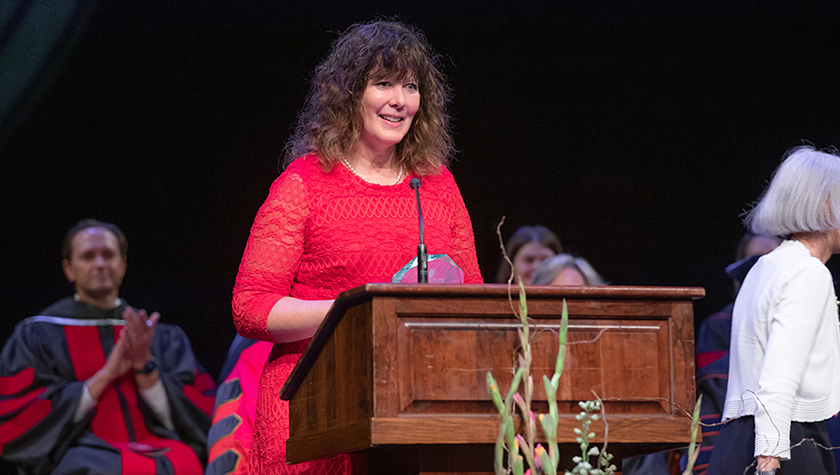
Moran, the ‘pharmacist detective,’ is recognized for providing student pharmacists with superb precepting at Children’s Wisconsin.
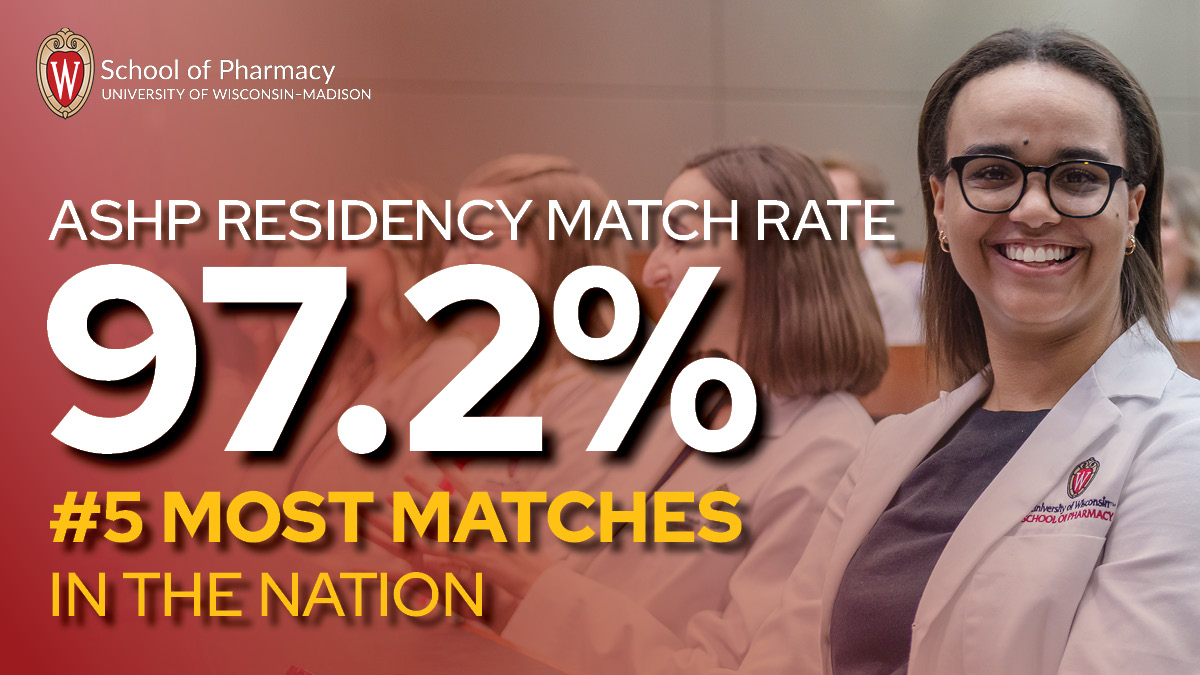
With a 97.2% ASHP residency match rate for 2026, the School outpaces national average and maintains a tradition of excellence.