In an increasingly competitive environment, a new course gives students hands-on training to compete for critical research funding
By Archer Parquette
When Fei Sun and Tina Dang began the Pharmaceutical Sciences graduate program at the University of Wisconsin–Madison School of Pharmacy, the complexities of scientific research didn’t surprise them. But the complexity of grant-writing did.
“I knew how important grant-writing was, but the whole process felt overwhelming and a bit intimidating,” says Sun.
No matter how brilliant and consequential their work may be, researchers outside of commercial settings always need to secure funding — and to do so, they must be able to write compelling, well-sourced grant proposals. Recent changes in federal funding have only increased the pressure, with researchers competing for a shrinking pool of resources.
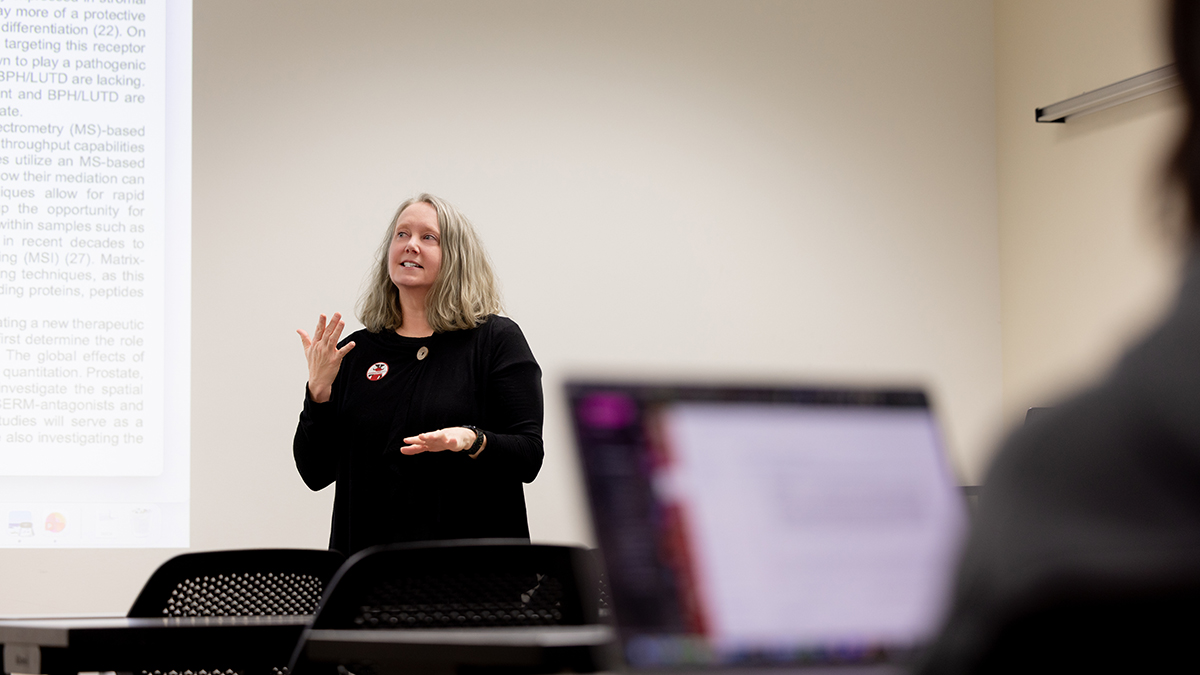
To prepare students for this competitive environment, Associate Professor of Pharmaceutical Sciences Lara Collier, assistant dean for graduate education and director of graduate studies for the Pharmaceutical Sciences PhD program, launched a Grant Writing Special Topics course in 2024. For years, students had been asking for more guidance on grant writing, and she decided that a dedicated course could provide the much-needed training.
“In the future, these students are going to have to communicate their science. They must be able to demonstrate its importance. This gives them a head start.”
—Lara Collier
“In the future, these students are going to have to communicate their science. They must be able to demonstrate its importance,” says Collier. “This gives them a head start.”
Breaking down the process
Collier’s grant writing course is split into an informational portion and a practice portion. As Sun said, the information can easily seem overwhelming, rife with nuances and procedural particularities that differ among grant types, so Collier breaks it up into step-by-step sections.
“When I was building the course, I reached out to colleagues on campus who were teaching similar courses, which helped me lay a foundation for it,” she says. “From there, I tailored it to reflect what’s most important for pharmaceutical sciences students.”
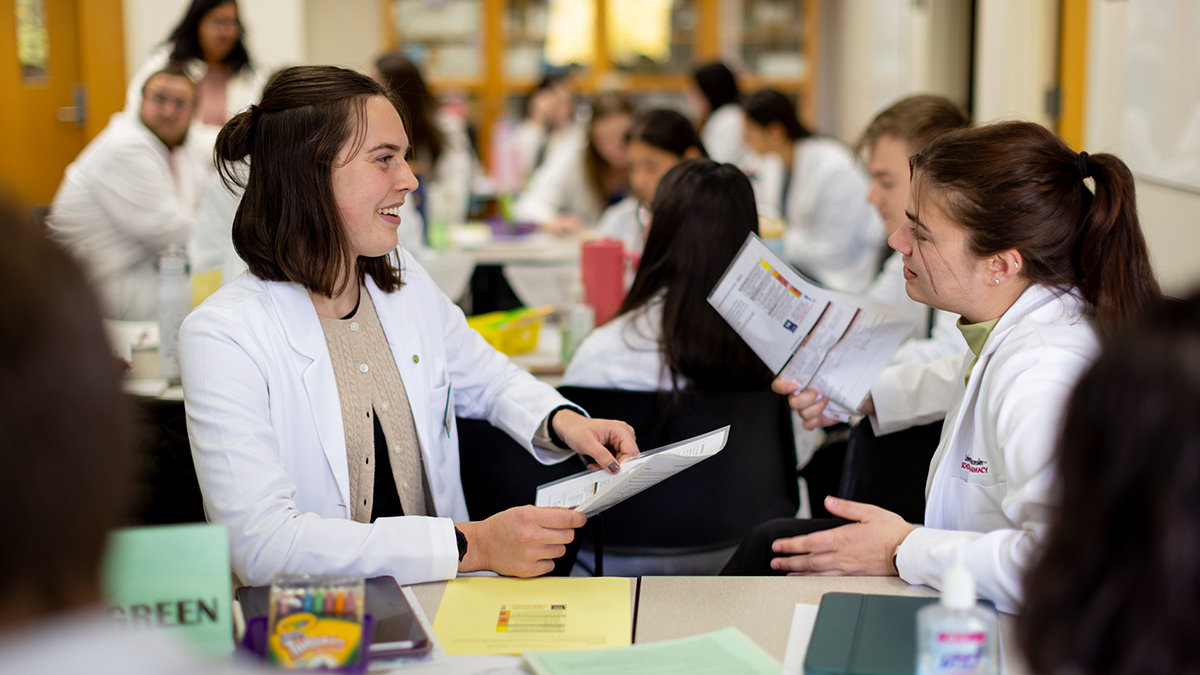
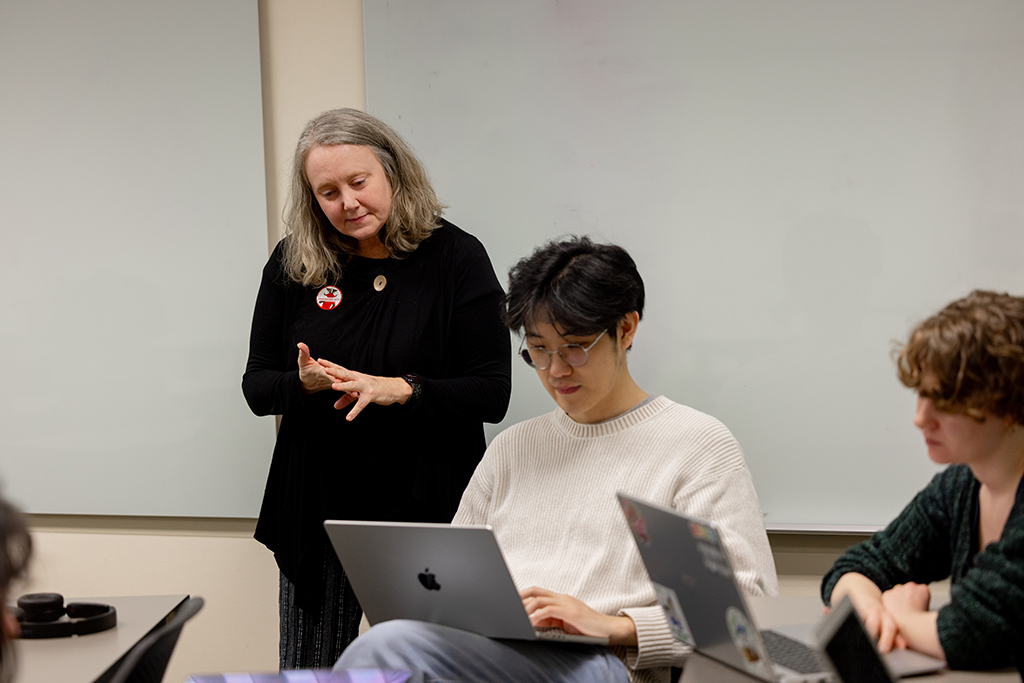
The course specifically covers F31 Individual Fellowships offered through the National Institutes of Health (NIH), a particularly relevant grant that supports promising doctoral candidates in biomedical and clinical sciences, such as pharmaceutical sciences. In small groups, students read and discuss example grant proposals before presenting their thoughts on the proposal’s strengths and weaknesses.
“Lara is a great biologist and a great teacher,” says Dang. “She helped me become a better writer. That’s helped not just with grant proposals, but with abstracts and my other writing.”
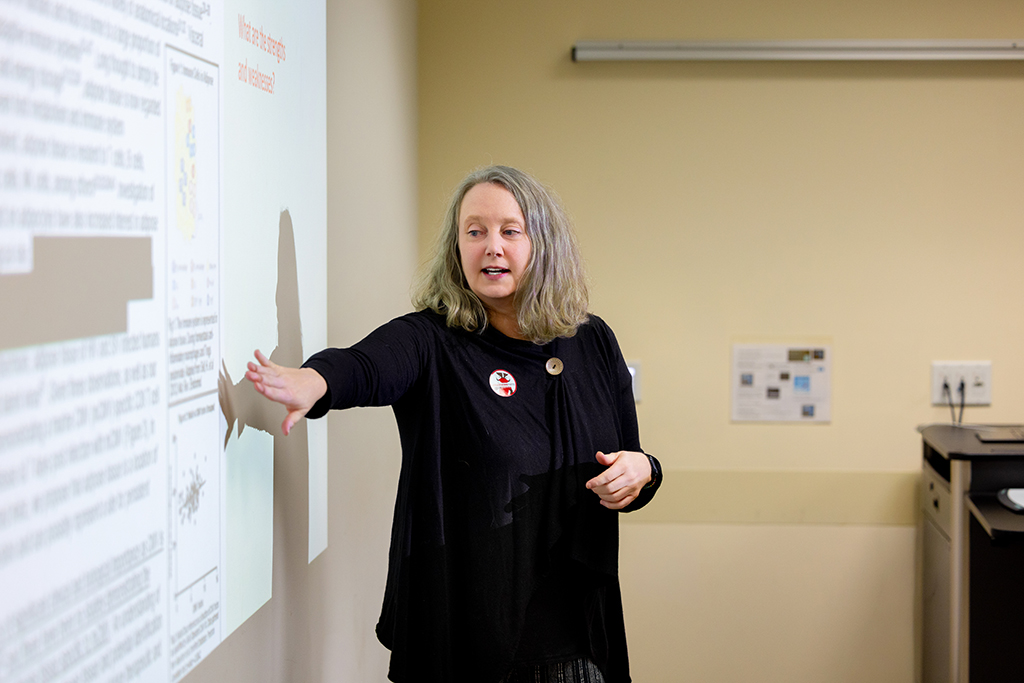
The students also have the opportunity to concurrently work on grant proposals of their own, piece by piece. For example, Collier will teach students about potential problems in a proposal and the corrective measures they could employ to address them. Students then apply that information to their own writing to be critiqued by Collier and other faculty as they go, eventually resulting in a finished proposal.
“The course broke everything down into clear, manageable steps, so the process feels more approachable,” says Sun, who took the course last spring. “I especially appreciated how supportive the class environment was. It felt like a space where I could ask questions and learn without any pressure.”
Eventually, the students hold a mock grant review, mimicking the NIH process. Each student is assigned three of their classmates’ grants to review, writing a critique based on NIH guidelines.
“The other students in my class all came from different labs, so there was a real diversity of grant proposals from us all,” Dang says. For example, Sun studies in the lab of Assistant Professor Ting Fu, who has a focus on the relationship between bile acids and conditions like colorectal cancer and irritable bowel syndrome, while Dang is in the lab of Professor Lingjun Li, who is focused on developing novel mass spectrometry strategies to shed light on the mechanisms underlying neurological disorders. “The differences between fields were very helpful to review and understand.”
The students then receive their peer reviews and incorporate the feedback into a final, polished proposal.
“After our course, that document is something they can work on with their advisors and other mentors to turn into either their preliminary exam grant proposal or potentially even an external grant submission,” Collier says.
Lasting impact for students
The new course had a strong reception. It’s been incorporated as a permanent part of the curriculum, and last year, it was honored with an inaugural School of Pharmacy Inspire Teaching Award for Instructional Excellence for the graduate education program.
“Even with the help of collaborative colleagues, it’s not always easy to develop a course,” Collier says. “It’s nice to be recognized for creating a class that students have asked for, that’s tailored to meet their needs.”
The students themselves are also grateful for the opportunity to strengthen these skills to sustain their future careers. After her graduation next year, Sun plans to pursue an industry or academic postdoctoral position.
“In both settings, strong grant-writing skills are extremely valuable — not only for securing funding, but also for learning how to clearly frame scientific questions, design feasible research aims, and communicate the broader impact of a project. The course gave me early, hands-on exposure to these skills, which I expect will be directly applicable to my future training and career.”
Dang echoes the sentiment.
“I wish we had this course my first year,” says Dang, who was one of the first students to take the course and plans to pursue a career in industry after graduation. “It’s prepared me for the work I’ve done since.”
Collier has already noticed the course improving the results of preliminary exams for her students, and as the first few classes enter their post-grad careers, she anticipates this head start helping them to earn grants in the years to come.
“Lara’s guidance really made the grant-writing process feel less mysterious and more achievable,” Sun says. “She gave us all suggestions for our futures and really encouraged us to think about where we want to go in our research and our careers. I now feel much more confident and prepared to meet my goals.”