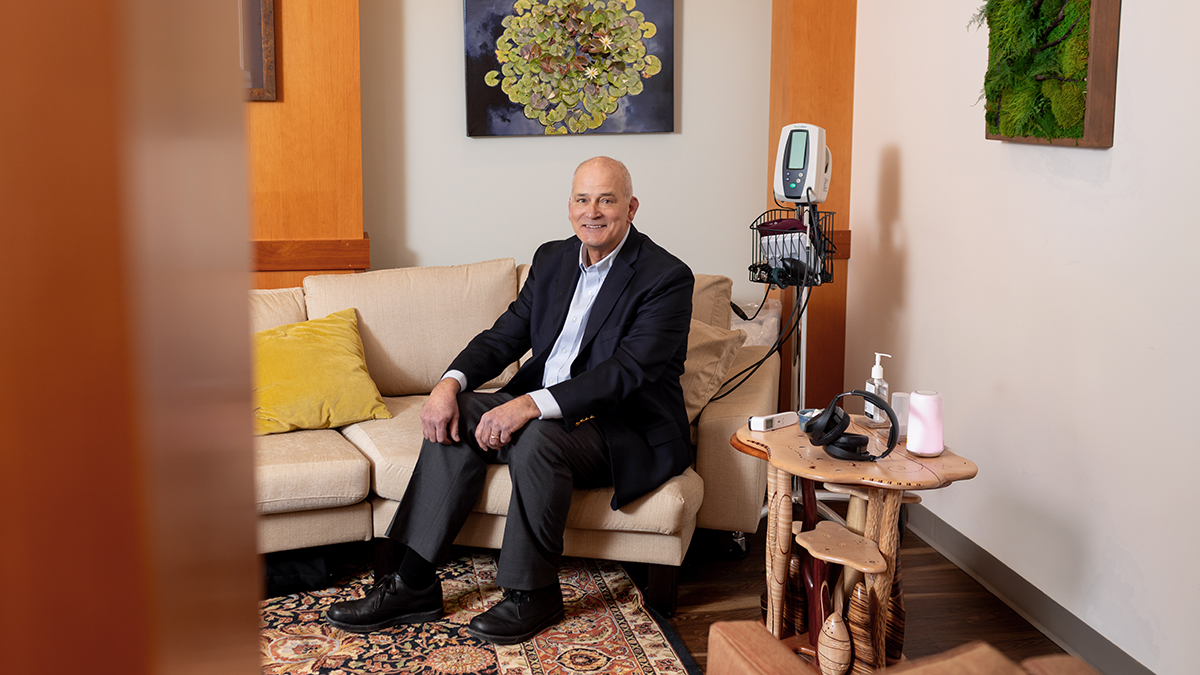
Professor Paul Hutson is named the inaugural Thora Vervoren Professor for Research in Psychoactive Substances — the first pharmacy professorship of its kind
By Archer Parquette
The potential for psychedelics is vast and growing. Terminal patients treated with psilocybin — the psychoactive ingredient in “magic mushrooms” — have seen significant drops in anxiety, depression, and distress. People with substance use disorder have gotten sober. Patients with severe post-traumatic stress disorder have paired the drug with therapeutic techniques to significantly reduce symptoms.
Paul Hutson, a University of Wisconsin–Madison School of Pharmacy professor, has been at the forefront of that psychedelic research for over a decade. In 2014, he led the nation’s first-ever Phase 1 clinical trial for psilocybin, a milestone that put the School at the cutting edge of psychedelic research. In 2021, Hutson took that work to the next level as founding director of the School’s UW Transdisciplinary Center for Research in Psychoactive Substances (TCRPS). Now he’s poised to accomplish even more: Hutson is being named the inaugural Thora M. Vervoren Professor for Research in Psychoactive Substances.
“This professorship opens up a lot of great opportunities,” says Hutson. “It will allow us to buy equipment that we need, to bring in speakers, to fund scholarships for graduate students, and to provide bridge funding for clinical trials.”
“The field is a very exciting one, with a lot of promise, and the School of Pharmacy has been leading the way. My goal for this professorship is to position UW–Madison at the very forefront.”
—Thora Vervoren
The new professorship — focusing exclusively on psychedelics — is the second of its kind in the United States and the first in a pharmacy school. It provides Hutson with funding to take his nationally leading work to new heights and to support the many professors who work with him at TCRPS, which includes researchers from across the university.
The professorship was funded by Thora Vervoren (BS ’53), who has long been a supporter of the School. She had been considering a professorship for years, eventually deciding that the money would best be used in this burgeoning field.
“I am extremely impressed by Paul and his work,” she says. “I’ve been following progress in psychedelic research for some years now. The field is a very exciting one, with a lot of promise, and the School of Pharmacy has been leading the way. My goal for this professorship is to position UW–Madison at the very forefront.”
Funding critical research
Hutson already has extensive plans in mind for the new professorship.
“Thora has been extremely generous,” he says. “We’re looking at ways to expand our scope and capacity here at the center.”
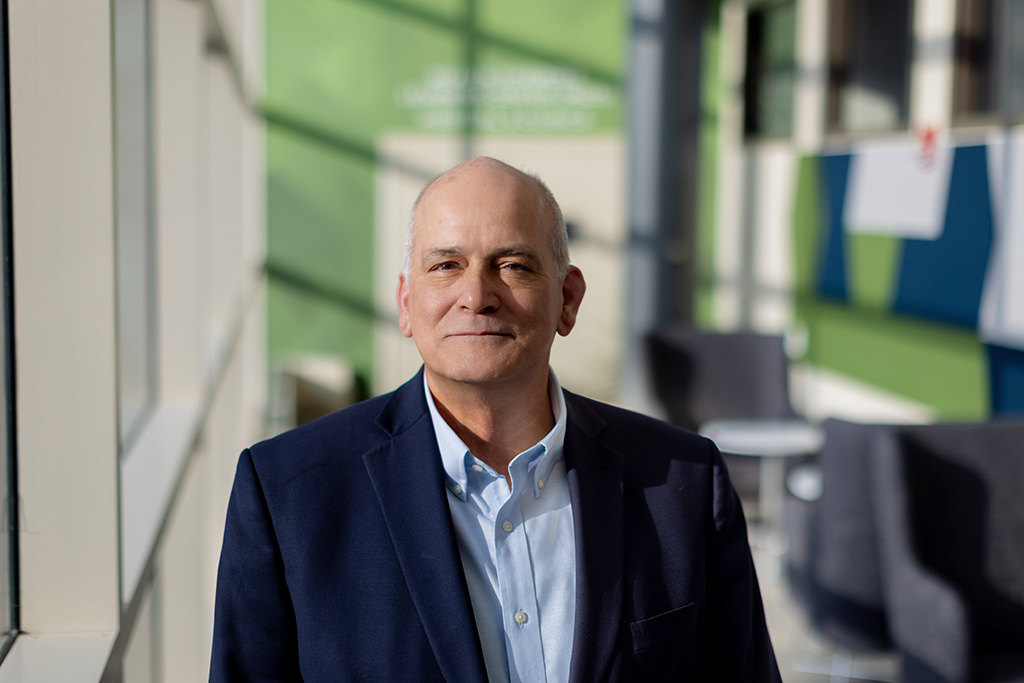
One of Hutson’s main goals is to better understand how psychedelic substances work. TCRPS member Charles Raison, professor in the UW Department of Psychiatry, is spearheading efforts to identify the exact mechanisms of psychoactive substances that cause psychedelic experiences. Besides developing a better understanding of the substance, this could possibly enable researchers to separate out the parts of psychedelics that have therapeutic effects.
“There’s a lot of excitement about the possibility that one could design a psychoactive drug that has a therapeutic effect without the psychedelic experience,” Hutson says, noting the physical and mental risk a psychedelic experience might entail — such as a patient leaving the dosing environment and attempting to drive. “There are many people who feel that the psychedelic experience is fundamental to the therapeutic improvements that we see. We’re not sure yet. We don’t know if a higher, more intense psychedelic experience is important.”
One of Raison’s studies in 2023 found that a single dose of psilocybin had a clinically significant effect on participants’ depression scores over six weeks.
Hutson also plans to purchase new equipment, including EEG machines to monitor brain activity during psychedelic experiences and driving simulators to test the length and extent of impairment caused by psychedelic use. This will help in Hutson’s efforts to ensure patient safety after a clinical trial or treatment.
Another project Hutson is especially excited about is a study on the effects of psychedelics on people with substance use disorder, led in collaboration with TCRPS members Randy Brown and Christopher Nicholas, professors in the UW School of Medicine and Public Health. Among methamphetamine users, the researchers saw a remarkable 90% drop in use after patients were treated with psilocybin for one month.
“The Center’s work has been amazing,” Vervoren says. “Psychedelics have potential for people with mental health issues and substance use issues. And I was particularly impressed by the effects shown in people at the end of life. Studies have shown that treatment with psychedelics can really improve people’s outlook and mental state during that often incredibly difficult time.”
An exciting future
This professorship comes at a pivotal moment for psychedelic research. The Food and Drug Administration is set to review the use of psilocybin to treat depression, and Hutson anticipates FDA approval by the end of 2027. Hutson’s own research will be part of that submission. His 2014 study gave volunteers three progressively higher doses of psilocybin, with researchers performing echocardiograms and taking blood samples to measure concentration. The researchers found that the drug was safe at those doses and that the dosage didn’t need to be adjusted for weight, simplifying the field for the wealth of studies to come.
“This will help us maintain and build the authority we need to persuade, inform, and lead the way in this field.”
—Paul Hutson
“We pushed the envelope,” Hutson says. “It’s gratifying to see that data used now as part of the drug application with the FDA. It shows the quality of the study and all the great people who worked on it.”
FDA approval would mean an increased need for researchers like Hutson. As demand presumably rises, their work would be needed to guide health care professionals, legislators, and regulators.
“One of the things this professorship will do is continue to build recognition here at the School of Pharmacy,” Hutson says. “This will help us maintain and build the authority we need to persuade, inform, and lead the way in this field.”