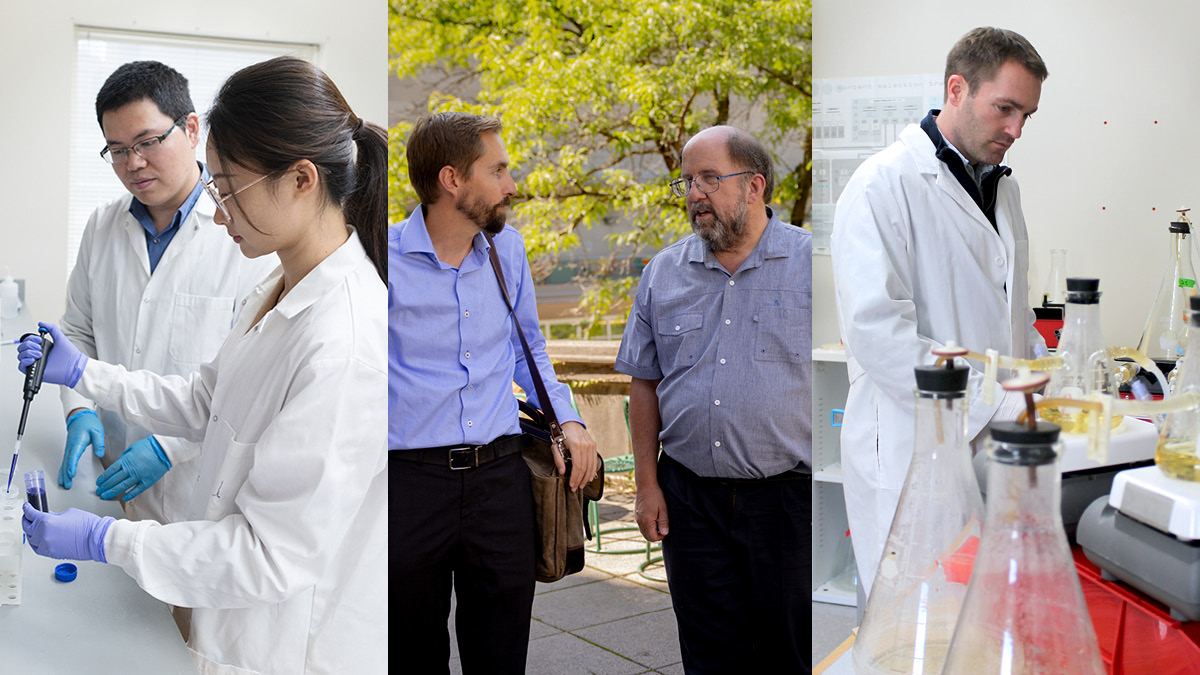
From oncology to engineering, faculty are partnering with departments across campus to advance healthcare in Wisconsin and beyond
Research from the University of Wisconsin–Madison School of Pharmacy is advancing potentially life-saving cancer treatments, helping rural health systems increase colon cancer screening rates, exploring the complex therapeutic possibilities of peptides and more — thanks to collaboration across campus.
“The School of Pharmacy is in a unique position,” says Professor of Pharmacy and Pharmaceutical Sciences Warren Rose, the School’s associate dean for research. “We have people in each discipline of the university: biological sciences, physical and chemical sciences, clinical sciences, social sciences, and humanities. And so naturally, we have the ability to collaborate across other university departments to make a real translational impact.”
“We have people in each discipline of the university: biological sciences, physical and chemical sciences, clinical sciences, social sciences, and humanities. And so naturally, we have the ability to collaborate across other university departments to make a real translational impact.”
–Warren Rose
As of this summer, there were 39 School of Pharmacy cross-campus collaborations on current federally funded research alone, including 10 with the Department of Medicine, three with the College of Engineering, two with the Department of Chemistry, and even one with the College of Education, outside the traditional bounds of science and healthcare.
From biomedical engineering to oncology to family medicine, that expertise is threaded through research in nearly every corner of campus. And, true to UW–Madison’s mission, the benefits are designed to extend far past the boundaries of the lab, touching lives across the state.
Innovative treatments
In his lab, Associate Professor of Pharmaceutical Sciences Quanyin Hu focuses on precision medicine — developing individualized treatment methods that he hopes will overcome the challenges of “one-size-fits-all” treatments. Recently, that’s meant innovative ways of treating cancer.
Hu has found that a small-molecule degrader targeting ferritin in cancer cells can trigger pyroptosis, a form of cell death that can be leveraged to prevent the occurrence and growth of tumors. By harnessing this scientific finding, melanoma patients could receive a new treatment designed to prevent cancer recurrence.
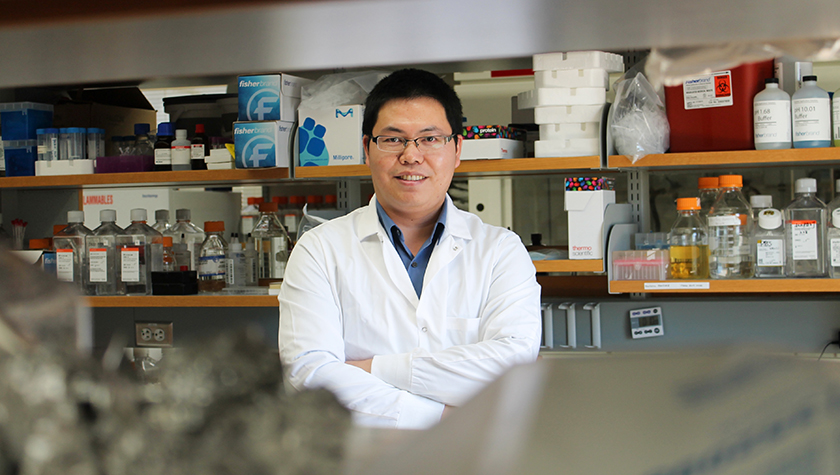
Hu turned to the Department of Human Oncology to push his research forward, working with Professor Paul Sondel to determine platelet-mediated methods for delivering those ferritin degraders to cancer patients.
“As research scientists who spend most of our time working on the basic science, we really need fresh opinions from the patient treatment side,” says Hu. “By collaborating with physician scientists and doctors, we’ve refined our delivery strategy.”
Glen Kwon, professor of pharmaceutical sciences, has achieved similar success in his development of a new therapy that could treat fibrosis. Working with the Department of Medical Physics, Kwon developed a peptide that could decrease the assembly of fibronectin, a protein central to fibrosis — a condition implicated in nearly half of deaths in the U.S.
Weiping Tang, a professor of pharmaceutical sciences, is also working with the Department of Human Oncology in his development of novel antibody drug conjugates — fast-growing, targeted cancer therapies. Those therapies have been making waves for their effectiveness in recent years, but producing them en masse has proven difficult. Tang and his colleagues in the School of Medicine have determined a streamlined approach that could potentially simplify the process for drugmakers looking to produce these therapies at scale.
“This is really just the first step,” Tang says. “Once we opened the door, we realized there are many opportunities to continue improving the technology.”
Screenings that save lives
Colorectal cancer is the second leading cause of cancer-related death in the United States — and it’s also arguably the most preventable and treatable cancer. Regular screenings can catch it early, and yet many people simply don’t get those screenings.
Jen Weiss, a professor in the School of Medicine and Public Health, has devoted her research to changing that, enlisting help from the School of Pharmacy. Weiss is working with Professor of Pharmacy Jay Ford, an expert in systems engineering and effective organizational change.
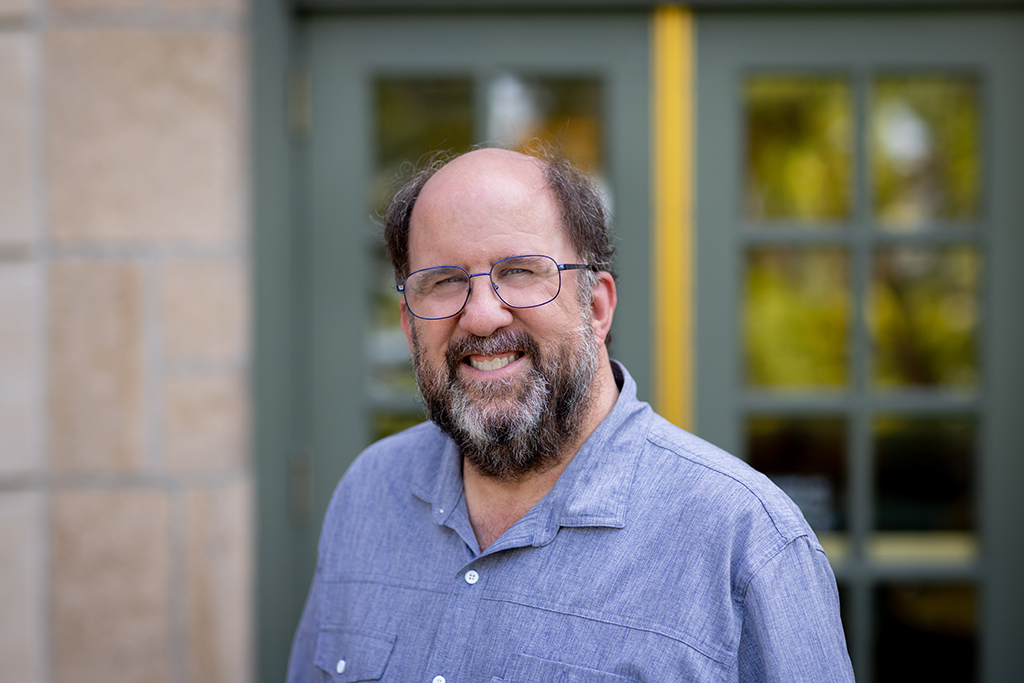
Ford’s expertise fits perfectly with what Weiss was hoping to achieve with her research — determining changes that clinics and health systems can make to improve screening rates. The research team conducted interviews with clinics across Wisconsin, both in urban and rural settings, to understand what’s working and what isn’t.
Interviews revealed both problems and potential solutions. Sometimes clinics reported they aren’t effectively using the electronic health record to identify patients who are eligible for screening. Other clinics have excessively long wait lists for scheduling patients. Finally, leadership involvement can become a barrier or a support within an organization in any and all efforts to improve screening rates.
Now, the team is analyzing its results to develop strategies to improve screening rates across Wisconsin.
“One of the key things we’ve done is interviewing both urban and rural clinics,” Ford says. “Because of that, we’ll be in a better position to tailor an intervention or a series of implementation strategies to a particular clinic.”
Decoding drugs, old and new
The School of Pharmacy’s cross-campus research reach is leading to a stronger scientific grasp on many drugs and drug classes.
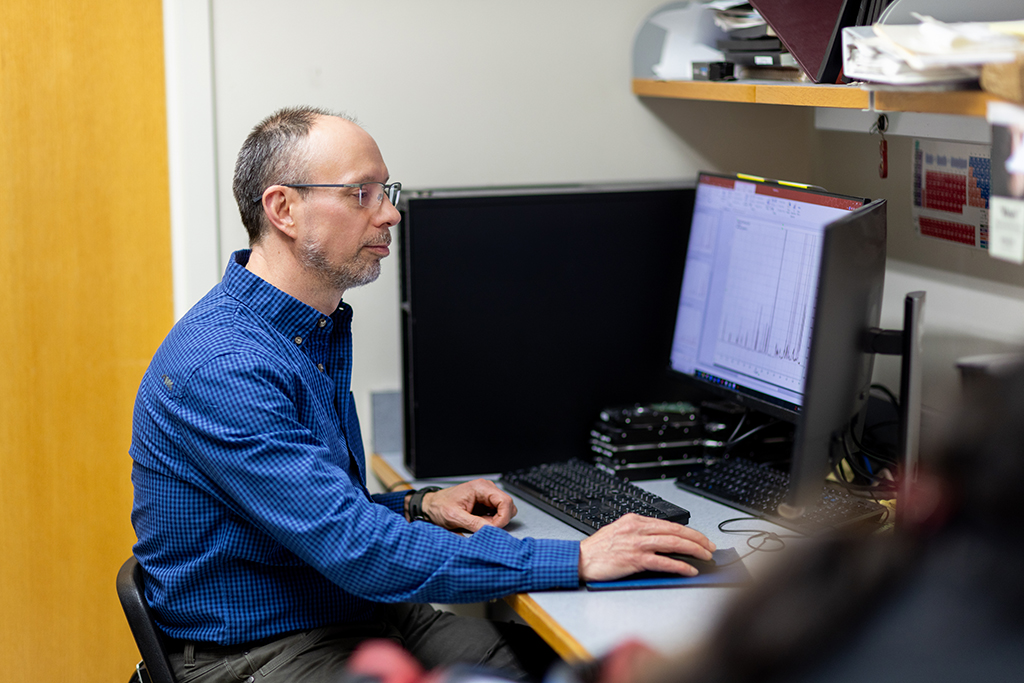
Heather Barkholtz, an assistant professor of pharmaceutical sciences, is using her expertise to better understand methamphetamine isomers. Her work with the Department of Family Medicine is both determining better ways to test for methamphetamine abuse — as opposed to its appearance from over-the-counter medication use — and new ways to understand the drug’s behavior.
While Barkholtz has been discovering different aspects of an existing drug, Professor of Pharmaceutical Sciences Tim Bugni and his collaborator from the Department of Medicine, David Andes, have been learning more about an entirely new one.
While searching the ocean in the Florida Keys for antimicrobials, Bugni’s team found turbinmicin — a new antifungal compound that can target multi-drug-resistant strains of a deadly fungal infection. The newly patented drug has shown the ability to attack the otherwise drug-resistant fungi without causing toxic side effects in mice, a promising first step toward human use.
“As a School, we bring expertise in drug deliveries, drug action, and more,” says Rose. “That’s one reason people from across campus come to us — because we have a level of clout and expertise.”
Focusing on the future
Besides facilitating cross-campus research as a dean, Rose is a researcher himself. In his lab, he studies antimicrobial pharmacology and resistance. His work examines multi-drug-resistant pathogens that are difficult to treat with antibiotics.
Like Bugni, he is also working with Andes of the Department of Medicine, as well as David Beebe of the Department of Pathology and Laboratory Medicine and Kevin Eliceiri of the College of Engineering. Together, they’re working to determine new methods for testing antibiotics.
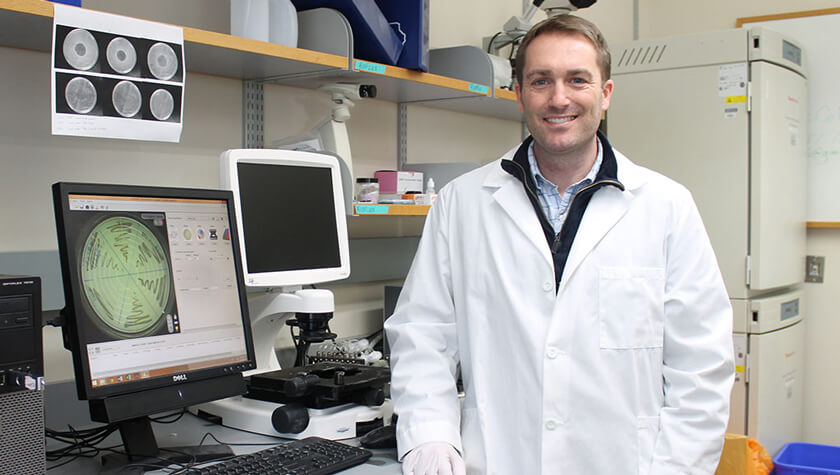
“My lab has the tools to look at particular pathogens from patients, while my collaborators have the experiences and skills to explore applying this work to different areas,” Rose says. “It’s valuable to have people who think differently than you work on projects. You come at things from a different standpoint and find unexpected ways to solve issues.”
Rose sees the School of Pharmacy having a major impact across campus going forward, as collaborations like this continue and more emerge.
“We’re in the process of creating a forward-looking strategic plan,” he says. “We’re focusing on innovation — areas where pharmacy and pharmaceutical sciences are going to have a major impact: AI, precision medicine, quality of care.”
Rose believes the School has carved a unique niche in the university for the faculty’s expertise and sees room for growth in the years ahead. Ford agrees, seeing a field of possibilities to pursue the Wisconsin Idea.
“I’ve had great collaborations and so have other professors — but I think there’s opportunity for more,” says Ford. “There is untapped potential across the board for us to continue to make a difference in the health of folks across the state.”

UW–Madison Center for Psychedelic Research and Education receives historic investment for cutting-edge mental health therapies and new public outreach lab to transform brain health care.
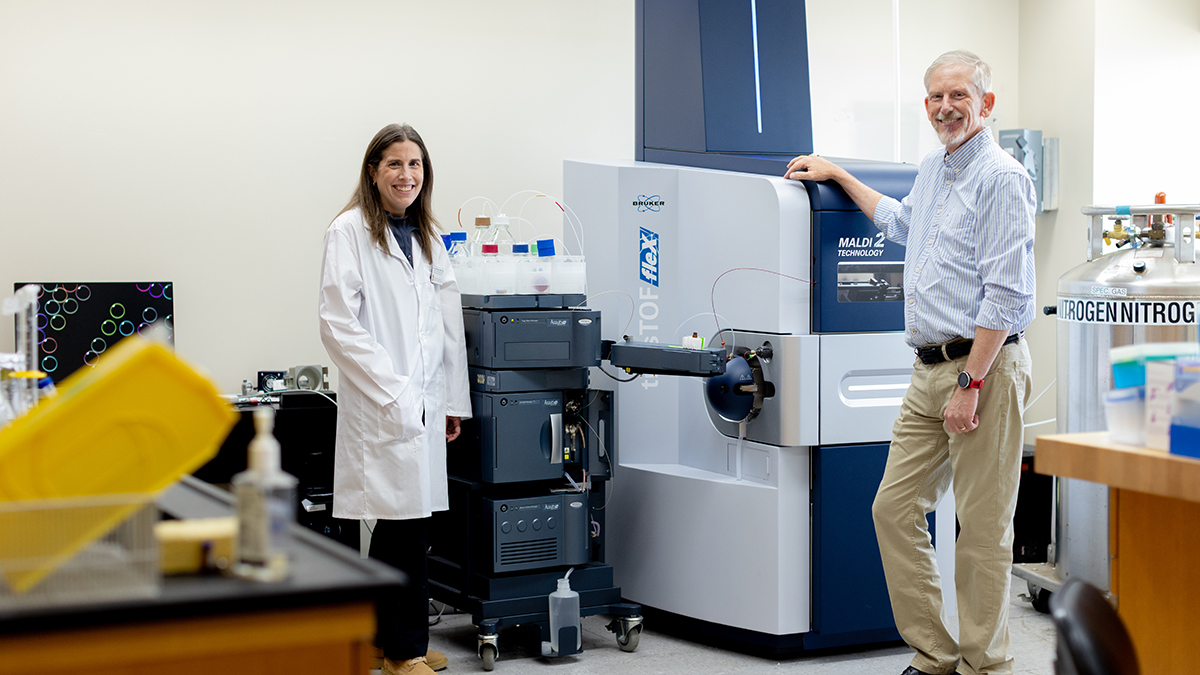
The School of Pharmacy’s Analytical Instrumentation Center supports critical research across UW–Madison and beyond.