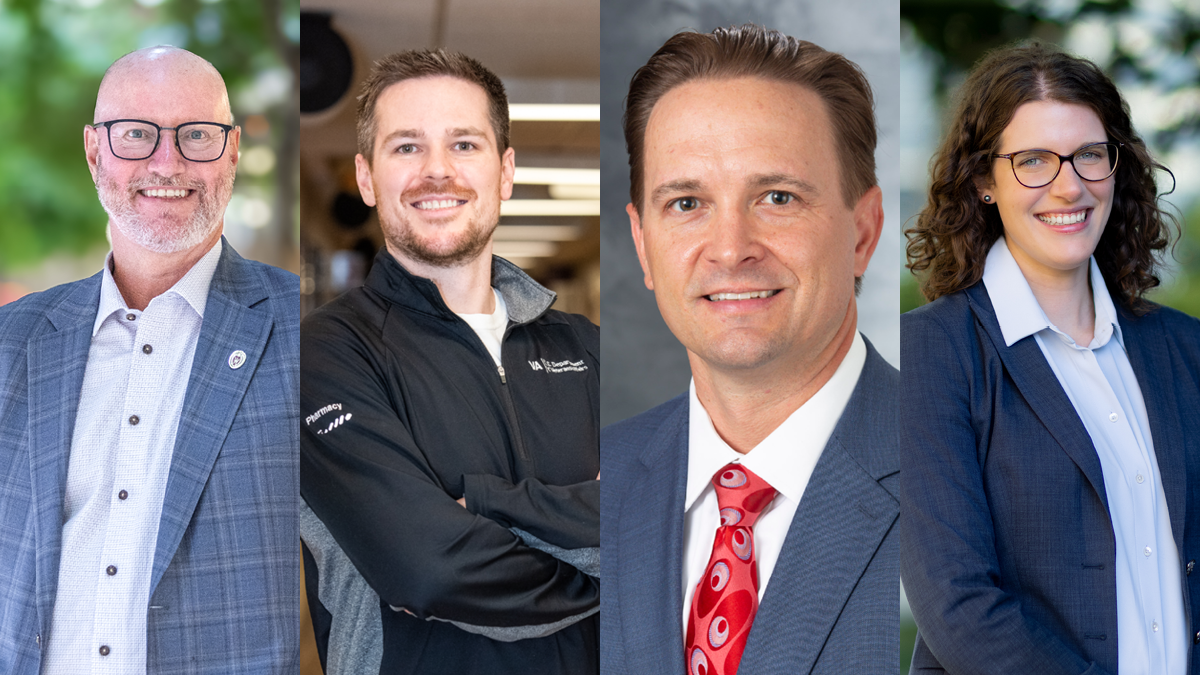
School of Pharmacy alumni and faculty share how technology is reshaping health care and practice, and what the future holds
By Archer Parquette
What does the future of pharmacy look like? Only five years ago, answers to that question were drastically different. In just a half-decade, artificial intelligence, machine learning, and automation have improved by leaps and bounds, drastically shifting the bounds of possibility for pharmacists and their patients. University of Wisconsin–Madison School of Pharmacy alumni and faculty are navigating that future in real-time and their insights reveal the promise and complexity of a profession seeing rapid transformation.
“I look at AI and technology as one and the same now,” says Steve Rough (BS ’91, MS ’94), chairman of Visante, a pharmacy advisory solutions and managed services firm. “Many cutting-edge organizations we partner with are using AI in some capacity to improve workflows. We’re at the early stages of this, and pharmacy as a profession is going to have to decide if we’re going to take a back seat or a front seat.”
“We’re at the early stages of [AI], and pharmacy as a profession is going to have to decide if we’re going to take a back seat or a front seat.”
—Steve Rough
“The more pharmacists take a front seat and embrace technology and we make sure student pharmacists are proficient in it, the more successful the profession is going to be, the more successful graduates of the UW–Madison School of Pharmacy are going to be, and the better patient care will be.”
New efficiencies in practice
Jack Temple (MS ’06), vice president of pharmacy services at UW Health, is one of the many alumni on the front lines of that fast-moving technological change.
“Historically, UW Health has been at the forefront of automation,” says Temple. “We have robotics and automation in place in our community and specialty pharmacy. We have robots dispensing medications and replenishing our automated dispensing cabinets for patients in our acute hospitals. We’ve also implemented automated safety features in barcode medication administration and validation checks during medication preparation. Now, with rapid changes in tech, our focus is successfully integrating AI and machine learning into both our clinical care and business operations to improve efficiency and effectiveness.”
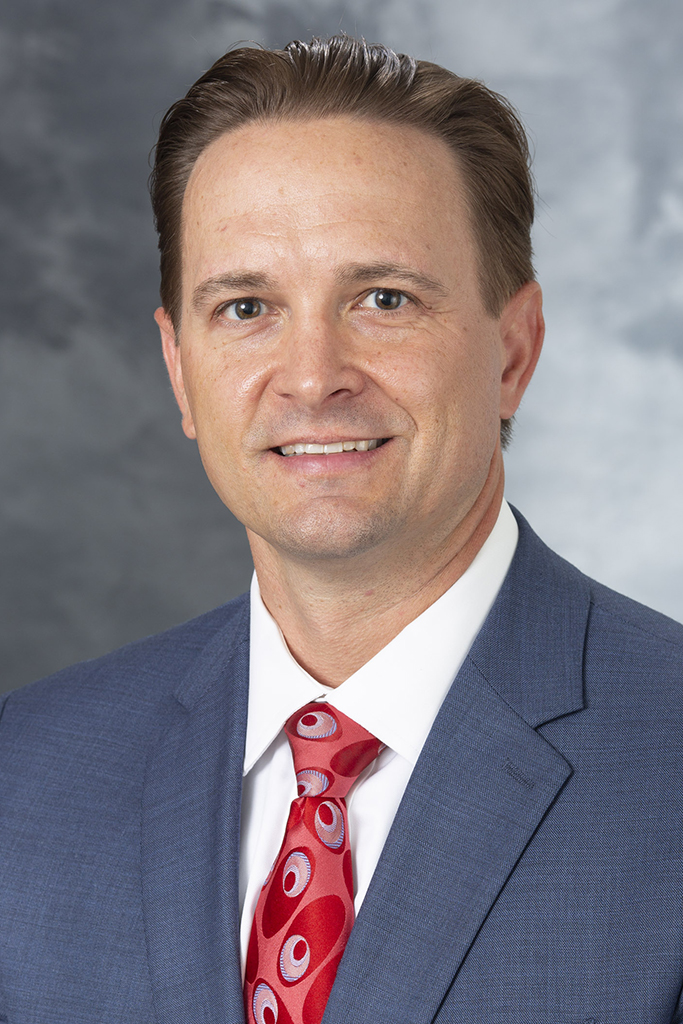
Some examples of recent innovations include ambient listening AI technology, which records clinical conversations with patients. Those recordings are then used to generate summaries, which highlight important information. He also sees AI synthesis and summarization as a way to more efficiently deal with health insurance companies and prior authorization concerns, by quickly providing a patient summary to be used to potentially overturn that denial.
In the future, Temple believes AI monitoring technology could potentially provide pharmacists and physicians with important nudges for improving population health. For example, a system that’s constantly monitoring a patient’s health record could point out when a patient’s health may be trending in a negative direction months before a clinician would otherwise see them. In that case, a clinician could step in and provide interventions before a patient’s health would deteriorate, improving outcomes.
Rough’s consulting clients, he says, are currently focusing their technology use in four key areas: refining medication prior authorization workflows, inventory management, inpatient medication order verification, and, as Temple said, identifying high-risk patients in need of pharmacist patient care services.
“The success of these technologies depends in part on the quality of the organization’s approach to change management,” Rough says. “I’ve never seen a new technology work perfectly from the start. It takes careful evaluation, determining what’s working and what’s not, and based on those learnings being persistent and refining your approach again and again until you perfect it.”
“I’m really excited about the opportunity for pharmacists. I think technology will augment and change the way we approach clinical practice.”
—Jack Temple
Paula Voorheis, an assistant professor of pharmacy at the School, joined the faculty last year with a background in just this kind of work — digital health tools, applications, AI systems, and more. One thing that differentiates her work is a constant focus on “human-centered design” — tools that serve patients and clinicians, not the other way around.
“Now more than ever, it’s possible to engage in digital health innovation,” says Voorheis. “Even for someone without a computer science background, it’s becoming easier to imagine how to design and build digital solutions. As that becomes more accessible, I believe you’re going to see pharmacists innovating and being a part of that process more closely, rather than contracting it out.”
New pharmacist opportunities
Nate Menninga (PharmD ’17), pharmacy informatics program manager at the William S. Middleton Memorial Veterans Hospital, works at the intersection of pharmacy and information technology, designing, improving, and maintaining electronic health records and pharmacy information systems so that providers and patients have access to accurate medication information. It’s a role, Menninga says, that’s still emerging and is ripe for innovation.
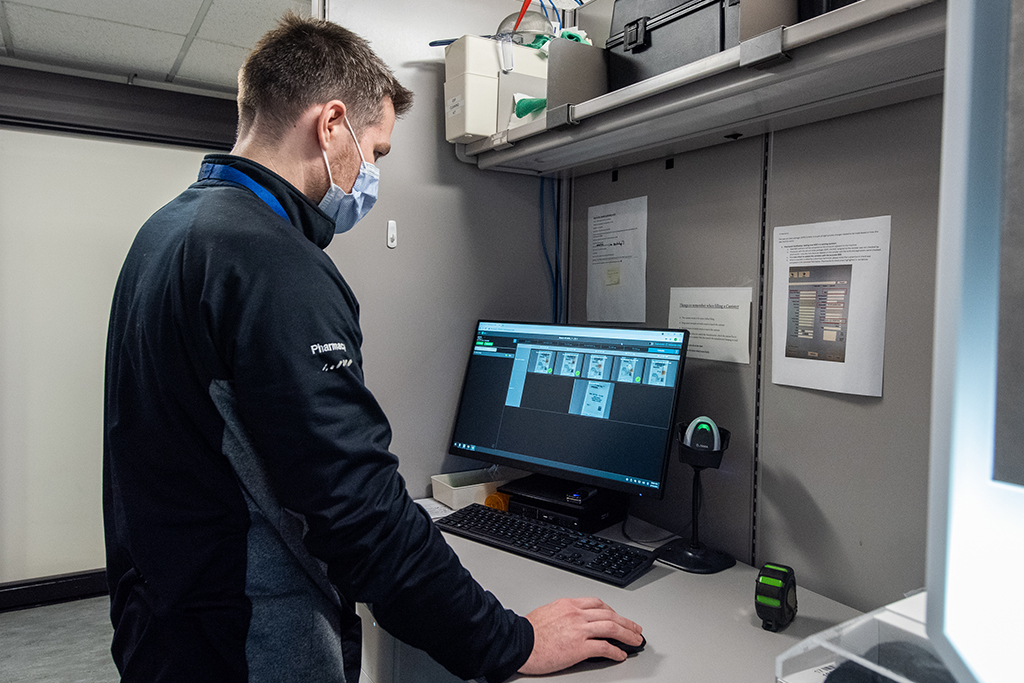
“Health care records contain a massive amount of data — and in most cases, the provider that’s sitting in front of that computer screen is looking for one thing in particular in all of that information,” says Menninga. “But at the same time, to make a recommendation, they need to make sure they don’t miss any clinical parameters or other relevant information.”
He sees AI as a way to make that process more efficient and direct. An AI chat interface — think ChatGPT but validated, secure, and specialized — could allow a clinician to, essentially, ask the health care record a question or make a request. “Give me all of the data on this patient that pertains to Type 2 Diabetes,” for example. And the well-trained AI could pull that information from all the different facets of the health record for the provider.
“I see that happening in the near future,” Menninga says.
Voorheis considers human-centered tech as one way to provide clinicians with much-needed time.
“One common complaint patients and health care professionals both share is spending too much time on administrative tasks,” Voorheis says. “You’ll often hear that doctors and pharmacists are spending too much time on the computer rather than focusing on patient care. AI has the potential to provide support for that and bring back time for more patient-centered care.”
“As technology advances, the role of pharmacists expands.”
—Nate Menninga
While AI’s potential to impact pharmacy is vast, Voorheis, Menninga, Rough, and Temple all emphasize the importance of remaining cautious as technology is implemented in practice. Rough notes that over-reliance on AI — especially if a pharmacist doesn’t understand it well — could lead to not spotting the technology’s inherent biases and assuming it’s always accurate.
“It’s important to know the limitations of technologies that are available,” Temple says. “We need to know where to draw the line and step into our clinical training.”
The skills of the future
How can both students and current pharmacists prepare for the future of their work? A lot of it comes down to information and awareness, Voorheis says.
“I believe there will be a huge push for continuing education about technology and AI in pharmacy practice,” she says. “I imagine there will be continuing education efforts, conferences, updated guidelines, and it will be crucially important to communicate as these things change.”
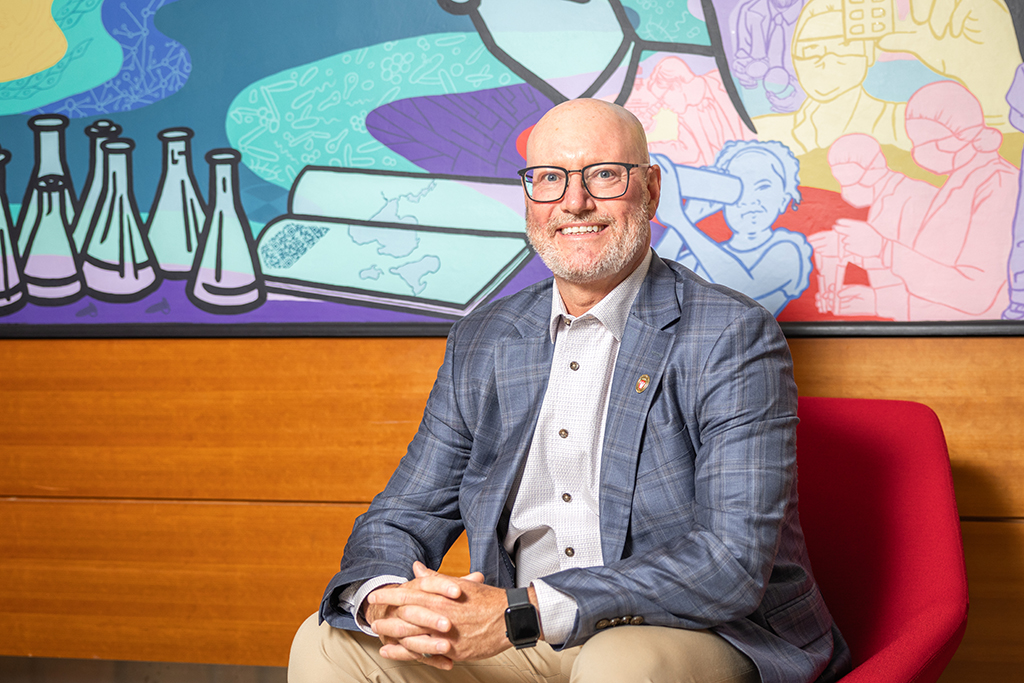
Temple also believes that communication will be crucial.
“I’m really excited about the opportunity for pharmacists,” says Temple. “I think technology will augment and change the way we approach clinical practice, but I don’t see it as replacing pharmacists or their core clinical decision-making. I believe it will allow us to make sure pharmacists can focus on patients.”
Temple and Rough were among the alumni who joined the School this spring for a panel discussion on technology and pharmacy practice, as part of the School’s ongoing effort to bring practitioners’ direct, real-world experience into the conversation about how to best prepare the next generation of Badger pharmacists.
Rough believes technology is not going to replace pharmacists, but that it will replace much of the routine, manual work they perform. Consequently, “there’s going to be a major shift in how employers and health care systems expect pharmacists to spend their time.”
“Pharmacy leaders aren’t always at the table where decisions get made about technology,” he says. “Pharmacists need to raise their hands and say, ‘I want to be at the table where decisions are made.’”

The most high-demand jobs, he believes, will be top-of-license specialty clinical practice, leadership and administration roles, and clinical informatics. And the pharmacists most in-demand will be ones who know how to effectively evaluate AI tools and help implement them in a manner that drives value. That means having a high level of data literacy and systems thinking.
“Systems thinking is not just thinking about what’s best for the patient — which is very important — but how this is going to work operationally,” he says.
Menninga emphasizes the importance of pharmacists ensuring that they understand how these technologies operate — in particular, decision-makers who will likely be evaluating which tools to use. An understanding of what exactly a large language model or other new tool does will allow them to better understand its limitations and how to use it. At the same time, that understanding will help pharmacists prepare for the emergence of new roles and opportunities.
“When I was in school, we didn’t have any course in pharmacy informatics — and now it’s my job,” says Menninga. “As technology advances, the role of pharmacists expands. I see pharmacy technicians becoming technical experts in automation systems, pharmacists having to learn to interact with the health record in a new way, and everyone involved in pharmacy having the opportunity to innovate and have new impacts on health care.”
Connect with Steve Rough Connect with Nate Menninga Connect with Jack Temple