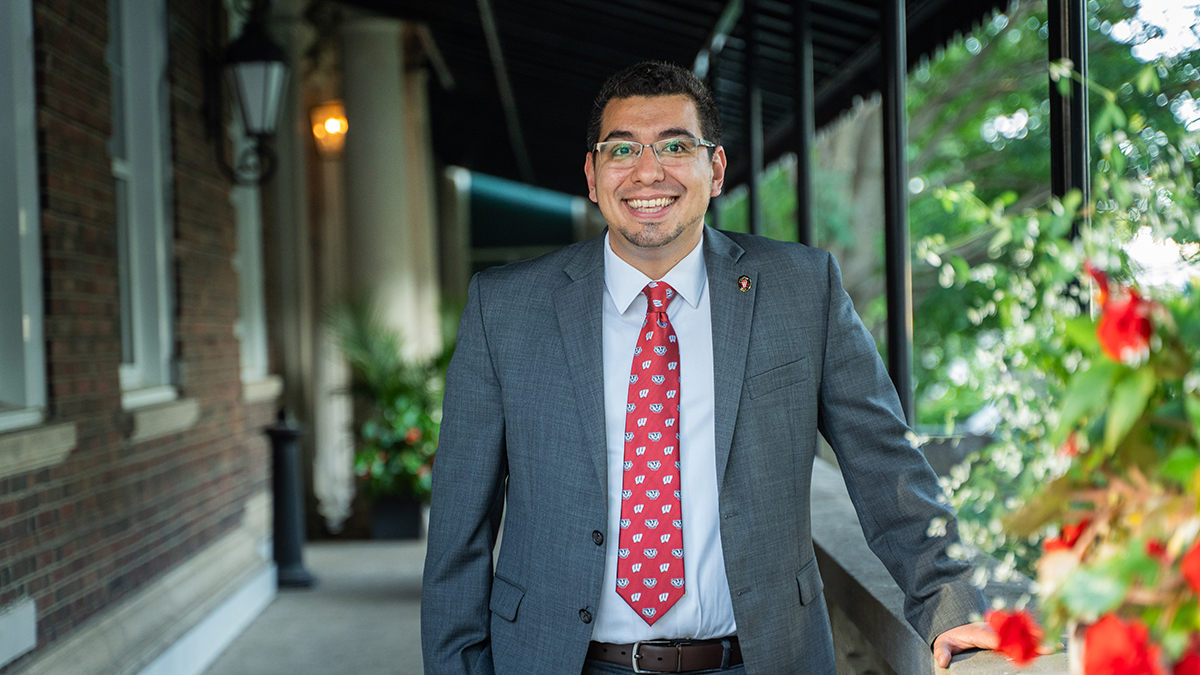
Associate Professor Edward Portillo, a leader in chronic obstructive pulmonary disease (COPD), is helping improve outcomes for patients around the world
By Kristin Baird Rattini
Twelve years ago, a two-minute conversation during his training forever changed the life and career path of Edward Portillo (PharmD ’14), associate professor and associate dean for advancement for the University of Wisconsin–Madison School of Pharmacy.
Portillo wanted to create a service in which pharmacists helped patients when they left the hospital. He asked a mentor what would be a good focus area for a pharmacist-integrated program.
“My mentor immediately said, ‘COPD (chronic obstructive pulmonary disease). We have so many patients dealing with this terrible disease who are coming into the emergency department. We want to help them so they’re not coming in as often,’” Portillo recalls.
Portillo has since been on a mission to reduce the suffering of patients dealing with COPD, a pulmonary disease that impacts 16 million Americans and is a leading cause of death both domestically and internationally. The pharmacist-led COPD CARE (Coordinated Access to Reduce Exacerbations) service he developed has been adopted across the country and has proven the impact of a team-based coordinated care bundle that integrates pharmacists as prescribers.
“If we as pharmacists can be part of the care team helping people breathe better with every breath, that is what motivates me.”
—Ed Portillo
More recently, Portillo was appointed as the sole pharmacist globally and sole U.S. representative on the GOLD Assembly for the Global Initiative for Chronic Obstructive Lung Disease. This 65-member international council promotes the goals of GOLD within their home country.
“A key goal in the work that I’m doing is to demonstrate the tremendous value we bring as pharmacists to make people’s lives better who are dealing with an incredibly debilitating, progressive, and, in many cases, deadly disease,” Portillo says. “If we as pharmacists can help to improve the lives of patients living with COPD, that can really make a difference in the care provided to patients.”
Portillo’s path to pharmacy practice
Portillo was first drawn to a career in pharmacy in high school, when he spent a day shadowing a pharmacist at a major retail store.
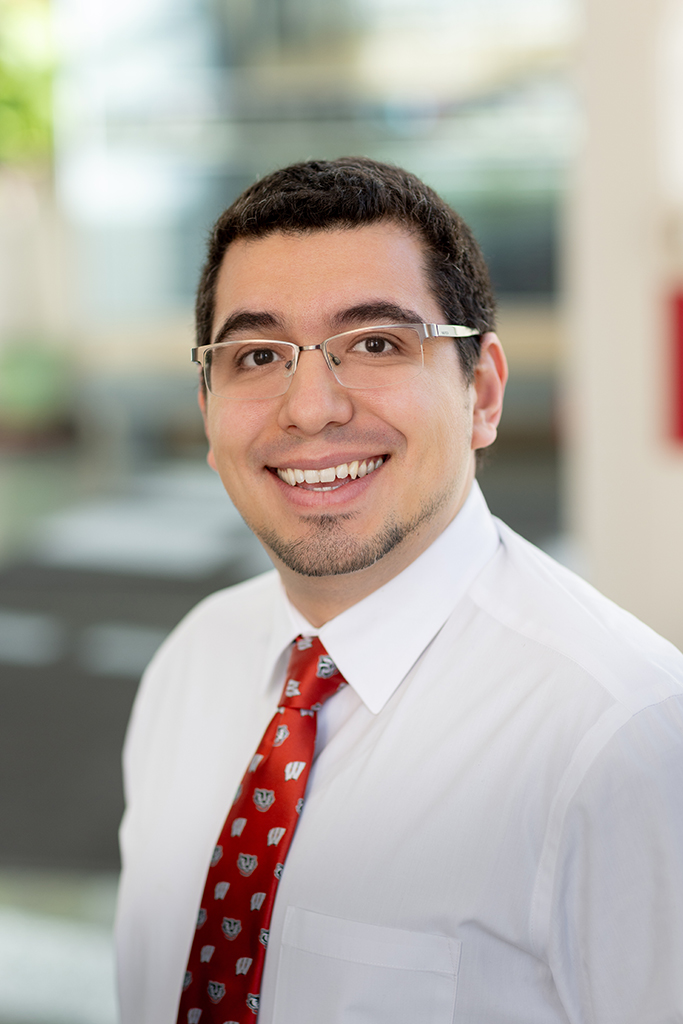
“There were three things that really stuck out,” he says. “First, I’ve never met someone more knowledgeable about medications. It blew my mind. Behind the counter were thousands of medicines, and the pharmacist was an expert about every drug.
“Second, I was floored by how accessible that individual was,” Portillo continues. “When you see any other healthcare practitioner, you need an appointment. For a pharmacist, you walk up to the counter and within minutes can talk with a medication expert about a problem or concern.
“The third thing was the trustworthiness that underpins the relationship a pharmacist builds with patients,” Portillo says. “The pharmacist knew every patient I was shadowing by name. They all trusted him and his expertise to make their lives better. That was extremely powerful.”
There was no question for Portillo that the University of Wisconsin–Madison School of Pharmacy was where he wanted to train.
“Wisconsin is such a special place,” he says. “It’s unbelievable when you think about the legacy of our school and the impact that generations of alumni have had since it was founded in 1883.”
Impacting COPD treatment across Wisconsin, the U.S., and the world
Portillo’s own impact through his COPD CARE service has been significant, particularly for veterans, who have a three-times greater incidence of COPD than civilians.
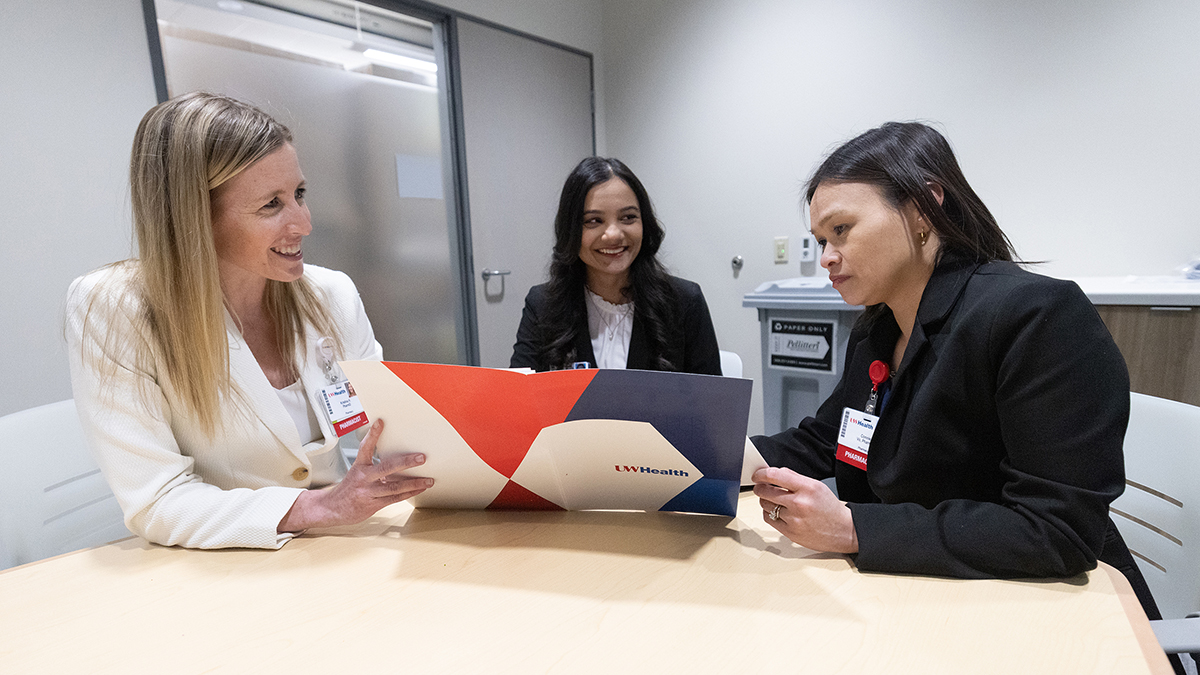
In the COPD CARE model, which Portillo developed as his residency project, a registered nurse care manager and pharmacist, together, meet with a patient for a post-discharge wellness visit. The pharmacist assesses COPD symptoms, reviews exacerbation history, prescribes therapy to optimize the patient’s medication regimen, and issues a written COPD action plan.
The pharmacist also reviews the patient’s inhaler techniques and refers patients to pulmonary rehabilitation services, nutrition counseling, spirometry, and smoking cessation treatment. A subsequent follow-up visit checks on COPD symptoms and adherence.
“The idea behind COPD CARE is that, after the patient is discharged from the hospital for an exacerbation, they’ll be followed up with by a pharmacist who is going to help drive their care forward and serve as the hub for referrals to a coalition of stakeholders across the health system,” Portillo says.
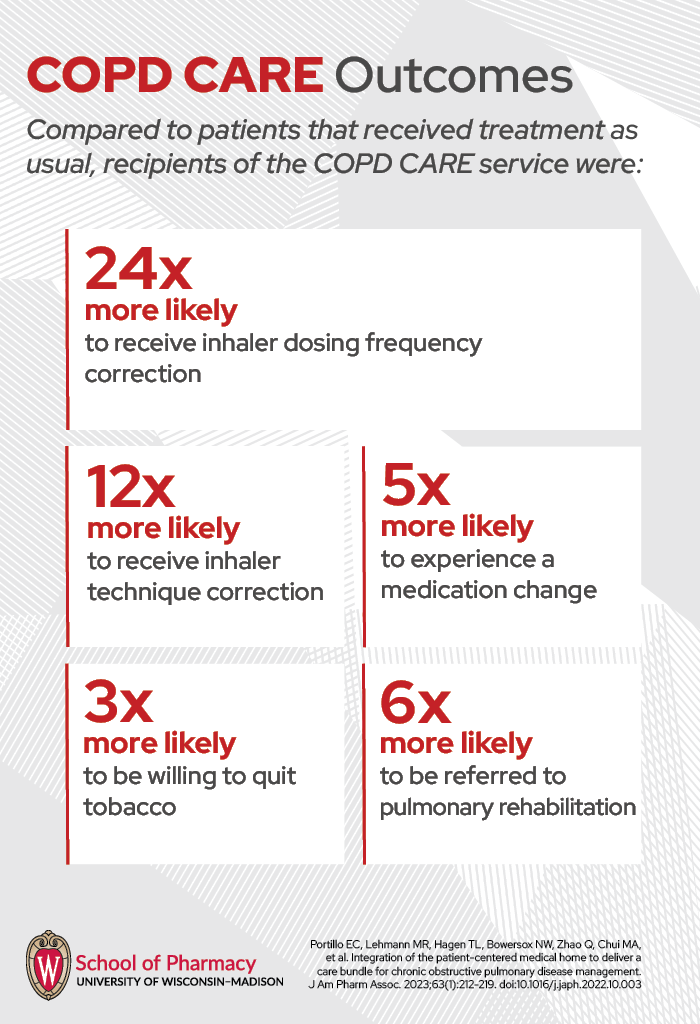
After Portillo piloted the COPD CARE service in 2016 at the William S. Middleton Memorial Veterans Hospital in Madison, where he practices, he noted that patients receiving COPD CARE were more likely to receive timely care delivery and evidence-based care. “That was exciting; I knew I wanted to scale the program,” he says.
In 2018, COPD CARE was selected as a National Gold Status Practice by the Veterans Health Administration. It has since been adopted by 50 VA medical centers and connected clinics across the United States. It received the ASHP Best Practices Award in 2021. In 2022, the U.S. Department of Veterans Affairs Office of Rural Health (ORH) awarded the COPD CARE service a five-year Enterprise-Wide Initiative grant.
The grant had funded the hiring of more than two dozen full-time pharmacists to deliver COPD CARE to rural veterans.
“There’s nearly a two-fold increase in prevalence for COPD in rural communities compared to urban,” says Portillo, who also helped launch a Rural Pharmacy Practice concentration in the School’s PharmD program in 2019. “We know rural patients are among the least likely to receive timely care. Our pharmacists are now delivering frontline COPD care to veterans in rural communities, which is awesome.”
The success of COPD CARE is measured not just in the number of clinics and staff but by patient outcomes.
“We’re noting an association between patients receiving pharmacist care for COPD and an actual reduction in their COPD symptoms,” Portillo says. “Patients are actually feeling better, which is very exciting.”
Portillo is thrilled to be participating in the GOLD Assembly. He has twice updated the medication tables in the organization’s annual report, which is used by practitioners globally to improve COPD management.
“I’ve appreciated the opportunity to support my clinician colleagues around the world to optimize care for all of our patients,” he says.
He’s also sharing his COPD expertise with the next generation of the School of Pharmacy’s pharmacists through a new pulmonary therapeutics curriculum he taught during the 2024–2025 academic year.
“It is the privilege of my life to teach our pharmacy students,” he says. “They are the most talented future pharmacists; what our students do when they leave this place is beyond incredible. The fact I get to be part of the team mentoring our students in their formative years is so exciting and rewarding.”