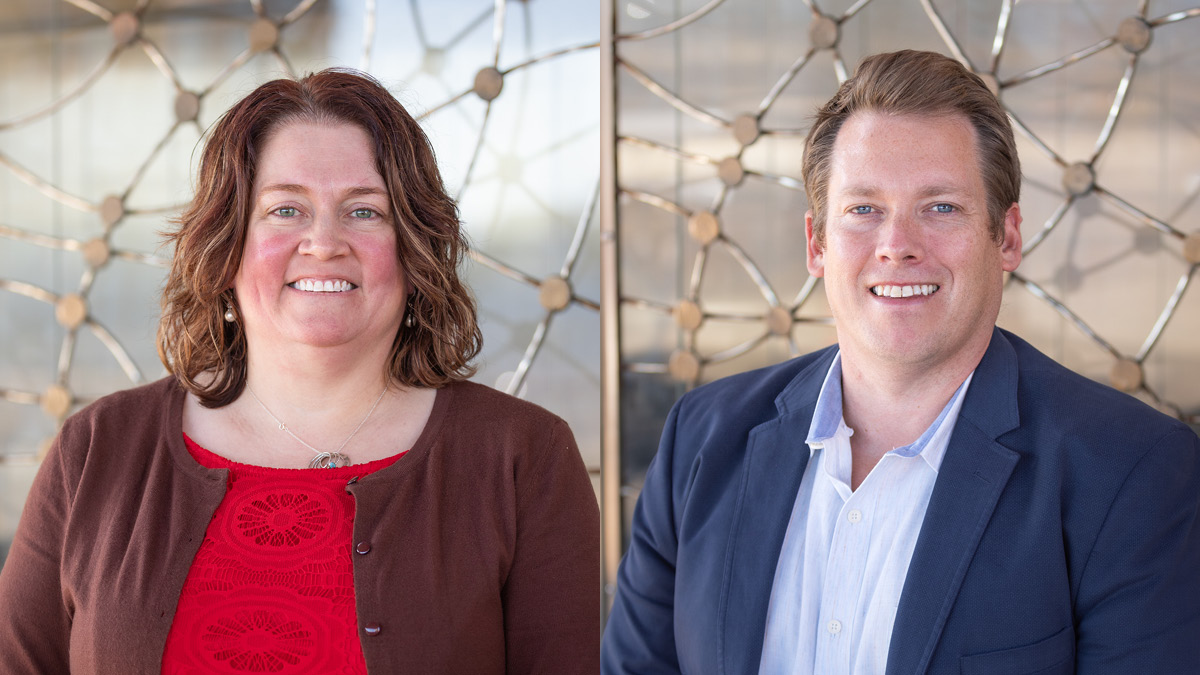
Professor Lucas Richert and alumni Amy Kennedy and Joel Farley are celebrated for decades of research, service, and innovation
By Katie Ginder-Vogel
National recognition from the American Pharmacists Association is reserved for those who elevate the profession.
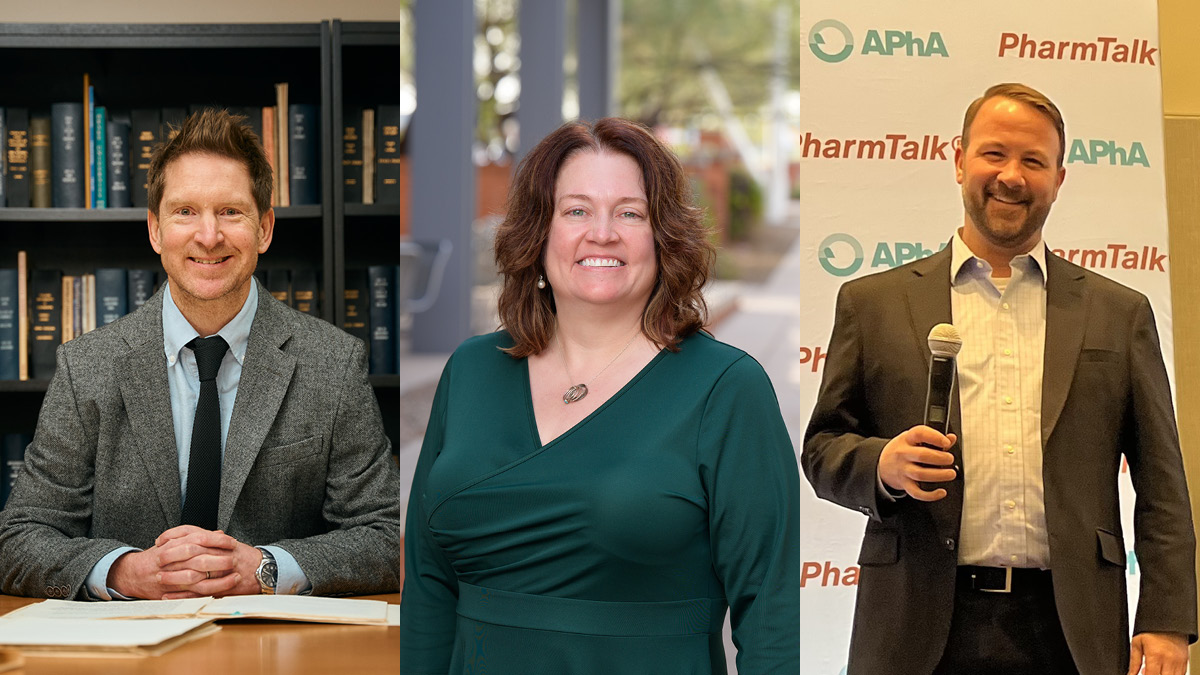
This year, three members of the University of Wisconsin–Madison School of Pharmacy community earned that distinction: Professor of Pharmacy Lucas Richert and alumni Amy Kennedy (PharmD ’08) and Joel Farley (BS ’97).
From documenting the political history of drug regulation to advancing patient-centered care models and transforming pharmaceutical policy research, each honoree represents a different dimension of pharmacy’s expanding impact.
Lucas Richert
Honorary Membership
“The history of pharmacy and pharmaceuticals offer tools for navigating the turbulent waters of the present,” says Richert, George Urdang Chair in Pharmacy History and executive director of the American Institute for the History of Pharmacy.
Through that lens, Richert has authored three books that delve into the legal and social histories of therapy and medication policies that serve as the foundation for their politically embroiled present, including Strange Trips: Science, Culture and the Regulation of Drugs and Break on Through: Radical Psychiatry and the American Counterculture. Most recently, he also co-edited Cannabis: Global Histories, an anthology that traces the social transformation surrounding cannabis, which was viewed as a medicinal plant for 4,000 years before being criminalized and broadly prohibited for the last century.
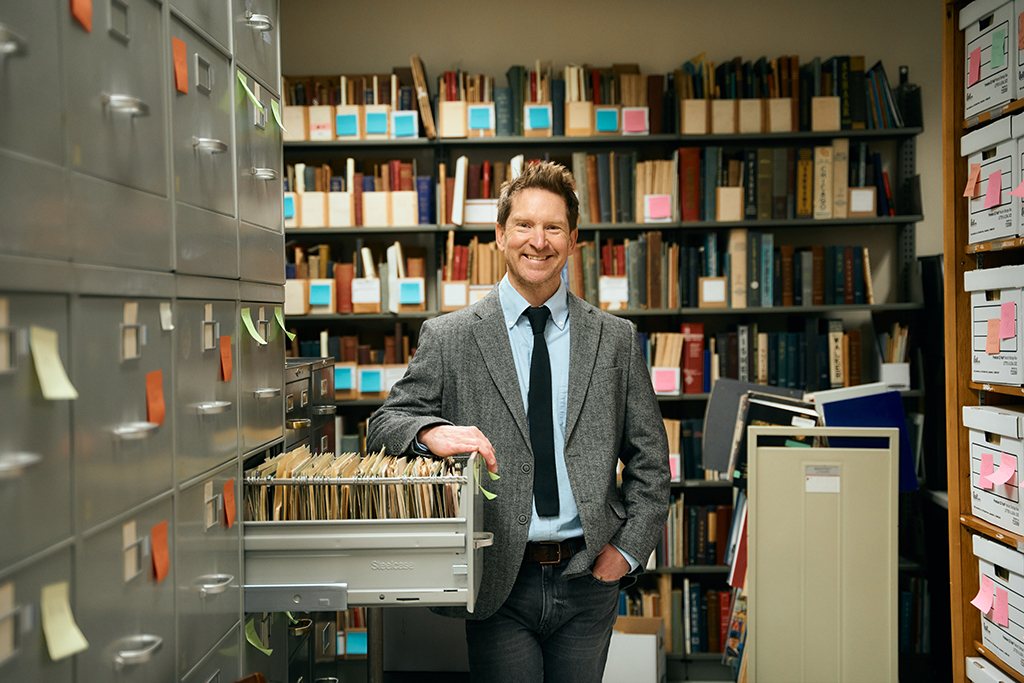
“There’s a huge richness in the history of pharmacy and pharmaceuticals, and to tease out some of that richness with other people is extremely rewarding,” Richert says.
Since joining the School of Pharmacy from the University of Strathclyde in Glasgow, Scotland in 2019, he has helped to found the School’s Psychoactive Pharmaceutical Investigation master’s degree program — the first of its kind in the country — and currently sits on the program’s steering committee. He’s also a founding member of the UW Transdisciplinary Center for Research in Psychoactive Substances, housed within the School, and sits on its executive, education, and outreach committees.
In his work as a researcher and leader of AIHP, Richert aims to bridge pharmacy’s past and future.
“I’m deeply motivated by how we make this accessible to people, making sure history and archival materials, research insights, and context are open and understandable to practitioners, students, policy makers, and the broader public,” says Richert.
In addition to his books, Richert also publishes scholarly articles to this end, including exploring the future role of pharmacists in cannabis medicine in the Journal of the American Pharmacists Association. He collaborates with colleagues, students, pharmacists, and pharmacist leaders to develop new perspectives and find meaning in history that can be applied to the present and future.
“The role of pharmacists is changing, so I see my job as to help translate some of that complexity for different types of audiences.”
—Lucas Richert
“The role of pharmacists is changing, so I see my job as to help translate some of that complexity for different types of audiences,” says Richert.
Richert views his Honorary Membership from APhA — which honors people who have had a significant impact on public health, the profession of pharmacy, and its practitioners — as a reflection of his sustained commitment to documenting, contextualizing, and championing pharmacy’s evolving role in society.
“I’m surprised, humbled, happy, and grateful,” he says.
Amy Kennedy (PharmD ‘08)
Distinguished Achievement Award in Service
Kennedy has been an active member of APhA for more than 20 years, stretching back to her time at the UW–Madison School of Pharmacy.
“I remember how unifying it felt to be part of the APhA student organization,” she says. “I was lucky enough to do policy work as a student, and my residency program director put me up for APhA’s Residency Advisory Council, which catapulted my involvement in APhA nationally.”
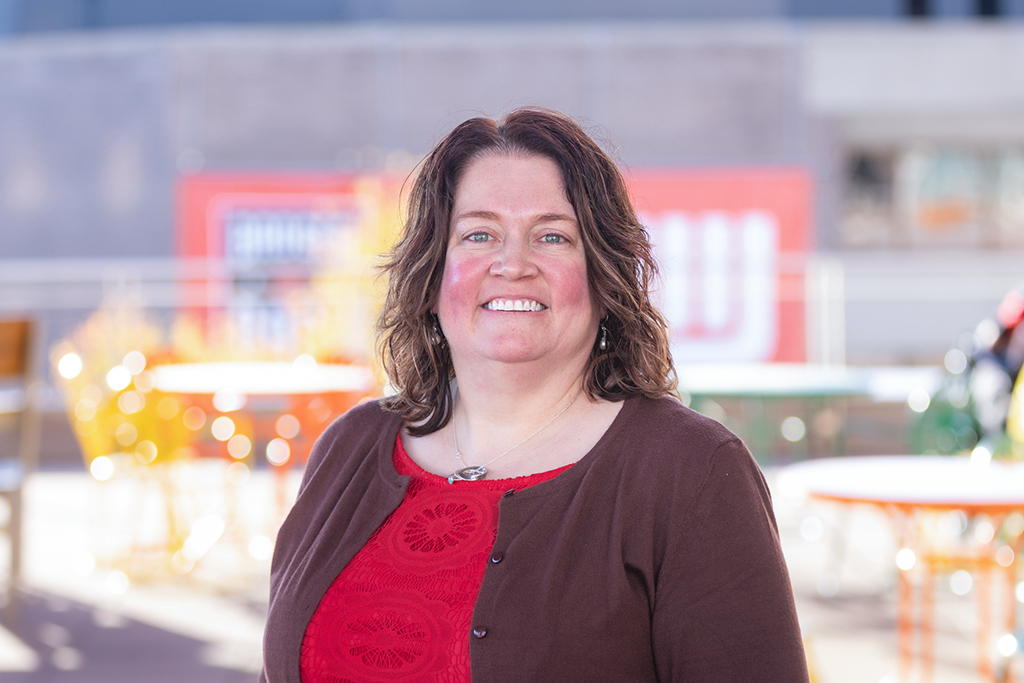
Today, Kennedy is an associate clinical professor in the Department of Pharmacy Practice and Science at the University of Arizona R. Ken Coit College of Pharmacy, clinical pharmacist at El Rio Health Center, and member of the UW–Madison School of Pharmacy’s Board of Visitors.
As an educator, she explores the scholarship of teaching and learning. As a pharmacist, her primary practice is in family medicine, and she uses that insight in her research into preventive health and pharmacists’ role in caring for the underserved. For example, through her work at El Rio, she developed a comprehensive medication therapy management program for patients with complex medical and mental health needs — work that earned her the Excellence in Innovative Practice Award from the Arizona Pharmacy Association in 2013.
Kennedy regards her School of Pharmacy professors as models of success.
“We’re trying to get students to think about the importance of day-to-day work and how that makes your organization and profession successful,” Kennedy says. “I still think about how I’m grateful for my professors at UW, and how they shared their accomplishments with us and helped us see the steps to reach new heights.”
Kennedy has a deep relationship with APhA, including serving on their New Practitioner Advisory Council, House of Delegates, Community Pharmacy Residency Advisory Council, and on the standing and executive committees of the Academy of Pharmacy Practice and Management. In 2020, she was inducted as an APhA fellow.
Her commitment to service goes back to her childhood — her parents were active in community service, as are Kennedy and her siblings.
“I say yes to opportunities if I know I can make an impact — it doesn’t have to be big or super visible. If it’s valuable to an organization and helps you grow, it’s worthy to build your career on.”
—Amy Kennedy
“I take from them the importance of service, and I try to do that with APhA,” she says. “I say yes to opportunities if I know I can make an impact — it doesn’t have to be big or super visible. If it’s valuable to an organization and helps you grow, it’s worthy to build your career on.”
This mindset earned her the 2026 APhA Distinguished Achievement Award in Service, in recognition of her significant and decades-long contributions to practice and advancing the mission of APhA. Kennedy says the APhA honor is an “incredible surprise.”
“There are so many people who do such great work with APhA that to be recognized in this way is really wonderful,” she says.
Joel Farley (BS ’97)
Research Achievement Award in the Pharmaceutical Sciences
“It’s exciting on any given day to be able to do something different, whether it’s teaching, research, or service,” says Farley. As the Peters Endowed Chair in Pharmacy Practice Innovation at the University of Minnesota College of Pharmacy, he regularly contributes to each area, mentoring graduate students and studying pharmaceutical policy evaluation, pharmacoepidemiology, pharmacy practice advancement, pharmaceutical outcomes research, and implementation science.
“I try to demonstrate the value pharmacists bring and move our reimbursement models for pharmacists forward through that research,” Farley says. “I always think about patients and how what I’m doing hopefully benefits patients in some way.”
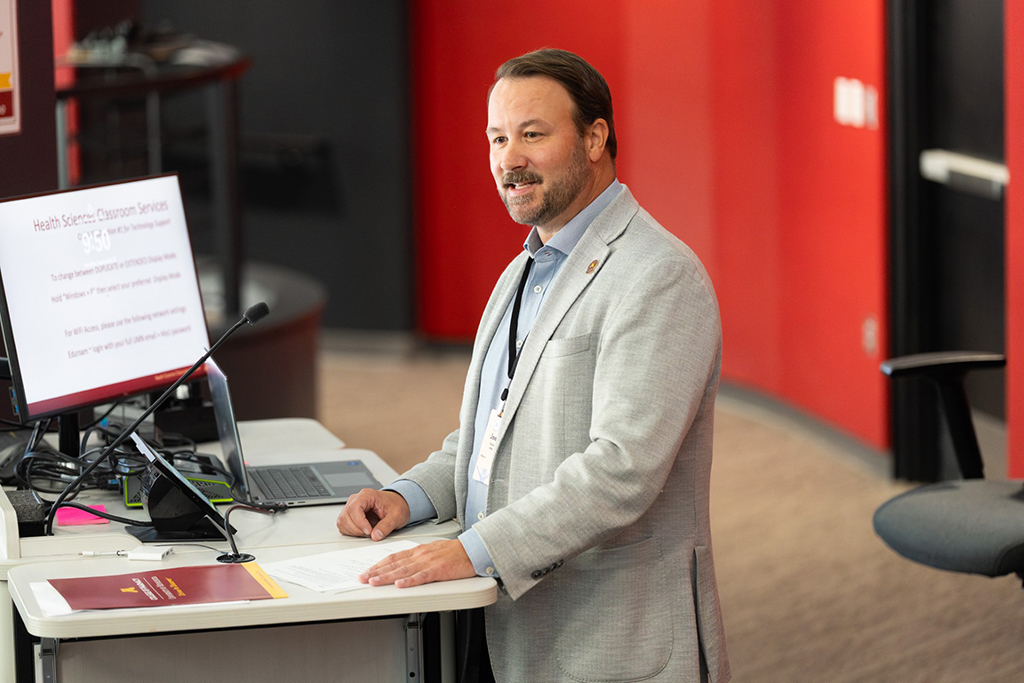
Farley writes about managed care pharmacy and its impact on patients and health systems, evaluates pharmaceutical policies, analyzes pharmacy practice models, evaluates the benefits pharmacists bring to the health system, and promotes the value they bring to care teams.
“I’ve done a lot recently around the application of quality measurements — how they are used and how we might think about measuring quality more effectively,” Farley says.
Farley appreciates seeing his research make its way to real-world settings, improving the patient experience and igniting the interests and curiosities of graduate students.
“Throughout my career, anytime people take evidence and use it to change practice, it’s exciting to see,” he says. “I enjoy sharing my work with graduate students, bringing them onto my collaborative team and watching them grow.”
Farley has been connected to APhA since his second year of graduate school at the University of Minnesota, when he spoke with UW–Madison School of Pharmacy Professor Beth Martin (BS ’90, MS ’03, PhD ’06), who was a post-graduate representative for APhA. After chatting about the role, Farley decided to run for that office.
“My last year of graduate school, I was a post-graduate officer for APhA, a two-year commitment, and later I became chair of the Economic Social and Administrative Science section of APhA and have been involved ever since,” says Farley, who is also a fellow of APhA.
“I always think about patients and how what I’m doing hopefully benefits patients in some way.”
—Joel Farley
His most recent honor, the 2026 APhA Research Achievement Award in the Pharmaceutical Sciences, recognizes his outstanding research contribution, which includes more than 150 publications exploring topics from catastrophic spending on antidiabetic medication to using social determinants of health screenings to improve comprehensive medication management effectiveness. For his investigation into patient outcomes after implementing an enhanced services pharmacy network, he earned another top honor: the 2022 APhA Academy of Pharmaceutical Research and Science Clinical Research Paper Award.
After decades of scholarship, mentorship, and national service to the profession, his newest recognition feels especially meaningful.
“I’m very excited about this award,” he says.