A Future-Facing Curriculum
The Doctor of Pharmacy (PharmD) degree program is designed to incorporate scientific foundations, innovative research, and practical experience in a way that prepares students for the constantly evolving healthcare industry.
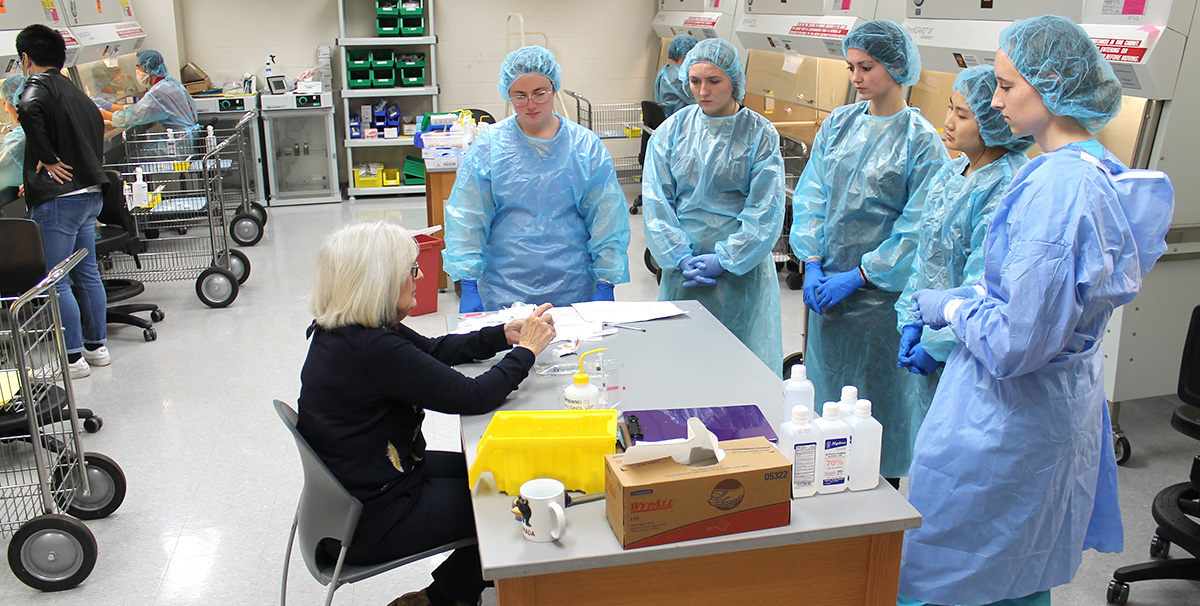
Over the course of four years, students follow a curriculum that integrates core principles from biomedical, pharmaceutical, and clinical sciences. The program emphasizes hands-on laboratory training, real-world experiential learning, and professional development. This comprehensive approach leads to a versatile degree that equips graduates with the skills and knowledge needed for long-term success in the pharmacy profession.
In Fall 2025, the school launched a major update to the Doctor of Pharmacy curriculum to better align with the evolving landscape of pharmacy practice. Pharmacology and Pharmacotherapy content will be combined into a new series of fully integrated courses designed to help students make stronger connections between scientific foundations and clinical care. This innovative approach reflects the interdisciplinary nature of modern pharmacy and aims to better prepare students for the dynamic roles they will take on in the profession.
As we progress with this curricular update, the course descriptions listed below will be updated.
This is an accordion element with a series of buttons that open and close related content panels.
First Year (DPH-1)
Fall Semester
| COURSE NAME & DESCRIPTION | NUMBER | CREDITS |
|---|---|---|
| Physicochemical Principles of Drug Formulation & Delivery | 718-420 | 3 cr. |
| Applications of physical principles and modern methods of analysis to pharmaceutical systems. | ||
| Biochemical Principles of Drug Treatment | 718-432 | 3 cr. |
| Basic biochemistry as the biochemical basis for drug action. Focus on biopolymers (proteins, nucleic acids) as intended and unintended targets of current drug therapy and the major biochemical pathways in which they operate. Review of protein structure, enzymatic activity, metabolic pathways, membrane biochemistry, mechanism of drug action, DNA mutation and repair. | ||
| Pharmacy in the Health Care System |
726-411 | 3 cr. |
| Orientation to the US health care system and pharmacy’s integral role within it. Address roles and responsibilities of different individuals and organizations involved in the provision of health care, issues of insurance coverage, reimbursement, and payment for health care services. Explore foundational leadership principles germane to the success of the modern-day pharmacist. | ||
| Pharmacy Integrated Learning Lab | 726-423 | 1 cr. |
| Provides an interdivisional foundation for pharmacy students to understand many aspects of pharmacy through a wide variety of activities. Delivers a broad understanding of the pharmacist’s public health and patient advocacy role with opportunities to practice basic calculations related to drug formulations in the context of safety, drug stability, and patient care. Fosters development of communication skills with peers and patients and be introduced to patient counseling principles. Includes active participation in a longitudinal group experience with an assigned senior in the community to apply course content. | ||
| Pharmaceutical Genetics and Immunology | 726-434 | 2 cr. |
| Facilitates the understanding and application of the principles of pharmaceutical genetics, immunology, and biotechnology. | ||
| Nonprescription Medications and Self-Care | 728-438 | 2 cr. |
| Provides students with knowledge and skills needed to perform triage and make self-care and therapeutic recommendations for self-limiting health conditions commonly encountered in pharmacy practice. | ||
| Pathways in Pharmacy Practice | 728-461 | 1 cr. |
| An introduction to, and exploration of, contemporary pharmacy practice settings and opportunities for career advancement. | ||
| Comprehensive Immunization Delivery | 728-650 | 1 cr. |
| Addresses vaccine-preventable diseases and the implementation of pharmacy-based immunization delivery programs. | ||
Spring Semester
| COURSE NAME & DESCRIPTION | NUMBER | CREDITS |
|---|---|---|
| Medicinal Chemistry I | 718-531 | 3 cr. |
| Chemistry of medicinal products, including cholinergic, adrenergic, dopaminergic and serotonergic agents, antidepressants, sedative/hypnotics, antianxiety drugs, opioid drugs acting at histamine receptors, and inhibitors of mediator release. | ||
| Pharmaceutical Calculations, Dispensing and Compounding (with lab) | 718-541 | 3 cr. |
| Introductory laboratory course in compounding and dispensing of pharmaceutical dosage forms, including sterile products. Includes practice in interpretation of prescription orders, pharmaceutical calculations, compounding procedures, physical manipulation of drugs and dosage form components, and product packaging and labeling. | ||
| Introductory Pharmacy Practice Experiences I | 726-426 | 1 cr. |
| Explore the role of the pharmacist and the many patient care opportunities that exist in and out of the community pharmacy practice setting. Observe pharmacists in a community pharmacy. Gain a broad understanding of the pharmacist’s public health role. | ||
| Pulmonary Science and Therapeutics | 726-435 | 2 cr. |
| Integration of pharmacologic knowledge and clinical decision-making to optimize patient management of pulmonary disease states and promote and support tobacco cessation. Emphasis on patient assessment and provision of evidence-based practices through application of pharmacotherapy principles, and drug monitoring to support person-centered care. Development of skills in gathering information, identifying and resolving medication-related problems, providing patient communication and education, and completing clinical documentation. | ||
| Professional Development and Engagement I: Developing Your Professional Identity | 726-462 | 1 cr. |
| Explore aspects of professional identity and how to become more engaged with the pharmacy profession. Explore personal values, skills, and strengths and identify their implications for patient care and professional practice. Engage in continuing professional and interprofessional development to promote quality patient care and advocacy. | ||
| Pharmacokinetics | 726-621 | 3 cr. |
| Introduction to pharmacokinetics. Fundamental principles and specific physical models are discussed. Absorption, distribution, metabolism, and excretion are thoroughly described including applications to pharmacotherapy mostly through a one body compartment model. Biopharmaceuticals and small molecule drugs are discussed based on their specific pharmacokinetics. All pharmacokinetics and pharmacodynamics principles and concepts are further described in depth in terms of their clinical applications with an emphasis on the role of the pharmacy professional. | ||
| Social and Behavioral Aspects of Pharmacy Practice (with lab) | 732-414 | 3 cr. |
| The goals of this course are to introduce students to psychosocial and behavioral aspects of pharmacy practice and patient care, including (1) the pharmacist’s role in patient care and public health; (2) patient perspective and factors related to health and medication use; (3) patient-pharmacist interaction and communication; and (4) principles of personnel management in pharmacy practice. | ||
Second Year (DPH-2)
Fall Semester
| COURSE NAME & DESCRIPTION | NUMBER | CREDITS |
|---|---|---|
| Drug Delivery Systems for Pharmacotherapy | 718-540 | 3 cr. |
| The application of physical, chemical and biological principles to the study of drug delivery using a variety of solid, solution and disperse systems as dosage forms. Rationale for therapeutic use, formulation and manufacture, and evaluation of stability and bioavailability. | ||
| Parenteral Therapy and Nutrition (with lab) | 718-542 | 3 cr. |
| Advanced extemporaneous prescription compounding and preparation of sterile products, with emphasis on physico-chemical stability and compatibility of drugs and dosage forms. Also addresses principles of appraisal, comparison, and selection of appropriate commercial brand name and generic products. | ||
| Circulation Science and Therapeutics | 726-535 | 3 cr. |
| Integration of pharmacologic knowledge and clinical decision-making to optimize patient management of cardiovascular diseases. Emphasis on patient assessment and provision of evidence-based practices through application of pharmacotherapy principles, and drug monitoring to support person-centered care. | ||
| Heart Science and Therapeutics | 726-536 | 3 cr. |
| Integration of pharmacologic knowledge and clinical decision-making to optimize patient management of heart diseases. Emphasis on patient assessment and provision of evidence-based practices through application of pharmacotherapy principles, and drug monitoring to support person-centered care. | ||
| Applied Clinical Skills I | 726-553 | 1 cr. |
| Develop pharmacy practice skills needed to address drug-related problems and provide patient-centered care. Apply the Pharmacists’ Patient Care Process to patient scenarios. Specific skills include patient communication through patient consultations, blood pressure and heart rate measurement, and clinical documentation utilizing the Subjective, Objective, Assessment and Plan (SOAP) note method. | ||
| Pharmacy Practice Experiences II | 728-526 | 1 cr. |
| The second experience of a three-year Introductory Pharmacy Practice Experiences (IPPEs) sequence. Provides opportunities to integrate learning from prior didactic courses such as The Role of the Pharmacist in the Public Health System, Managing Pharmacy Systems for Patient Care, current pharmacotherapy courses, and a previous community IPPE, into observation and discussion of the provision of patient care. Students participate in a wide variety of activities to expose them to the role of the pharmacist and patient care opportunities that exist in and out of the pharmacy practice setting. Focus on the provision of care in an institutional setting along with a variety of pharmacy practice settings which fall under an elective category. Continued exposure to the Pharmacist Patient Care Process (PPCP), which is a framework for providing patient care in a pharmacy practice setting. | ||
Spring Semester
| COURSE NAME & DESCRIPTION | NUMBER | CREDITS |
|---|---|---|
| Medicinal Chemistry II | 718-532 | 2 cr. |
| Chemistry of medicinal products, including antihyperlipidemics, glucocorticoids, estrogens, progestins, nonsteroidal anti-inflammatories, antitumor agents, and enzyme inhibitors. | ||
| Managing Pharmacy Systems for Patient Care | 726-514 | 2 cr. |
| Introduces concepts and principles related to managing pharmacy operations and systems for patient care, and managing financial aspects of pharmacies. | ||
| New integrated course: Diabetes and Kidney Science and Therapeutics * | 726-537 | 2 cr. |
| Course under development. | ||
| New integrated course: Infectious Diseases Science and Therapeutics * | 726-538 | 4 cr. |
| Course under development. | ||
| Professional Development and Engagement 2: Cultivating Leadership and Advocacy within the Profession | 726-562 | 1 cr. |
| Continue to develop professional identity and engage with the pharmacy profession through leadership and professional advocacy. Explore wellness; personal values, skills, and strengths; and identify their implications for leadership and professional advocacy within pharmacy practice. Engage in career, continuing professional, and interprofessional development to promote quality patient care. | ||
| Integrated Pharmacotherapy Skills II | 728-554 | 1 cr. |
| Learn pharmacotherapeutic skills necessary to develop competence as a pharmacist to assume the responsibility to improve therapeutic patient outcomes related to medication use. Skills will include patient communication, identification and resolution of drug-related problems, and documentation. | ||
| Drug Literature Evaluation | 728-570 | 3 cr. |
| Fundamentals of literature evaluation to enable students to make decisions regarding the clinical use of drugs. | ||
Third Year (DPH-3)
Fall Semester
| COURSE NAME & DESCRIPTION | NUMBER | CREDITS |
|---|---|---|
| Safety & Quality in the Medication Use System (with lab) | 726-608 | 3 cr. |
| Addresses the problems of medication errors and quality in health care, problem resolutions, methods of assessment, and intervention implementation and quality management. | ||
| New integrated course: Sex-Based Health Science and Therapeutics * | 726-635 | 2 cr. |
| Course under development. | ||
| New integrated course: Brain and Mind Science and Therapeutics * | 726-636 | 4 cr. |
| Course under development. | ||
| Pharmacy Practice Experiences III | 728-625 | 2 cr. |
| Integrates didactic learning with active participation in a wide-variety of patient-care activities under the supervision of a pharmacist preceptor including medication reconciliation, patient consultation, complex medication reviews, documentation, therapeutic drug monitoring and calculations. Continued exposure to the Pharmacist Patient Care Process (PPCP), which is a framework for providing patient care in a pharmacy practice setting. | ||
| Integrated Pharmacotherapy Skills III | 728-653 | 1 cr. |
| Learn and build upon pharmacotherapeutic skills necessary to develop competence as a pharmacist to assume the responsibility to improve therapeutic patient outcomes related to medication use. Skills will include patient and healthcare provider communication, identification and resolution of drug-related problems, and documentation, and complex problem solving skills. | ||
| Professional Electives, as needed | varies | varies |
Spring Semester
| COURSE NAME & DESCRIPTION | NUMBER | CREDITS |
|---|---|---|
| New integrated course: Oncology Science and Therapeutics * | 726-637 | 2 cr. |
| Course under development. | ||
| New integrated course: Gastrointestinal & Musculoskeletal Science and Therapeutics * | 726-638 | 2 cr. |
| Course under development. | ||
| Professional Development and Engagement 3: Embracing Continuing Professional Development | 726-662 | 1 cr. |
| Become more engaged with the pharmacy profession through further development and refinement of professional identity and continuing professional development. Use appropriate published evidence to answer clinical questions and complete orientations to understand expectations and prepare for advanced pharmacy practice field experiences. | ||
| Pharmacy Practice Experiences IV | 728-626 | 2 cr. |
| Integrates didactic learning with active participation in a wide-variety of patient-care activities under the supervision of a pharmacist preceptor including medication reconciliation, patient consultation, complex medication reviews, documentation, therapeutic drug monitoring and calculations. Continued exposure to the Pharmacist Patient Care Process (PPCP), which is a framework for providing patient care in a pharmacy practice setting. | ||
| Integrated Pharmacotherapy Skills IV | 728-654 | 1 cr. |
| Learn and build upon pharmacotherapeutic skills necessary to develop competence as a pharmacist to assume the responsibility to improve therapeutic patient outcomes related to medication use. The course will focus on building complex problem solving skills including the integration of patient and provider communication, documentation, and evaluation of integrated patient cases with a secondary focus on patient profile reviews and comprehensive medication review and assessment. | ||
| Pharmacy Law & Regulation | 732-611 | 2 cr. |
| Federal and Wisconsin laws related to drug manufacture, drug distribution, drug use, and pharmacy practice. | ||
| Pharmacist Communication: Educational & Behavioral Interventions (with lab) | 732-652 | 2 cr. |
| Educational & Behavioral Interventions (with lab) Intermediate principles of pharmacist communication with patients and other care givers; weekly communications laboratory provides opportunity to refine skills in listening, interviewing, counseling, and use of various educational and behavioral strategies to improve drug use. | ||
| Professional Electives, as needed | varies | varies |
Professional Electives
Fourth Year (DPH-4)
Summer, Fall and Spring Semesters
| COURSE NAME & DESCRIPTION | NUMBER | CREDITS |
|---|---|---|
| Acute Pharmaceutical Care Clerkship | 728-740 | 6 cr. |
| This required PharmD experiential course integrates prior didactic course work in pharmacotherapy, pathophysiology, and drug literature evaluation into the provision of pharmaceutical care to hospitalized patients. The student will participate in the provision of direct pharmaceutical care, by monitoring drug therapy, providing patient counseling, and providing drug information and pharmacokinetic dosing recommendations for patients. In addition, the student will gain experience and insight into health education by interacting with other health professional students. | ||
| Ambulatory Pharmaceutical Care Clerkship | 728-741 | 6 cr. |
| This required PharmD experiential course integrates prior course work in pharmacotherapy, pathophysiology, and drug literature evaluation into the provision of pharmaceutical care to ambulatory patients. Students will conduct patient interviews and assessments, provide drug information to patients and health professionals, and monitor drug therapy in ambulatory settings. | ||
| Health System Pharmacy Practice Clerkship | 728-742 | 6 cr. |
| This required PharmD experiential course integrates prior didactic course work into the provision of care and the development and delivery of services for hospitalized patients. The student will be exposed to the 5 pillars of the medication use system (prescribing, transcribing, dispensing, administering, monitoring), plus procurement/storage along with the hospital services and processes that support them. The experience will also include, but is not limited to, exposure to hospital-based services/programs/committees such as investigational drugs, Pharmacy and Therapeutics, quality/performance improvement (DUE/MUE), technologies, and personnel management. The experience will also expose the student to best practices, regulatory, legal, and accreditation standards/requirements that influence the quality and delivery of care to hospitalized patients. | ||
| Community Pharmacy Practice Clerkship | 728-743 | 6 cr. |
| The purpose of the community pharmacy clerkship is to provide the student with an educational experience where they can develop the skills and judgment necessary to apply the knowledge gained in the basic and clinical sciences to specific patient care situations. In addition, the course seeks to demonstrate the philosophy that clinical (APPE) and distributive pharmaceutical services should be patient oriented and integrated in contemporary ambulatory practice. | ||
| Elective Pharmacy Practice Clerkship | 728-760 | 6 cr. |
| This required PharmD experiential course integrates prior didactic course work in pharmacotherapy, pathophysiology, and drug literature evaluation into the provision of pharmaceutical care to hospitalized patients and ambulatory patients. The student will participate in the provision of direct pharmaceutical care, by monitoring drug therapy, providing patient counseling, and providing drug information and pharmacokinetic dosing recommendations for patients. | ||
| Elective Veterinary Pharmacy Clerkship | 728-764 | 6 cr. |
| Practical experience in a veterinary medicine environment with emphasis on the drug treatment of diseases in animals. | ||
| Elective Clinical Research and Pharmacy Investigation Clerkship | 728-769 | 6 cr. |
| This experiential learning course offers students the opportunity to gain experience with clinical and translational research in a mentored situation. Students will learn study design, laboratory techniques, statistical analysis, manuscript preparation, and ethical principles of research. | ||
* Clerkships (advanced pharmacy practice experience) to total 42 credits.
Notes
- Some students will be assigned to experiential learning sites outside the Madison area, and some students will not receive their first choice.
- Please note that our curriculum is subject to change as we update and enhance our program.
- All professional electives must be completed while students are enrolled in the Doctor of Pharmacy program.
Questions about our program?
Check our FAQ page for detailed answers to common questions.