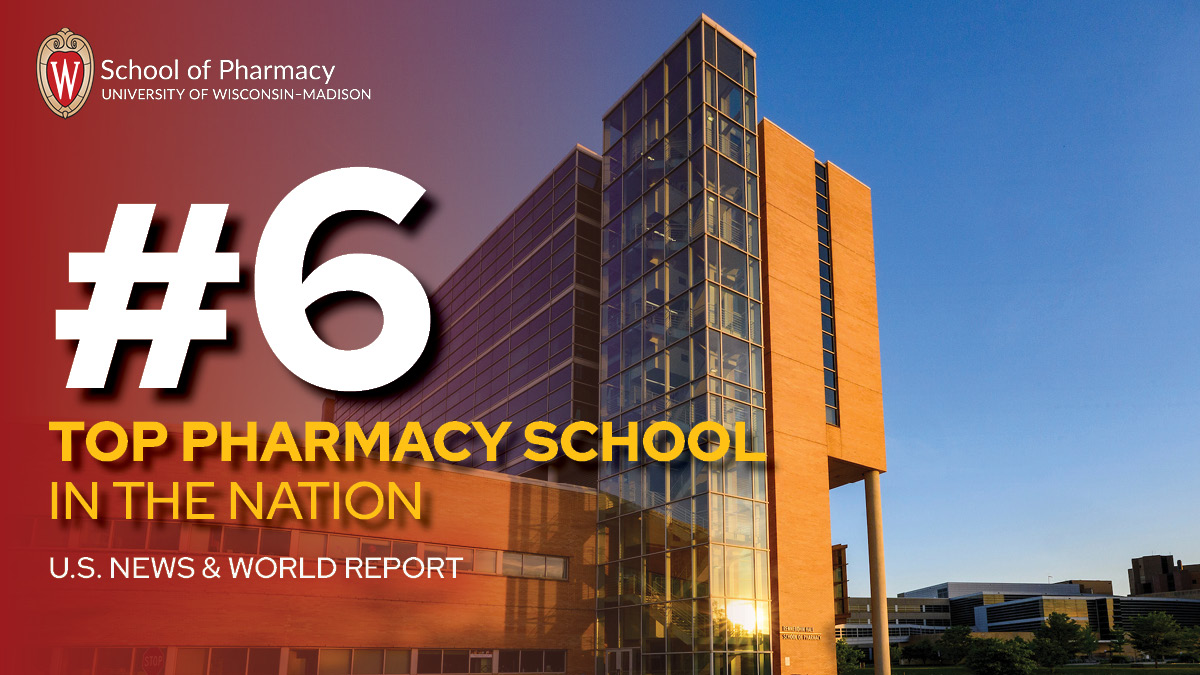
In recent years, I’ve written about the historic drop in applicants to pharmacy schools nationwide. Today I’d like to speculate about why it happened and what our faculty and staff have done to adjust. I’ll also report on some exciting student outcomes that helped boost our newly released 2026 U.S. News & World Report ranking to #6 in the nation (up three spots), and why I think our graduation rate in the academy may now more appropriately reflect the needs of the job market.
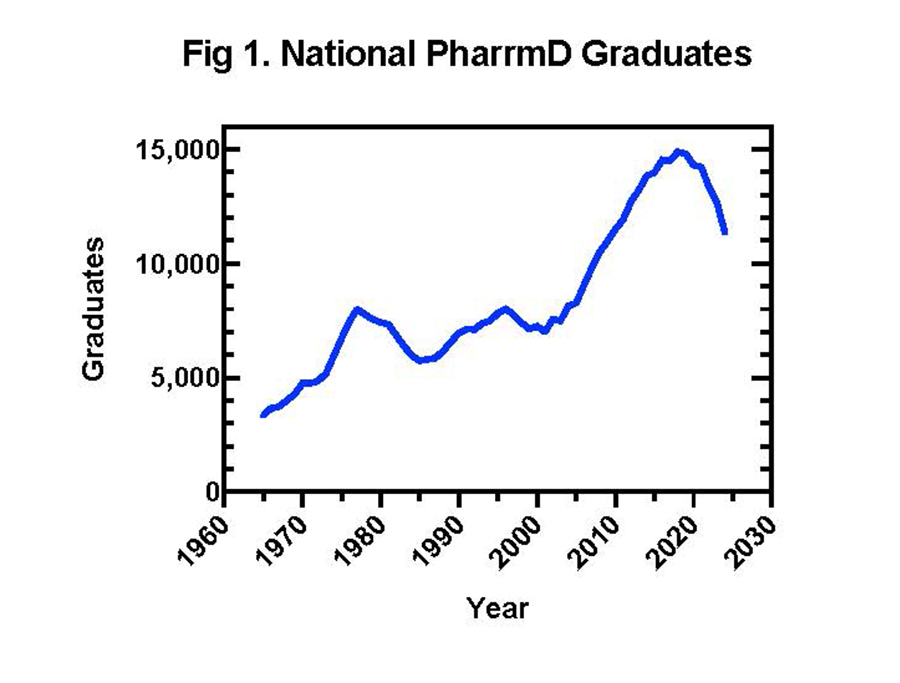
According to data from the Pharmacy College Application Service, the number of applicants to all pharmacy schools peaked in 2013. However, applicant numbers declined rapidly over the next 11 years. A 24% decline in graduates between 2018 and 2024 followed (Fig 1) making the pharmacist workforce pipeline a serious national problem.
How did this happen? Around the year 2000, there was growing concern about a national pharmacist shortage. New pharmacy schools opened across the country. Established schools increased their enrollment or started new satellite campuses. This resulted in a rapid increase in the number of pharmacists entering the workforce. Retail pharmacy business started to take off. According to their annual report, Walgreens opened 432 new stores in 2005 and was “one of the fastest growing retailers in the United States.” Pharmacy was booming.
Not long thereafter, however, a variety of pressures stressed retail pharmacy companies and induced a major correction in the industry. Walgreens has suffered over 90% market devaluation in recent years and was acquired last summer by the private equity firm Sycamore Partners, taking the storied company private for the first time in a century. Rite Aid filed for bankruptcy – twice – and is now out of business. CVS decreased its number of stores by more than 900 over the past five years. Added pressures on pharmacists during the COVID-19 pandemic compounded financial pressures and led to working conditions that compromised pharmacists’ ability to dispense medications and assure patient safety. In the fall of 2023, pharmacists at retailers walked off the job to protest unsafe working conditions. No one knows for certain why applications to pharmacy schools plummeted after 2013, but the rapid increase of graduates and the challenging working conditions in many pharmacies were likely major contributors.
The turning point
We, at the School, were relieved that the historic drop in applicants nationally did not affect our applicant pool until 2020. Once it did, we completely overhauled our recruitment efforts and developed a strategic plan to increase our applicant numbers. Our alumni have been valuable partners in helping us get the word out to prospective students about the many and varied career opportunities available to PharmD graduates. They accompanied us to recruitment events across the state, inspiring young people with their stories of rewarding careers by supporting the health of patients and populations. Our alumni also supported renovations at Rennebohm Hall that provide modern study spaces for our students. Faculty and staff have worked collaboratively designing the new “Science and Therapeutics” curriculum to bridge the gap between basic molecular science and real-world clinical application. Our applications numbers began to rebound.
Getting students to apply to our pharmacy school was half the battle. The other half is convincing the top candidates to choose our PharmD program over that of other top schools. Again, our supportive and engaged alumni are stepping up with scholarship support. With the increase in pharmacy schools nationwide and the dearth of applicants, competition for the best students is fierce. Scholarships have become a critical component of top candidates’ calculations as they weigh acceptances from multiple strong pharmacy schools.
A bright outlook
It’s all coming together now with the past two entering classes meeting our historic 20-year enrollment average of 130 incoming PharmD students per year. This fall’s class size also looks like it will be at or above this number. Best of all, due to the dedication of our faculty and staff and the hard work of our students, PharmD outcomes during this difficult period have been truly outstanding. Our students’ most recent NAPLEX three-year average first time pass rate is 94.6% — fourth best among 142 schools of pharmacy nationwide. This year’s ASHP Match is ongoing with Phase I complete. All Badgers seeking PGY2 residencies successfully matched and 89.2% of our class of 2026 matched with PGY1 residencies. Results of Phase II will be released on April 22. Also, 99% of our 2025 graduates found employment within 90 days of graduation. Those Those student outcomes support our increase in the latest U.S. News ranking of Pharmacy schools from 9th to 6th place.
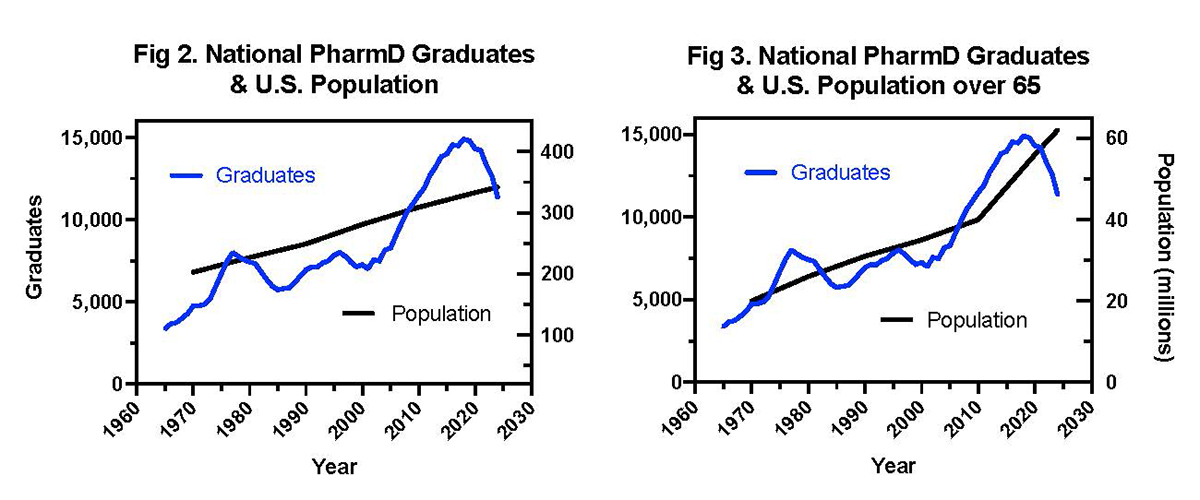
Once our graduates enter the workforce, they will have been educated and trained at a fair cost to enter a well-paying profession that is critical to health. A recent report from the National Bureau of Economic Research found that the PharmD degree is among the top three graduate degrees with the highest return on investment. Given that our school ranks 99th in residential tuition and fees but sixth in national ranking, a PharmD degree from UW–Madison is an excellent value indeed. Furthermore, the Bureau of Labor Statistics notes strong salary data and projects above average employment growth over the next decade for pharmacists. In the figures 2 and 3, we can see the relationships between pharmacy graduates and the U.S. population in general (Fig 2) and Americans over 65 (Fig 3), the subpopulation who take the most medications. Time will tell whether we are entering a period where national graduate numbers will better match job market demand.
The School of Pharmacy ranks 99th in residential tuition and fees but sixth in national ranking.
What the future holds for major companies in pharmacy and healthcare in general is an important question. Healthcare in the U.S. has many known issues but remains a financial juggernaut. Health related spending accounts for 18% of the U.S. GDP. Six of the top 15 companies in the Fortune 500 are related to healthcare. A major challenge going forward is controlling costs while providing excellent care. Pharmacists can optimize medication use and thereby provide value to patients and providers by improving health outcomes and minimizing costs. This is work that pharmacists are performing in health systems and is the future role for pharmacists in community settings. Our graduates are well prepared to provide these critical services in any setting.
The stakes are high and possibilities for change are everywhere. Badgers are made for challenges like these. And Pharmacy Badgers have proven to be successful in seizing every opportunity and leading the way.
On, Wisconsin!
Steven M. Swanson
Dean and Professor