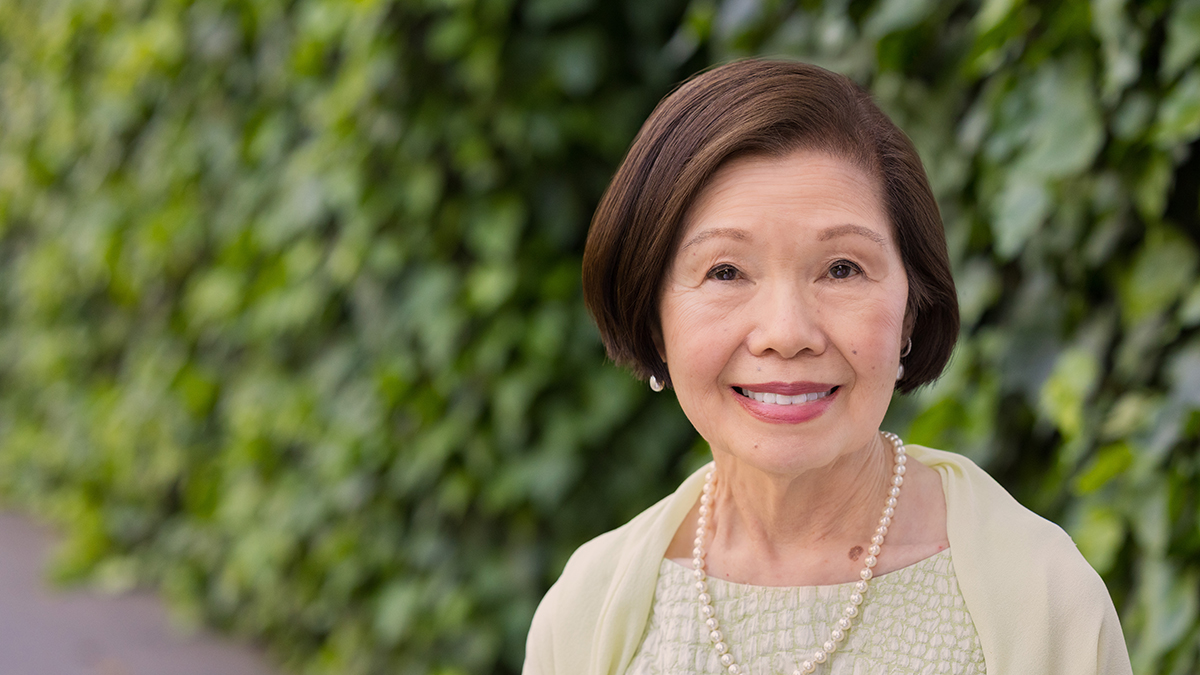
Alum Pauline Chan helped shape California’s clinical pharmacy landscape, from hospital pharmacy to behavioral health
By Katie Ginder-Vogel
When Pauline Chan (BS ’74) first walked into the compounding lab at the University of Wisconsin–Madison School of Pharmacy, she was more focused on meeting her instructors’ expectations by crafting “pharmaceutically elegant” ointments and rose-scented soaps than reshaping hospital pharmacy and psychiatric care. But over the next five decades, that’s exactly what she did.
Born and raised in Hong Kong, Chan followed her passion for medicine to Madison — and eventually to California, where she would build hospital pharmacies from the ground up, pioneer clinical pharmacy services, and support statewide Medicaid initiatives affecting millions. Through it all, she remained rooted in the values instilled during her formative years at the School of Pharmacy: precision, compassion, and the courage to make a difference.
From floor stock to full service
It was Chan’s father who first nudged her toward pharmacy school, and she wound up about 8,000 miles from where she grew up in Hong Kong.
“The School of Pharmacy is a small community, and I felt right at home,” Chan says. “Everyone was friendly and helpful.”
Chan enjoyed her hands-on classes, like labs and dispensing courses.
“It was fun making soaps with rose water and ointments,” she recalls. “We were taught to make ‘pharmaceutically elegant’ products, with neatly applied labels.”
In 1975, Chan’s husband, Vincent, a plasma physicist, landed a job at General Atomics, Inc. in La Jolla, California, so they relocated to the San Diego area, where they still reside, to grow their careers.
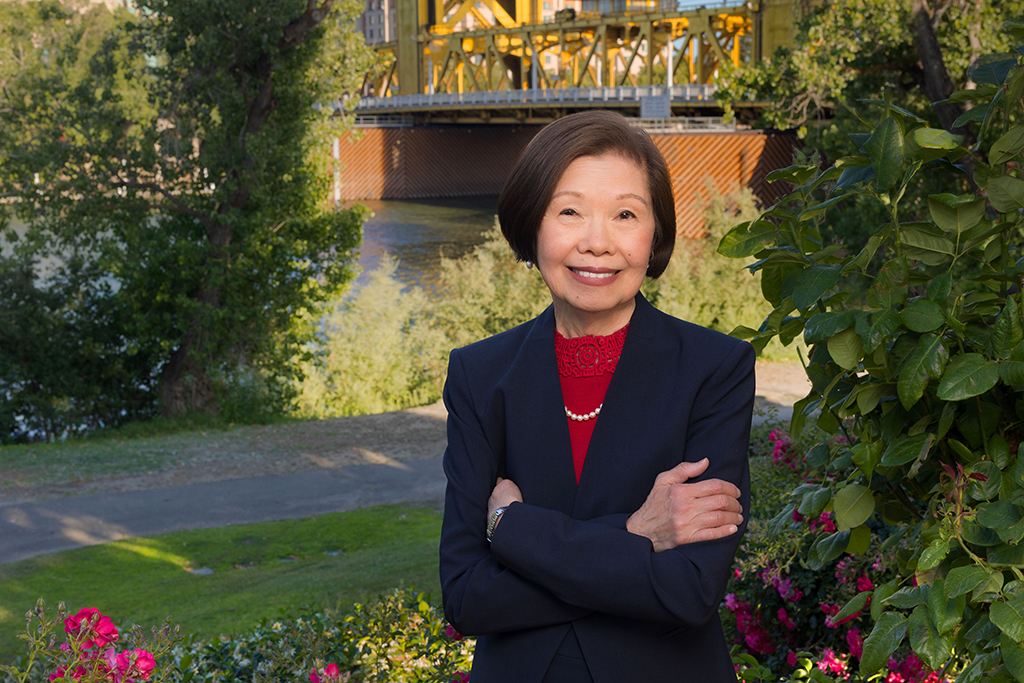
The same year, Palomar Hospital in San Diego County hired Chan as a staff pharmacist to serve the 300-bed hospital along with the chief of pharmacy, a part-time pharmacist, and a clerk.
“The pharmacy operated a traditional floor stock system, with no clinical program or services,” Chan says. “After the morning rush of filling floor stock, I realized I had time to help the nurses check the expiration dates of medication stocked in the nursing area.”
The opportunity to visit the nursing stations and interact with the nurses helped Chan realize there were great unmet needs for basic pharmaceutical services, such as sterile compounding and the unit dose medication system. It was with urgency and with the medical staff’s support that she started a new hyperalimentation (total parenteral nutrition) preparation program and built a coalition with the medical staff to improve medication safety by providing critically needed pharmacy services.
Because of her exceptional work, just two years later, Chan became the founding chief pharmacist at the new Pomerado Hospital in Poway, California, where she remained until 1994. She opened the new hospital pharmacy and established a unit dose medication delivery system, as well as a sterile compounding system, including total parenteral nutrition and chemotherapy.
Chan continued to modernize the hospital pharmacy by initiating a new clinical pharmacy service, including pharmacokinetic consultation.
“I hired our first clinical coordinator to develop the first clinical pharmacy program,” Chan says. “Pharmacists were invited by the medical staff to provide input on medication use and consultation and collaborated with nurses to provide training and education. That was the beginning of team-based care.”
“Early efforts recognizing pharmacists can play an important role in the medication use process to reduce medication errors.”
—Pauline Chan
As a chief pharmacist, Chan made a point to visit each department to learn and to offer pharmacy services; observed surgeries in orthopedics, ophthalmology, and anesthesia to establish rapport and to understand their work process; talked to the emergency room doctors and infectious disease specialists to identify priorities and needs and asked to introduce pharmacy services at medical staff meetings.
“I believe this laid the foundation of a collaborative working relationship,” she says. “Early efforts recognizing pharmacists can play an important role in the medication use process to reduce medication errors.”
Leading psychiatric pharmacy care
In 1995, Chan became a staff pharmacist for Sharp HealthCare, rotating between seven hospitals and skilled nursing facilities. She returned to leadership in 2000, as the pharmacy manager for the Sharp Mesa Vista Behavioral Health Hospital.
“Those were transformative years for me because I realized pharmacists are as critically needed to serve the patients in behavioral health as in acute hospitals, and there is great opportunity to close the gap of unmet needs,” Chan says.
She collaborated with the CEO on innovative practices, leading to the initiation of an outpatient smoking cessation program in a behavioral health facility taught by student pharmacists. A pharmacy resident helped to conduct weekly medication classes for the patients. She collaborated with the nurse educator to enhance nursing training, even contributing a chapter on pharmacology in the book Psychiatric Mental Health Nursing. Pharmacists initiated pain management, diabetes rounds on the nursing units to further integrate behavioral and physical health needs.
In 2006, Chan left Sharp Healthcare to join California Medicaid (Medi-Cal) as the pharmacist lead for CalMEND, a five-year, grant-funded project supported by the voter-approved Proposition 63, the Mental Health Services Act (MHSA). One of the CalMEND initiatives Chan supported was the development of a medication therapy management (MTM) pilot at the University of California, San Diego Outpatient Psychiatric Clinic in collaboration with the San Diego County Health and Human Services Agency Adult and Older Adult Mental Health Services. The pilot demonstrated the value of providing MTM services by pharmacists in a behavioral health outpatient setting.
In 2011, Chan participated in another five-year quality improvement project to improve psychotropic medication use in children and youth in foster care, co-sponsored by the California Department of Social Services and the Department of Health Care Services.
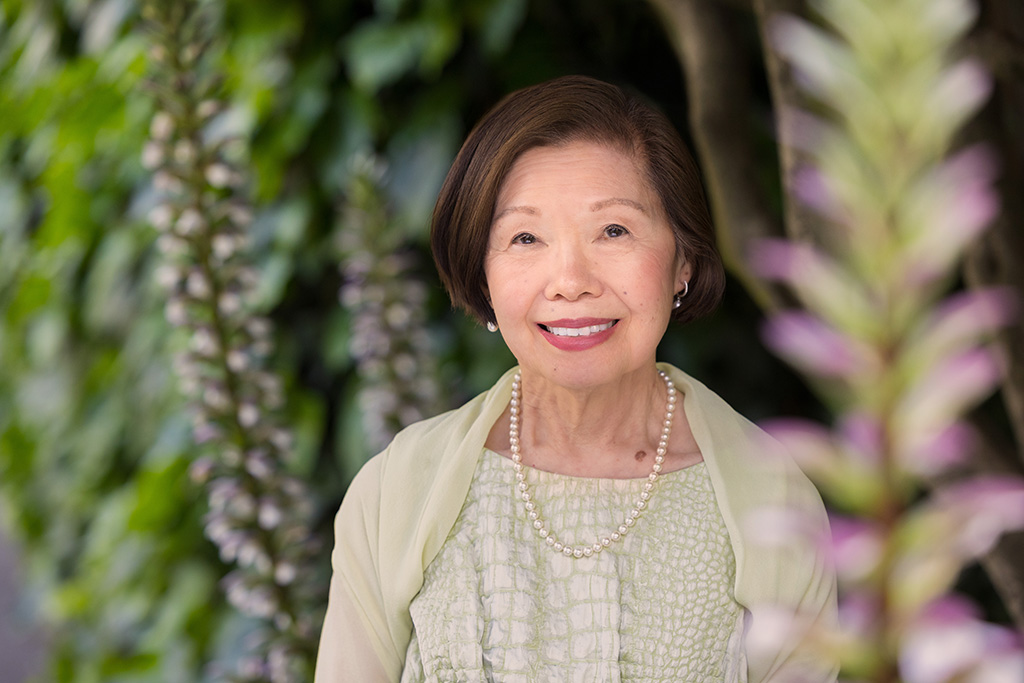
“I was one of six members representing California to a tri-agency summit in Washington, D.C.,” Chan says. “We learned from the experts across the country and brought back many ideas to implement in California. The California report has been included in A Review of State Medicaid Approaches on Child Antipsychotic Monitoring Programs and posted on the Centers for Medicare and Medicaid Services Medicaid Drug Utilization Review website. The project also published the first California Guidelines on the Psychotropic Medication Use in Children and Youth in Foster Care in 2015. The guidelines are still in use and have been updated in 2024.”
Chan has been the lead pharmacist for the Medi-Cal Drug Utilization Review (DUR) program since 2011. Medi-Cal serves over 13 million members, and with the academic partner, the University of California, San Francisco School of Pharmacy, her role includes coordinating DUR activities with the fee-for-service program and the 23 Medi-Cal managed care health plans, which collectively cover over 90% of the Medi-Cal populations. In addition to meeting requirements, the program initiated quarterly scheduled plans’ presentations of their DUR best practices at the Medi-Cal DUR board meetings to inform the public, and for plans to further spread and learn from each other.
As the COVID-19 pandemic swept the country, Chan saw another opportunity for herself and other pharmacists to help their communities.
“In combatting COVID, on the national forefront, pharmacists provided leadership to address medication shortages and administer vaccines to the elderly in institutional care settings,” says Chan, who says she was grateful she was asked to temporarily leave her regular work to be a case investigator/contact tracer for the Sacramento County Department of Public Health. “The special assignment lasted 10 months. In California, case investigator/contact tracers handled multiple needs of infected patients — helping people get groceries, meals, diapers, baby food, rent, and electric bill deferrals. I realized the impact of economic and social determinants that add to the hardships and the challenges, especially of the very poor, and how this impacts negatively on health.”
Reflecting on a career
Chan plans to retire from California Medicaid in June 2026, and as she reflects on her career, she is proud of advancing pharmacy in hospital care settings, driving quality improvement across disciplines, and helping to integrate behavioral health with primary care support — including pain management, diabetes, and hypertension care.
“Pharmacists can contribute to behavioral health, write book chapters, conduct outreach at hospital-affiliated health fairs or through professional organizations, and investigate and contact trace infectious diseases,” she says. “I believe that ordinary people can do extraordinary things, and I hope my experience encourages our pharmacy peers to always look for opportunities to expand pharmacy services and to improve safe medication use.”
“I believe that ordinary people can do extraordinary things, and I hope my experience encourages our pharmacy peers to always look for opportunities to expand pharmacy services and to improve safe medication use.”
—Pauline Chan
Professional involvement has been a consistent thread throughout Chan’s career. She has been recognized as a fellow of the American Society of Health System Pharmacists in 2003 and as a fellow of the California Society of Health System Pharmacists (CSHP) in 2002. She served on CSHP’s Board of Directors and as treasurer from 2017 to 2022; CSHP-San Diego chapter president in 2002 and CSHP-Sacramento Valley chapter president in 2012. In 2013, she helped to launch a mentorship program for student pharmacists through the CSHP-Sacramento Valley chapter, which went on to name her Pharmacist of the Year in both 2015 and 2021.
Chan believes that everyone is a mentor and a teacher — and encourages pharmacists to stay engaged in professional organizations, seek common ground, and work collaboratively to drive change.
“Observe and study how doctors, nurses, and other health care professionals around you work, and they will help you to identify barriers and gaps in care. Offer your solutions to help them do their job better; actively engage in the conversation,” she says. “I credit UW–Madison School of Pharmacy for giving me a world-class education. Armed with that foundation, we can move forward confidently to apply what we know to make effective change.”