Alumna Sirada Jones built a career bridging pharmacy education across two continents
By Katie Ginder-Vogel
Separated by 8,000 miles, an ocean, and vastly different languages and health systems, Madison, Wisconsin, and Phitsanulok, Thailand, have one thing in common: pharmacist Sirada Jones (PharmD ’00, MS ’02).
Jones was born and raised in Thailand, traveling across the globe to pursue pharmacy at the University of Wisconsin–Madison School of Pharmacy through the U.S.-Thai Consortium for Pharmacy Education, which was founded in 1994 to expand and strengthen pharmacy education and practice in Thailand.
“I wanted to get advanced training in the U.S. and learn about American pharmacy practice and education, so that I could bring that knowledge back to Thailand and impact pharmacy practice and education there,” says Jones.
“I’ve kept my ties to both Thailand and the U.S., and precepting students from both countries gives me a different perspective and keeps me learning.”
—Sirada Jones
Her time at the School marked the start of decades of international work and influence, training hundreds of student pharmacists to improve patient outcomes in two countries.
“Teaching students about my experiences and helping them through the health system and hospital gives me perspective,” says Jones. “Precepting students from the U.S. and Thailand helped me continue learning.”
Bridging two systems
While at the School of Pharmacy, Jones earned her PharmD and then wanted to delve into health system leadership, staying to complete the combined Health System Administration residency and master’s degree program at the School, as well as a third year of residency at UW Health. After six more months of clinical practice, she was ready to take what she’d learned back home.
“After I graduated, I tried to bring what I learned back to Thailand and implement it, to advance the role of pharmacists and pharmacy education in Thailand,” says Jones.
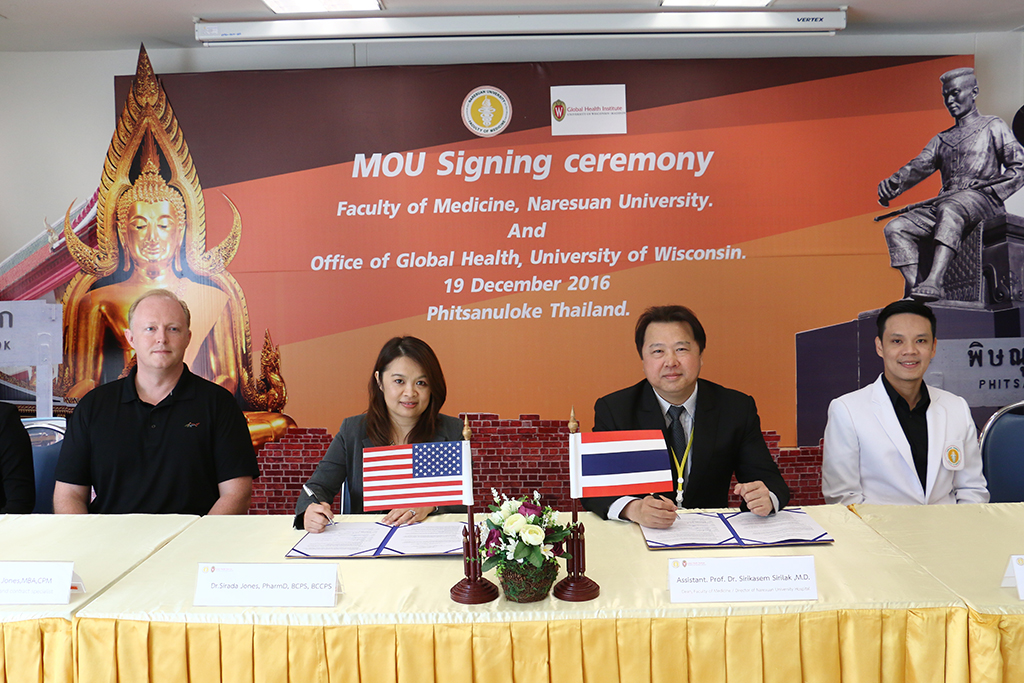
In Thailand, she joined the faculty at Naresuan University in Phitsanulok, which had an exchange agreement with UW–Madison. In a matter of a few years, she grew into a leadership position as the chair of the university’s pharmacy practice department and as assistant dean of hospital pharmacy.
As the School laid the foundation for clinical rotations in Thailand, Jones also served as a preceptor for the School of Pharmacy, welcoming Badger student pharmacists alongside Thai students to foster cross-cultural learning.
“I was the preceptor for the first UW students who went to Thailand to do rotations, and the program has adapted so much,” Jones says. “I’ve kept my ties to both Thailand and the U.S., and precepting students from both countries gives me a different perspective and keeps me learning.”
And Jones’ influence continued to grow from there. Through the Consortium, she became connected with Auburn University in Alabama, where she joined as an affiliated faculty member and preceptor, bringing Thai rotations to Auburn pharmacy students alongside UW–Madison’s.
Jones’ experiences living and working in both Thailand and the U.S. have shaped her approach to pharmacy practice and education. Pharmacists in Thailand have more limited integration into health care teams for direct patient care, while in the U.S., pharmacists provide medication therapy management, chronic disease management, and highly collaborative care — differences Jones navigates daily as a preceptor.
“I’m able to introduce American students to Thailand and guide them through our health system,” she says. “Participating in clinical activities to the degree that American pharmacists do requires collaboration and education — pharmacists have to work as a team with other disciplines.”
She helps American student pharmacists learn to navigate universal health coverage, while Thai students discover what’s possible with expanded pharmacist duties, such as more common vaccine administration. The exchange raises new possibilities for both.
“I learned a lot when I was training in the U.S. and try to adapt what I can to Thailand to advance practice and education,” Jones says. “American students introduce Western medicine into the Thai system, and the two countries can move forward together.”
For example, Jones says, physicians and care teams in Thailand interact with students from the U.S., which facilitates a trade of information and best practices.
“We can all learn from each other,” she says. “It has been interesting for me to see how healthcare disciplines in different countries learn from each other.”
Return to Madison
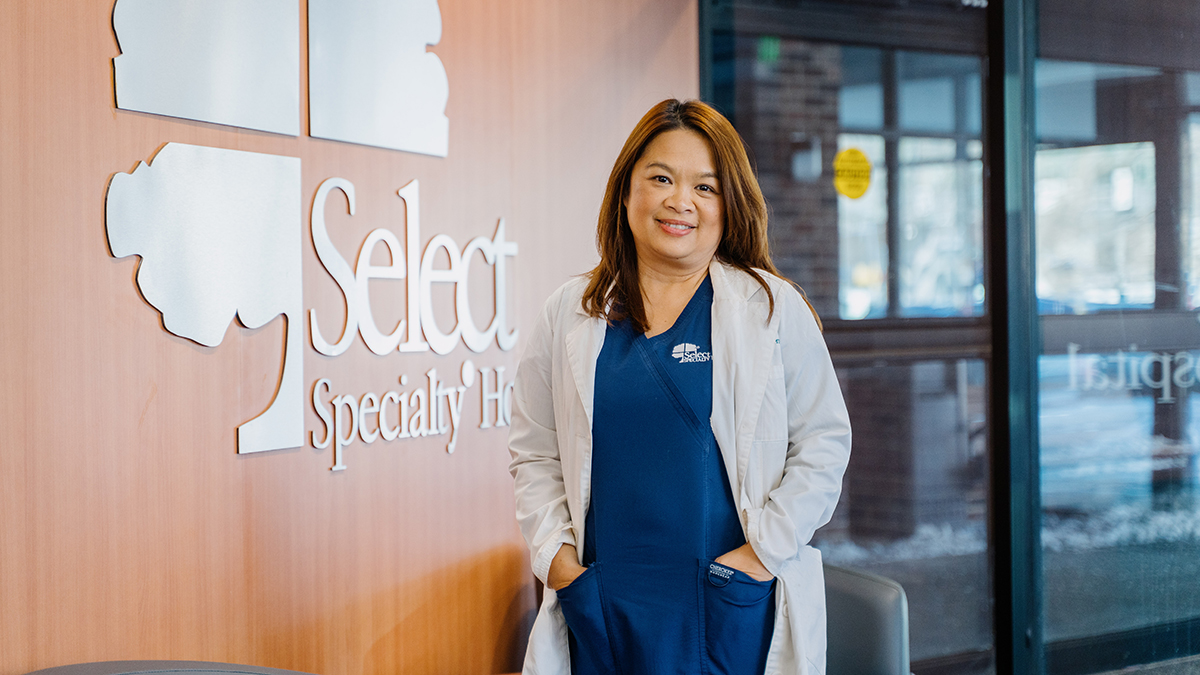
In 2012, Jones returned to the U.S., joining Select Specialty Hospital in Madison as a clinical pharmacist.
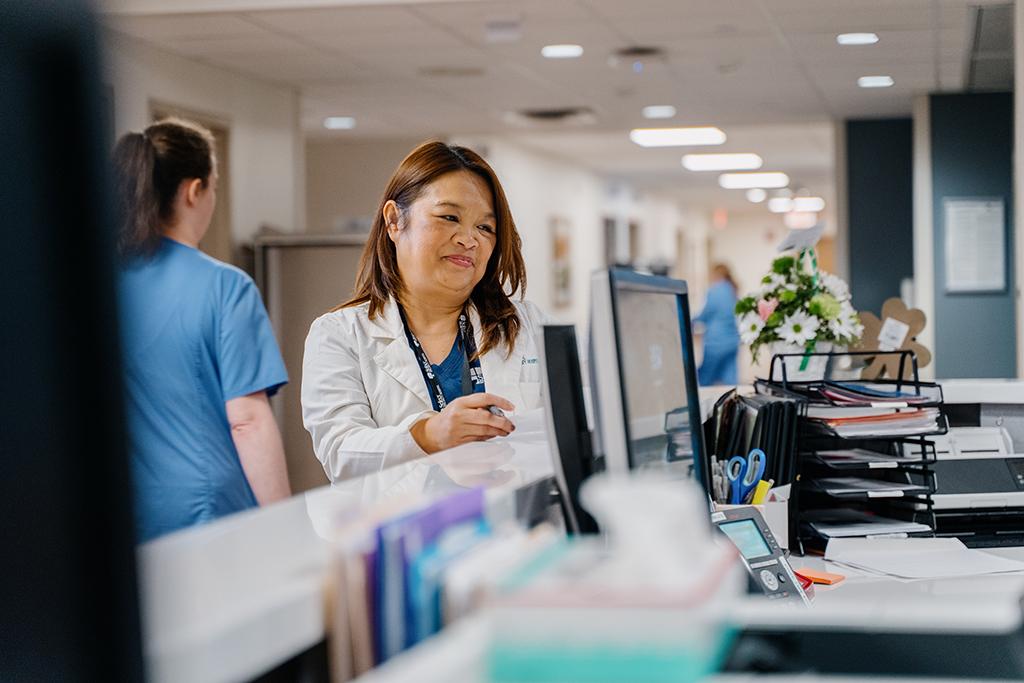
“Now, I’m back in the U.S. health care system, continuing to precept UW–Madison’s pharmacy students, and I like to see them grow from being pharmacy techs to interns, students, or residents,” she says. “That keeps me involved and motivated.”
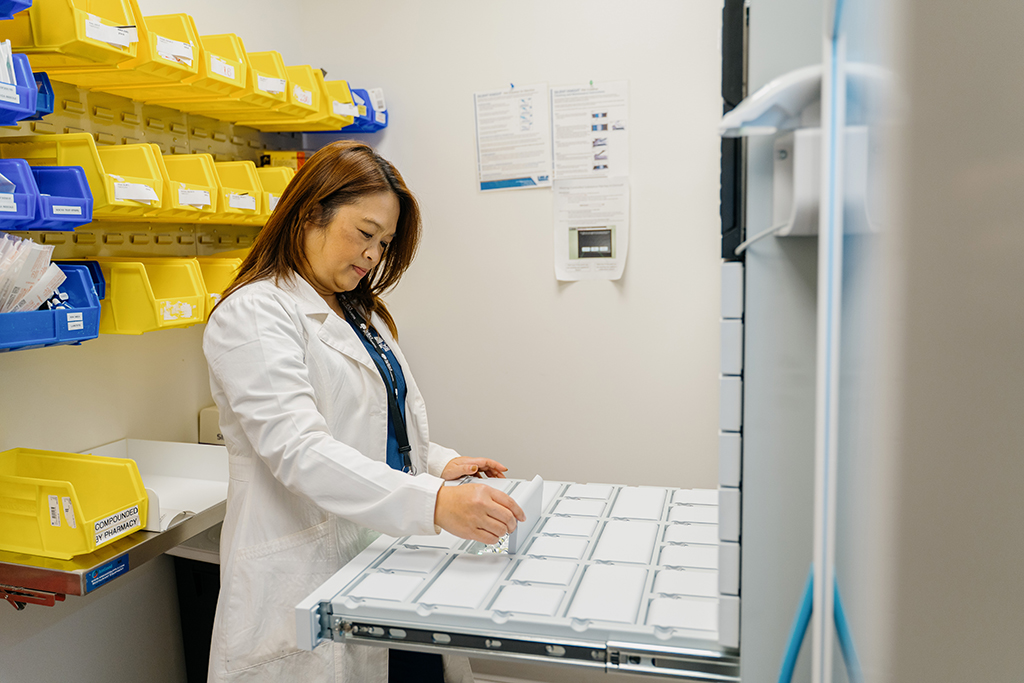
She became the director of pharmacy at Select in 2016 and continues to work with colleagues in Thailand through the UW exchange program, mentoring Thai students who come to the U.S. on rotations.
“I enjoy sharing my experiences and seeing students learn in both systems at the same time,” she says.
Jones also helps School of Pharmacy Assistant Dean for Experiential Education Mara Kieser orient PharmD students preparing for international rotations in Thailand.
“A week ago, I talked with five students who are signed up to go to Thailand next year,” Jones says. “I enjoy doing that and plan to continue as long as I can. I travel to Thailand every year if I can, to see family and visit old colleagues.”
Practicing pharmacy in both countries has given Jones a rare, comparative perspective on how the profession is evolving. A board-certified critical care and pharmacotherapy specialist, she sees U.S. pharmacy practice as highly advanced, where pharmacists like herself can practice at the top of their licenses.
“Practice in the US is about 20 years ahead of Thailand, and by practicing in both countries, I learned about the differences,” she says. “Now that I’m back in the U.S. at the hospital and health system I’m in, I can practice at top of the scope of my license.”