Badger pharmacists share how pharmacy careers and family life can go hand in hand
By Katie Ginder-Vogel
Whether it’s sitting in on virtual meetings in a dim room, nap trapped under an infant, or taking calls while walking the dog, wearing a weighted vest, and pushing the double stroller carrying twins, pharmacist parents know how to multitask.
That capacity runs through the personal and professional lives of University of Wisconsin–Madison School of Pharmacy alumni with young children, proving that a range of pharmacy careers can dovetail comfortably with family life, making work-life balance a reality.
“You give your best to your patients every day, and your family deserves your best, too,” says pharmacist Kristin Weiler-Nytes (BS ’05, PharmD ‘10), owner of Sniteman Pharmacy in Neillsville, Wisconsin, who has a 9-year-old son and a 3-year-old daughter.
“You give your best to your patients every day, and your family deserves your best, too.”
—Kristin Weiler-Nytes
For Weiler-Nytes and three other Badger pharmacists juggling patients and parenthood, the path to balance looks different depending on where they practice. But one thread — flexibility — stitches their stories together, and it starts with finding the right fit.
“When you surround yourself with like-minded people who are willing to be flexible, everyone can support each other’s families,” says Weiler-Nytes.
Flexibility is personal
For Patti Thornewell (PharmD ’10), a medical review associate director at Exact Sciences, flexibility means a nontraditional industry role that runs Monday through Friday.
Thornewell says she’s always thought pharmacy was family-friendly, with good work-life balance, due to the number of different roles in industry, hospital, and community pharmacy. She started her career in direct patient care before moving into managed care and ultimately the pharmaceutical industry.
“You can find the one that works best for you and your family and the season you’re in,” she says.
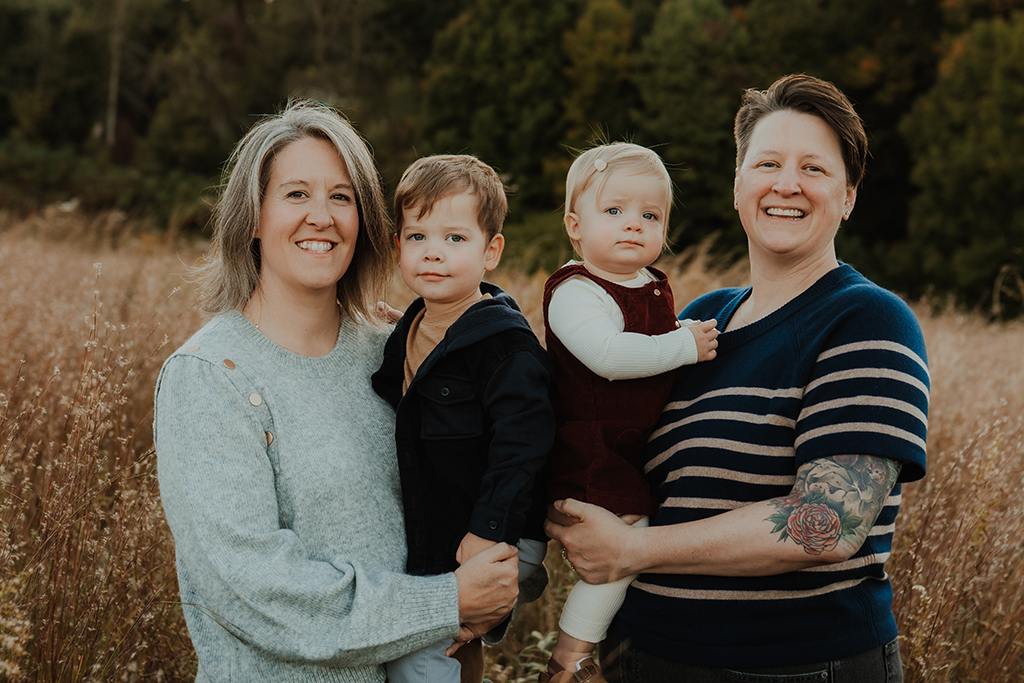
Thornewell and her wife have a three-year-old son and a 16-month-old daughter. Her son’s understanding of her job is that “I help decide what the Cologuard box says.”
“Exact Sciences is a really good company that treats us very, very well, with flexible paid parental leave,” she says.
Thornewell has taken many calls from her children’s rooms, often while being used as a parent jungle gym, and once she took a Journal of the Pharmacy Society of Wisconsin editorial advisory committee call from a chair in her daughter’s room, with her daughter asleep in her lap.
“I messaged my colleagues, ‘I’m actively nap trapped. I’m in a dark room, and I cannot speak, but I am here and listening, and I will type something if I have something important to share,’” she says.
Thornewell cites the influx of women into pharmacy that was noted in the 2019 National Pharmacist Workforce Study as a shift for the profession.
“We started to set the tone that this career can complement our home lives and doesn’t have to fight for our time,” she says. “I’m lucky; nontraditional roles are typically family-friendly, Monday through Friday, 9 to 5.”
For Katie Kuecker (PharmD ’17), a clinical pharmacist practitioner at the William S. Middleton Veterans Memorial Hospital, flexibility looks like her ambulatory care clinic.
“I work business hours Monday through Friday — no evenings or weekends — and we have holidays off and take advantage of the time we have as a family unit,” she says.

Holly Altenberger (PharmD ’12), director of pharmacy at O’Connell Pharmacy in Sun Prairie, Wisconsin, built her workweek to span four days, using her day off to help coach her kids’ sports teams, finish household tasks, and teach a geriatrics course through Concordia University.
“I like that flex day quite a bit, and other staff have done similar things,” she says. “I enjoy having prep time, and I really like teaching.”
Independent pharmacies don’t have the same benefits as bigger corporations, but they can offer employees work-life balance and a sense of family.
Through her own experience, Altenberger helped the pharmacy develop its parental leave policies.
“We have done all different types of things for people — some come back part-time, or hybrid, or take a larger break in the middle of the day,” Altenberger says. “We make sure our employees can be as flexible as possible.”
Weiler-Nytes has also found flexibility in community pharmacy, which evolved with her career stage and her family. As her father was heading toward retirement, Weiler-Nytes, who joined the family pharmacy just after graduation, worked 50 to 60 hours a week. She precepted talented student pharmacists, one of whom she hired before going on maternity leave with her first child.
“I took six weeks of leave, which wasn’t nearly enough, but I was also buying my father out of our pharmacy at the time, and we were going into January, our busiest time of year,” she says. “Fortunately, my husband was able to take six weeks of leave after mine, and I hired another pharmacy student I had precepted.”
As the business grew, Weiler-Nytes continued to hire capable early-career pharmacists, which offloaded some of her responsibility.
“I felt like the pharmacy could run without me, and my team could problem-solve without me, so when I had my second child, I took more time off,” she says. “My philosophy as an owner is you need to use your four weeks off every year because it makes us better employees, parents, humans, and workers.”
Always the pharmacist
It’s hard to beat the medication and dosing expertise of a pharmacist parent.
“I can come up with a Tylenol dose super quick,” says Weiler-Nytes.
Thornewell discovered early on that her pharmacy skills come in handy as a parent.
“With Emmett, we were formula feeding, and I asked myself, why am I measuring 30-odd scoops of formula?” she says. “I’m a pharmacist; I’m going to weigh it and compound the formula. I also appreciate being comfortable and confident in giving them medicines.”
Kuecker’s husband, Kyle Arnoldussen, who is also a primary care clinical pharmacist practitioner with the White City VA based in Oregon, compounded his own diaper cream at home, based on his experiences in community pharmacy.
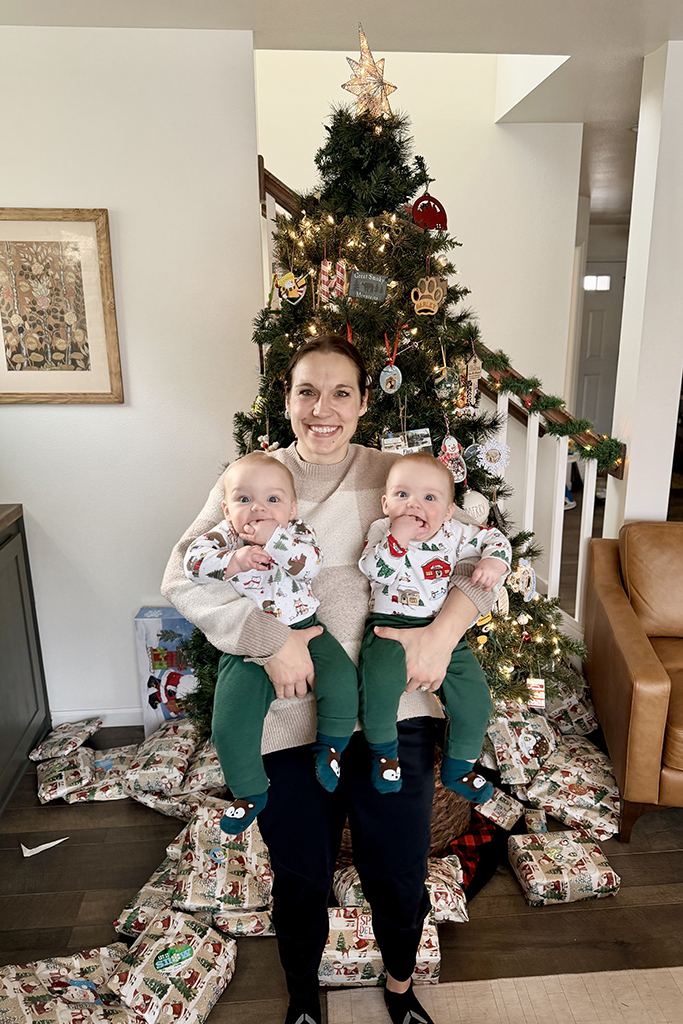
“I’m glad I have health care experience to understand safe medication doses for infants and navigate their health care,” says Hannah Hecht (PharmD ’20), a clinical pharmacist practitioner at the William S. Middleton Veterans Memorial Hospital, who has twin baby boys. “I have a detail-oriented, Type A personality, which is helpful in managing everyone’s schedules.”
Weiler-Nytes also notices her professional skills showing up at home.
“I use the same cadence and tone with my kids as I do when I explain an insurance deductible to a patient,” she says. “As a pharmacy manager/owner, I’m juggling multiple employees’ schedules and problem solving, so handling the logistics of getting family members to and from different activities is easy.”
Recalibrating balance
Kuecker, whose infant daughter recently started daycare, reflects on the shift, personal and professional, that accompanies parenthood, and how it introduces new challenges.
“It’s a new reality,” Kuecker says. “Like a lot of pharmacists, I was a typical Type A, detail-oriented, career-driven person, focused on practicing at the top of my license. I did my residency, got my dream job, and switched gears to get married and have a kid.”
With only so much time in a day, Kuecker says her focus has shifted. She prioritizes getting home on time from work and saving some energy throughout the day to be present for her baby.
“Work is great, and I’m passionate about it, and there’s this other aspect to life now, and I want work to complement that,” she says.
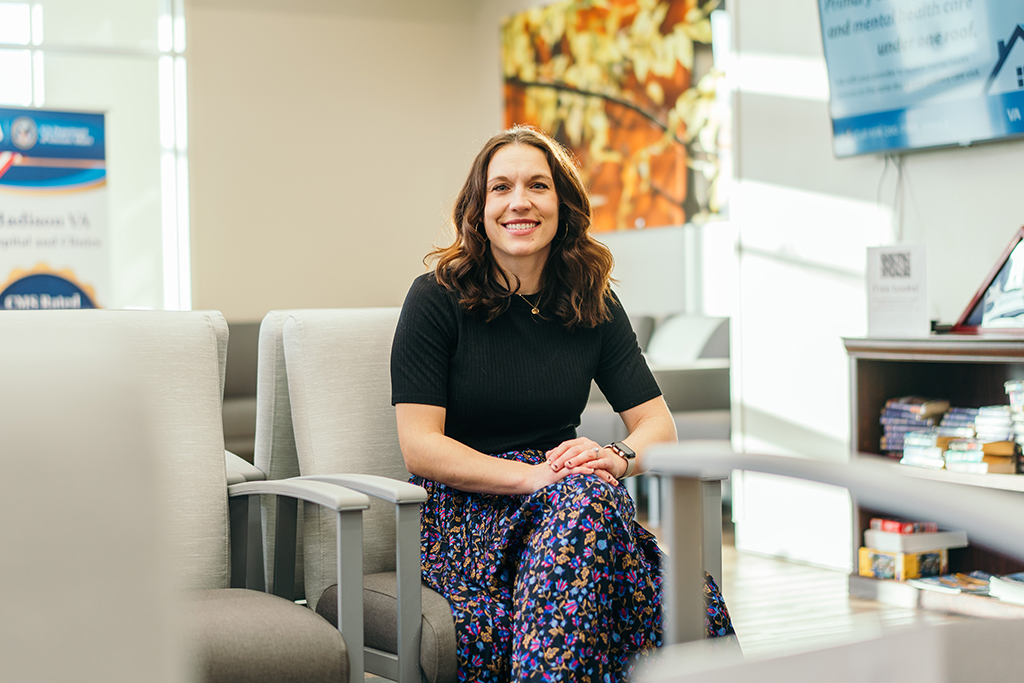
Hecht describes a similar transformation.
“I feel like I’ve changed quite a bit,” she says. “I’m way more efficient, and I think I have a better sense of prioritization. My in-basket is always going to be full, and there will always be projects to address, but I have to be as efficient and effective and focused in my 40 hours a week as possible, and then I go home and start my other full-time job. I need to set that healthy boundary, and parenthood has helped me do that.”
Hecht says her supervisor and colleagues have been very supportive as she has returned to work.
“They understand that this is a huge transition,” she says. “I knew it would be a lot of work with twins, but I was unprepared for being a caretaker of two kids and all my patients, which takes a lot of emotional energy. When my supervisor checks in on me, it’s nice to know someone is looking out for me.”
Hecht has always prioritized health and daily exercise, so with a dog, two babies, a full-time on-site job, and household responsibilities, she says fitting in self-care is a challenge right now — which led to her juggling the dog, double stroller, and phone calls.
“I thought, this is the epitome of craziness,” she says. “But you realize what you’re capable of.”
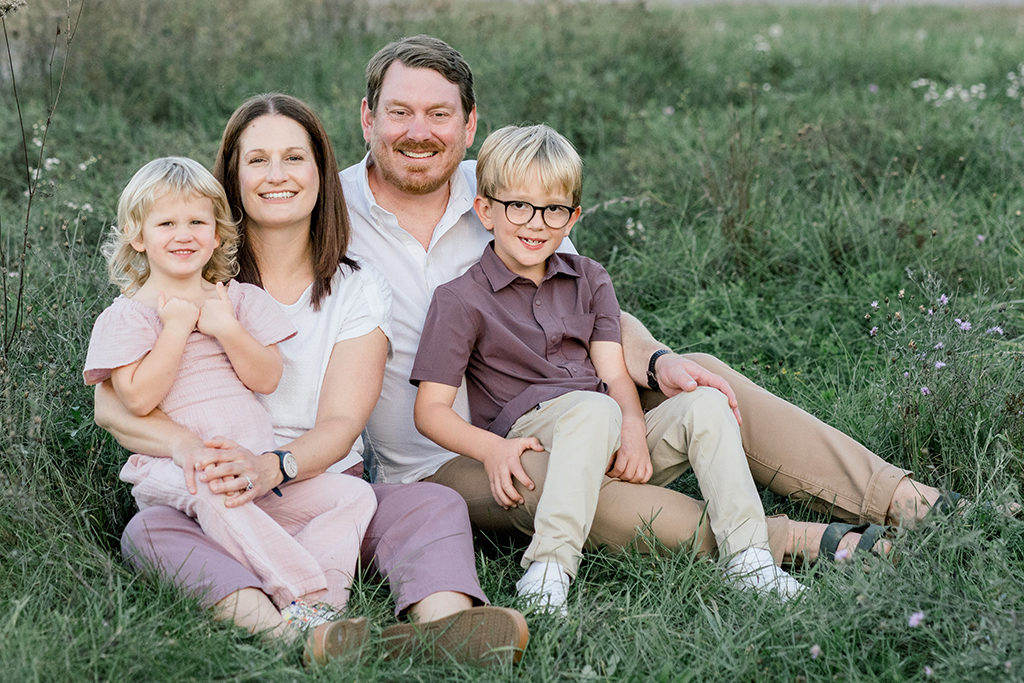
Altenberger, who is married with three kids — her stepdaughter Verity, 25; Isla, 11; and Daxton, 9 — sees beauty in a full schedule.
“We’re incredibly busy, and it’s super fun,” she says. “I’m so invested in my career, and at an independent pharmacy, my patients and coworkers are my other family. My drive to continuously learn, improve, and advance is still there, but now it stays within work hours.”
When Kuecker returned to work, she took on responsibility for a third team, so she appreciates living near work and daycare and being able to lean on her colleagues, many of whom are also parents of young children.
“When you work full-time, in any field, there’s so little time left with your kid before bedtime and so little you get to yourself for self-care,” Kuecker says. “I’m a schedule-oriented person, so I’m trying to find a good routine that includes cooking a healthy dinner, relaxing, and working out.”
One delight of family time is watching her baby accomplish new things.
“Ella giggles uncontrollably when we play with our dog, Harper,” she says. “For me, the most joyful, surprising thing is how the smallest things are just really exciting to see, as this tiny human explores the world.”
Similarly, Weiler-Nytes is intentional about the family time that surrounds her workweek.
“I get a two-hour window at night with my kids, which has motivated me to reprioritize to be home on time and be present in the moment,” she says.
Where two worlds merge
For these pharmacists, the boundary between work and family is a door that swings both ways.
Weiler-Nytes’ kids visit the pharmacy regularly, and when her son was 5, he would often come to work with her.

“He thinks it’s cool to watch the robot do things and ask the pharmacists questions,” she says. “When your kids see you work, they understand it better.”
Altenberger’s kids, too, are fascinated with life in the pharmacy.
“They love to come in and see what’s going on and what the machines do,” she says. “They are super comfortable there, know where everybody sits, and leave notes for my coworkers.”
Altenberger also enjoys the perspective her kids bring to her work. Following a weekend of being on call, her daughter, Isla, proudly told her class, “I want to be a pharmacist, because even though you have to be on the phone a lot, you are really helping people.”
“They know I’m doing something good,” says Altenberger. “Our pharmacy is now doing a lot of vaccine clinics, and another pharmacist and I go to Marshall schools and do clinics there. I’m hearing from other parents that their kids want ‘Isla or Daxton’s mom’ to give them their vaccines. I’m someone these kids trust to give vaccines, and that feels great.”
Connect with Hannah Hecht Connect with Holly Altenberger Connect with Katie Kuecker