The Wisconsin Society of Pharmacy Students is recognized for impactful community outreach to improve medication safety and prevent misuse
By Darcy Lewis
Year after year, the University of Wisconsin–Madison School of Pharmacy’s student pharmacists set the standard for what community outreach can look like.
For the 2024–25 academic year, the School’s Wisconsin Society of Student Pharmacists (WSPS) earned two regional Patient Care Awards from the American Pharmacists Association Academy of Student Pharmacists (APhA-ASP) for community outreach: one for Operation Substance Use Disorder (SUD) and another for their Operation Over-the-Counter (OTC) Medication Safety.
These “operations” are two of many student-run outreach campaigns organized by WSPS, the School’s APhA-ASP chapter, which each address aspects of health, from respiratory and cardiac health to immunizations.
“Our operations are important steps in preparing us for our eventual careers because they might be the first time many of us get to interact with community members as future healthcare professionals in this capacity,” says Lauren Koch, third-year PharmD student and co-chair of Operation SUD.
“Through each of the patient care outreach activities, our student pharmacists are building trust with their communities, improving health, and seeing firsthand the difference they can make.”
–Andrea Porter
The recognition continues a strong legacy of excellence: this marks the fifth consecutive year WSPS has earned at least two Region 4 awards. It’s also the third year in a row that Operation SUD has earned the award, and the second for Operation OTC Med Safety.
“We are incredibly proud of the impact of our operations,” says Chaise Pucek, third-year PharmD student and president of WSPS. “Our members’ passion, dedication, and countless hours of work truly made these Operations impactful within our community, and they absolutely deserve this recognition. WSPS is stronger and more successful because of leaders like them.”
APhA-ASP selects regional award winners based on a comprehensive report that includes innovative programming, volunteer hours, and the number of people reached. But the impact goes far deeper.
“Through each of the patient care outreach activities, our student pharmacists are building trust with their communities, improving health, and seeing firsthand the difference they can make,” says Professor of Pharmacy Andrea Porter (PharmD ’06), WSPS faculty advisor. “They’re also growing as leaders, learning how to problem-solve, adapt, and design outreach that meets the needs of local communities.”
Preventing substance misuse
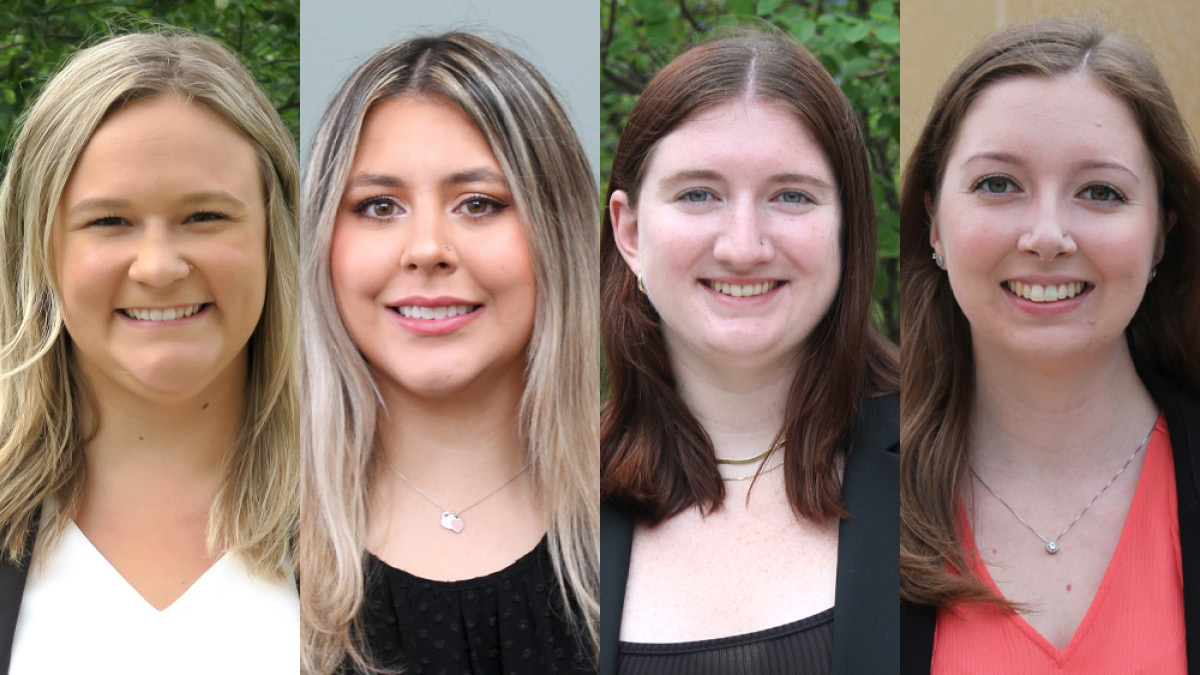
Under the leadership of co-chairs Koch and fourth-year PharmD student Samantha Dawiedczyk, with pharmacist advisors Erica Frazier and Theresa Frey (PharmD ’09), Operation SUD revamped their programming during 2024-25. Historically, Operation SUD gave presentations at local middle and high schools, but they were unable to host the group’s presentations this year.
“The local schools didn’t have room for us in their curriculum anymore, so we had to go back to the drawing board to create new ways to educate the community,” Koch says. “As operation leaders, we have the creative freedom to plan events that will benefit both students and community members in different ways.”
As the centerpiece of the year’s operation, Koch and Dawiedczyk teamed up with the campus chapter of the national naloxone-access nonprofit End Overdose to present a naloxone training session to 54 pharmacy students.
“Both groups shared key points to naloxone administration and signs of suspected overdose, while Operation SUD members highlighted the role of the pharmacist,” Koch says. “We were able to help break the stigma surrounding substance use disorders while providing future pharmacists with the tools to help.”
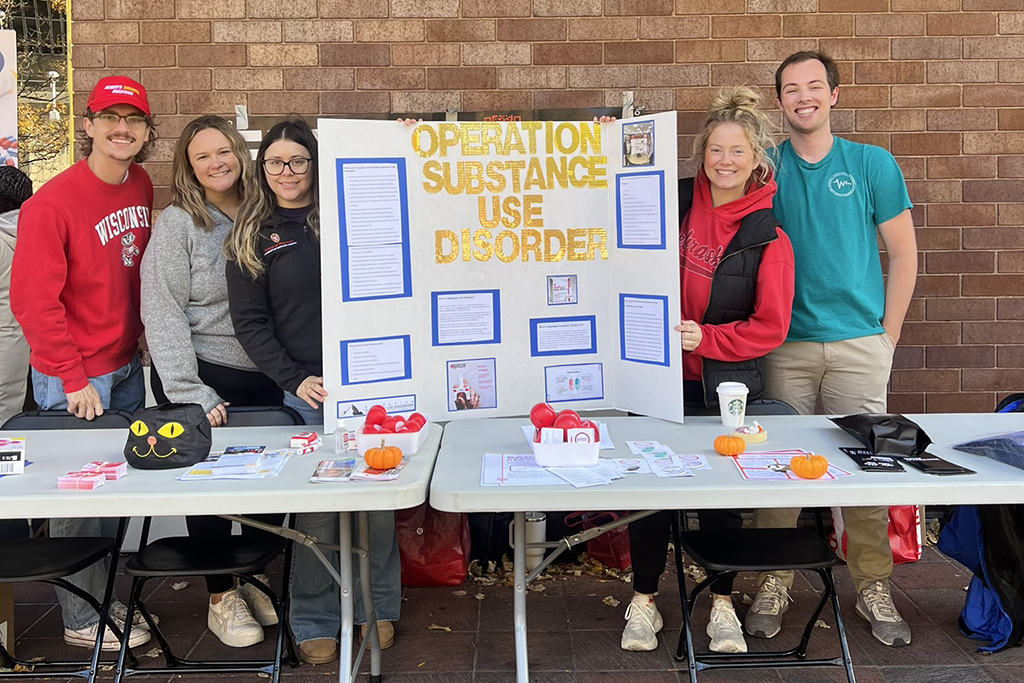
Participating students received a naloxone kit and fentanyl test strips free of charge, as well as an End Overdose Opioid Recognition and Prevention certification.
Additionally, Operation SUD hosted seven other events, including a presentation by Frey and Katherine Rothbauer (PharmD ’20), who both practice at the William S. Middleton Memorial Veterans Hospital in Madison about their work treating patients with SUD, as well as community health fairs.
“Being from New Mexico, where we have a large population dealing with both substance misuse and mental health issues, I definitely want to specialize in psychiatric pharmacy,” Koch says. “Working with Operation SUD will be so helpful in connecting with and helping these populations in the future.”
APhA-ASP also recognized MedDrop — an outreach initiative housed within Operation SUD — which focuses on prescription drug take-back events. Under co-chairs Jessa Mielke and Heather Marz, both fourth-year PharmD students, with faculty advisor Professor of Pharmacy Beth Martin (BS ’90, MS ’03, PhD ’06), the group hosted two takeback events that collected almost 2,000 pounds of medicine. A total of 48 student pharmacists volunteered at 25 locations around the Madison area for the two events, including three local retirement communities.
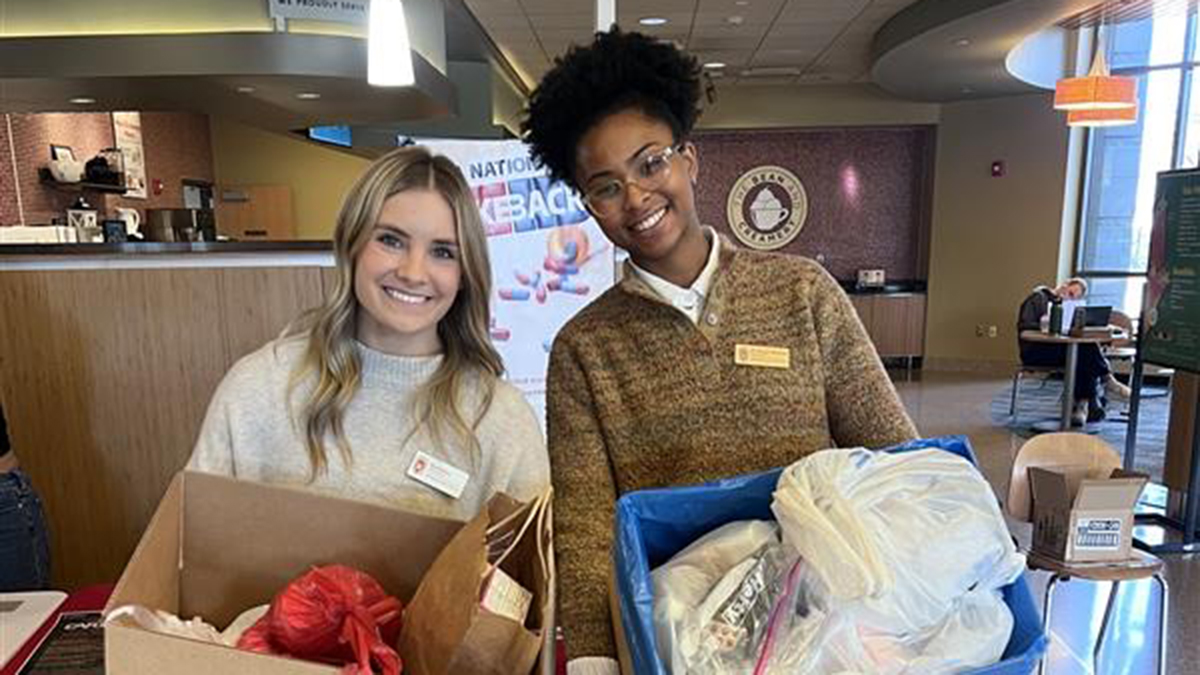
As a new initiative this year, MedDrop partnered with University Health Services and End Overdose to bring takeback events to campus. Held at a student dining center and a residence hall, they targeted undergraduate students preparing to move out at the end of the academic year.
“These events focused on fostering comfortable and non-judgmental conversations about drugs and safe drug disposal to help ensure that college students felt welcome,” says Mielke.
Improving OTC safety
Since people of all ages use OTC medications, Operation OTC Med Safety co-chairs Yinglai Chang, a fourth-year PharmD student, and Cameron Hauser, a third-year PharmD student, wanted a broad focus. With faculty advisor Associate Professor of Pharmacy Denise Walbrandt Pigarelli, the pair planned a total of 10 events, with an emphasis on elementary-aged children and older adults.
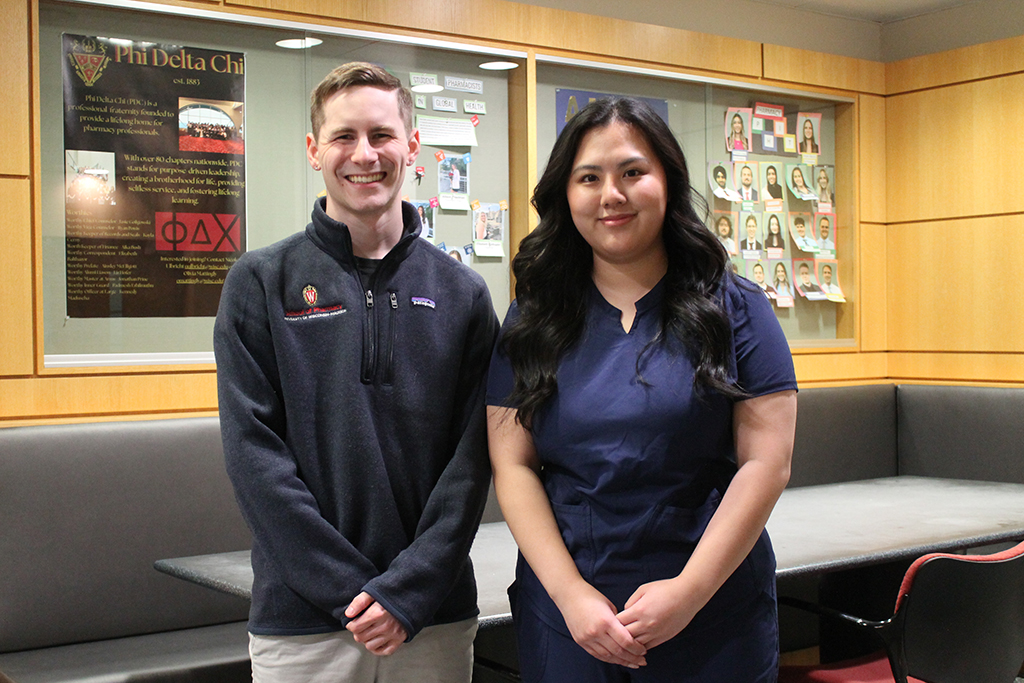
As with the Operation SUD team, Operation OTC Med Safety members attended a variety of health fairs, where they focused on early education and using hands-on demonstrations to teach children how to properly measure liquid medications using different dosing instruments.
“We emphasized taking medications only from a trusted adult to ensure safety and introduced the pharmacists’ role as a medication expert,” Hauser says. “We used visual aids and interactive activities, such as the Candy or Medicine? game, to reinforce key safety concepts in a memorable and fun way.”
Operation OTC also addressed the needs of older adults at local health fairs by providing practical guidance and written materials on safe OTC medication use, including how to avoid dangerous interactions, read medication labels, and safely dispose of unused medications.
“The most innovative component of our OTC medicine safety campaign was our ability to adapt our content across various age groups using interactive activities and by providing different ways to absorb information,” Chang says.
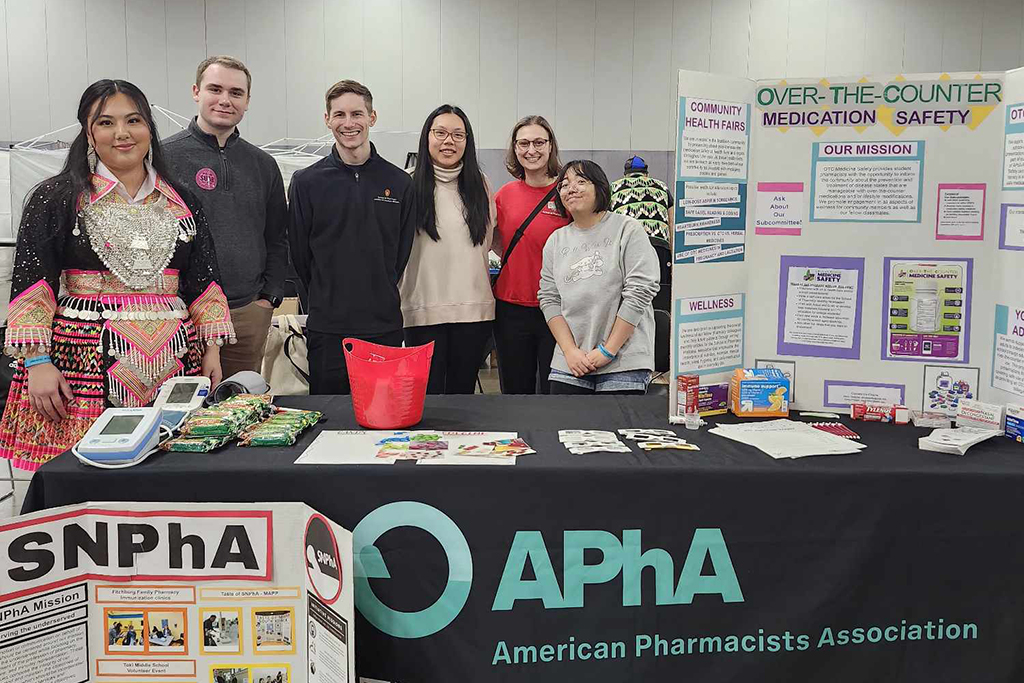
A highlight of the year was the Madison Hmong New Year, where Operation OTC Med Safety partnered with other campus organizations to provide blood pressure screenings and prediabetes screenings.
“Being a member of the Hmong community, I knew about this event and that we could make a difference there,” says Chang, who hopes to return to serve her Hmong community in Wausau, Wisconsin, once she completes her pharmacy training. “There is a high level of health illiteracy in the Hmong community, so just being able to talk and be present for community members and to answer some basic questions meant a lot.”