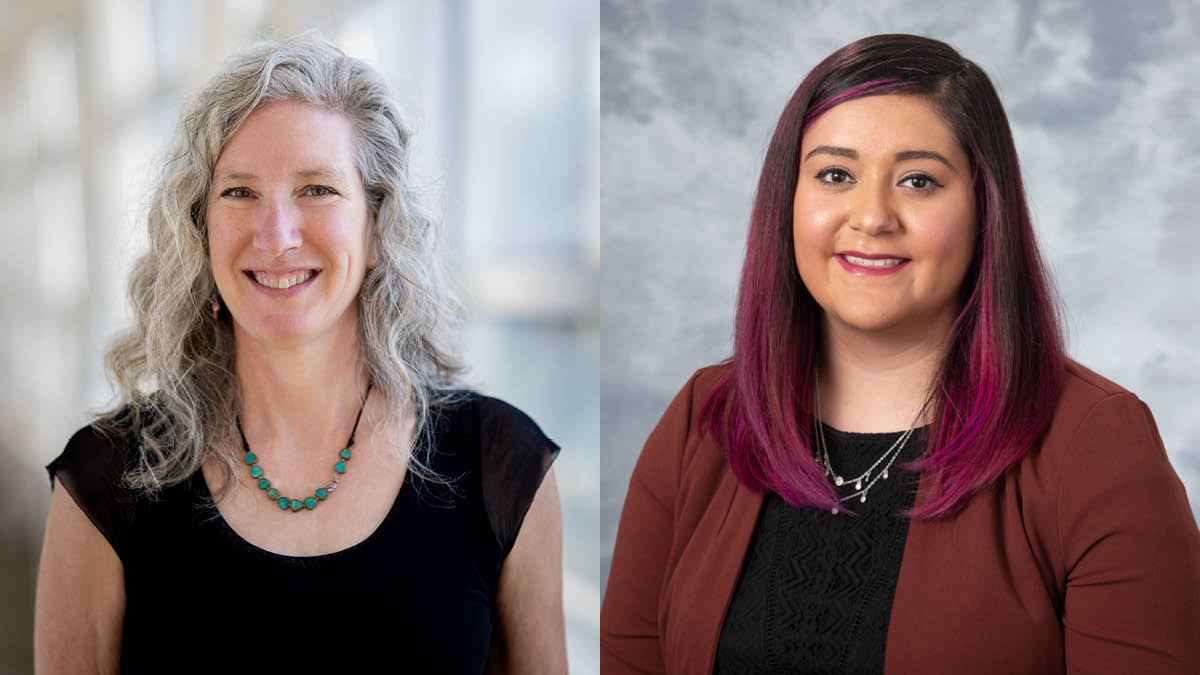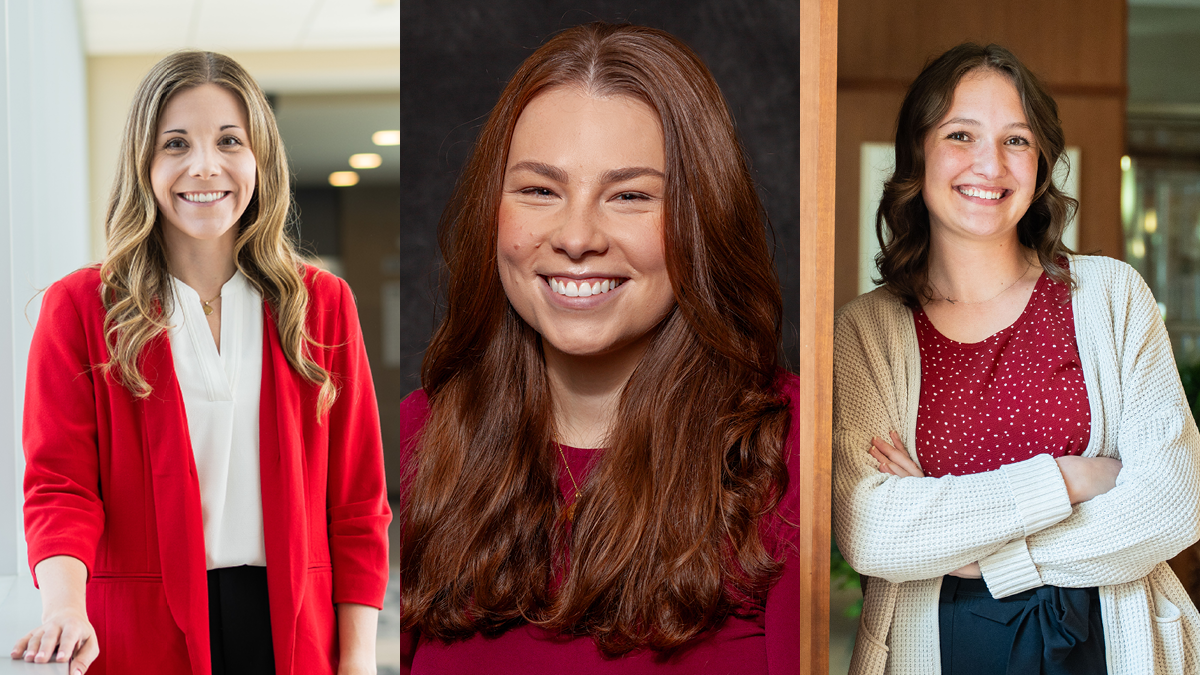
In an innovative care model, alumni Bianca Bellissimo and Emma Hickmann are treating chronic conditions, collaborating with physicians, and providing accessible primary care
By Archer Parquette
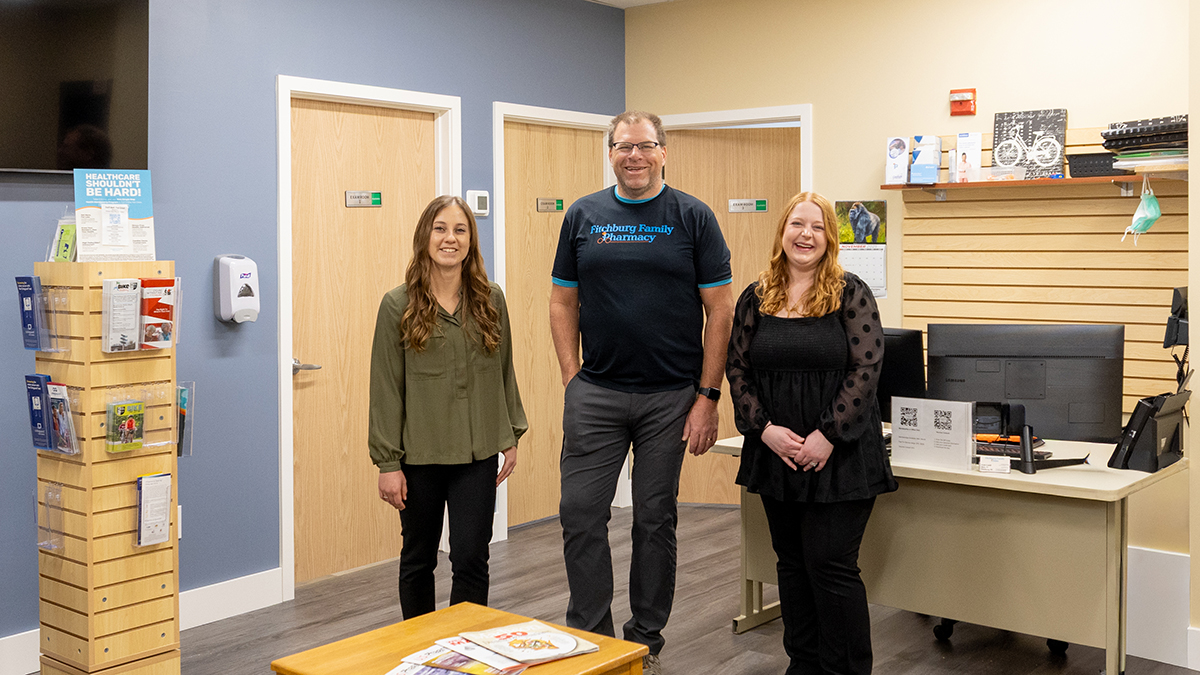
When Bianca Bellissimo (PharmD ’19) and Emma Hickmann (PharmD ’22) step into the exam rooms at Fitchburg Family Clinic, they fill both prescriptions and gaps in care. Alumni of the University of Wisconsin–Madison School of Pharmacy, Bellissimo and Hickmann work alongside clinic owner and pharmacist Thad Schumacher to help patients manage their diabetes, monitor their hypertension, get an annual physical, and more.
Together, the trio is testing a new kind of community care: a model that unleashes pharmacists to practice at the top of their license and use the full scope of their clinical training to provide primary care services, work alongside physicians, and make health care more accessible, all in a community pharmacy setting.
“We need to teach people that pharmacists can do a lot more than you might think.”
–Thad Schumacher
In 2013, Schumacher founded what was then Fitchburg Family Pharmacy, which operated as a traditional community pharmacy in its titular Madison suburb until Schumacher had an idea: a pharmacist-powered direct primary care model.
“Community pharmacies are under threat,” says Schumacher, a frequent School of Pharmacy collaborator and preceptor. “The reimbursement system that we have set up currently is not sustainable. Pharmacies being at risk, we think of other innovative things that we can do.”
Collaboration in practice
Schumacher says the direct primary care model works “like a gym membership.” The model turns health care into a direct transaction between patient and provider, no need for insurance, with patients paying a monthly fee for access.
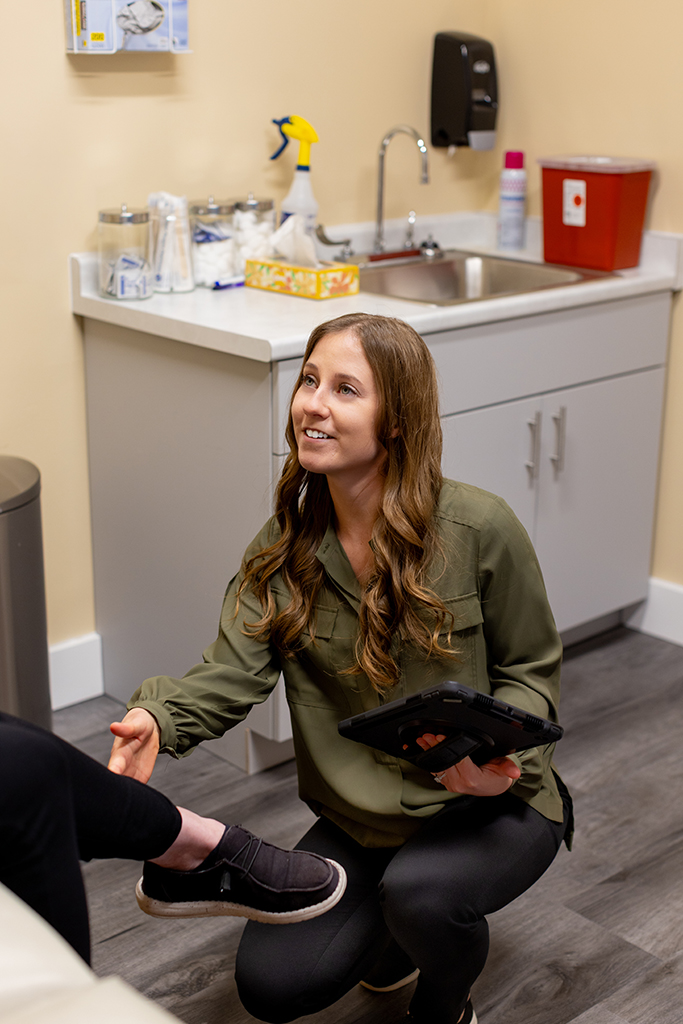
This model seemed ideal for a Wisconsin pharmacy, where collaborative practice agreements, enshrined in state law, allow pharmacists to take on patient care services designated by a physician. That means that, by working with a physician, Schumacher and Bellissimo, who has been with the pharmacy since 2023, could also provide primary care services.
“We had a lot of discussions about what that would look like,” says Bellissimo. “It’s been interesting, and it’s certainly groundbreaking. It’s definitely different than what I thought I would be doing when I got into pharmacy.”
As the clinic began to take shape, Schumacher brought on Hickmann, who is also teaching faculty at the School of Pharmacy, to join the team. Hickmann did her residency at the William S. Middleton Veterans Memorial Hospital in Madison, where she saw her own patients independently of a physician.
“When I heard about Thad’s model, it was super exciting to me to have the opportunity to use the skills and training I’d had from pharmacy school and my residency to prove that something like this can work outside of that federal VA setting,” Hickmann says. “Certainly, pharmacists have the training to do it — it’s just a matter of figuring out the logistics.”
Expanding access
Schumacher opened the Fitchburg Family Clinic alongside its partner Fitchburg Family Pharmacy in July 2025.
Ken Valyo, a primary care physician, works alongside the clinic’s three pharmacists — Schumacher, Bellissimo, and Hickmann. If a patient requires a diagnosis for complex symptoms, they’ll see Valyo. If they need testing or chronic condition management, or even sprained ankle care, they could see one of the pharmacists.
“I’m really hopeful this model can prove to be successful because it could be the answer to keeping rural community pharmacies in Wisconsin alive,” says Schumacher, a Wisconsin Community Pharmacy Enhanced Services Network luminary.
Since the clinic is powered by pharmacists — the most accessible health care providers — patients experience shorter wait times and longer visits.
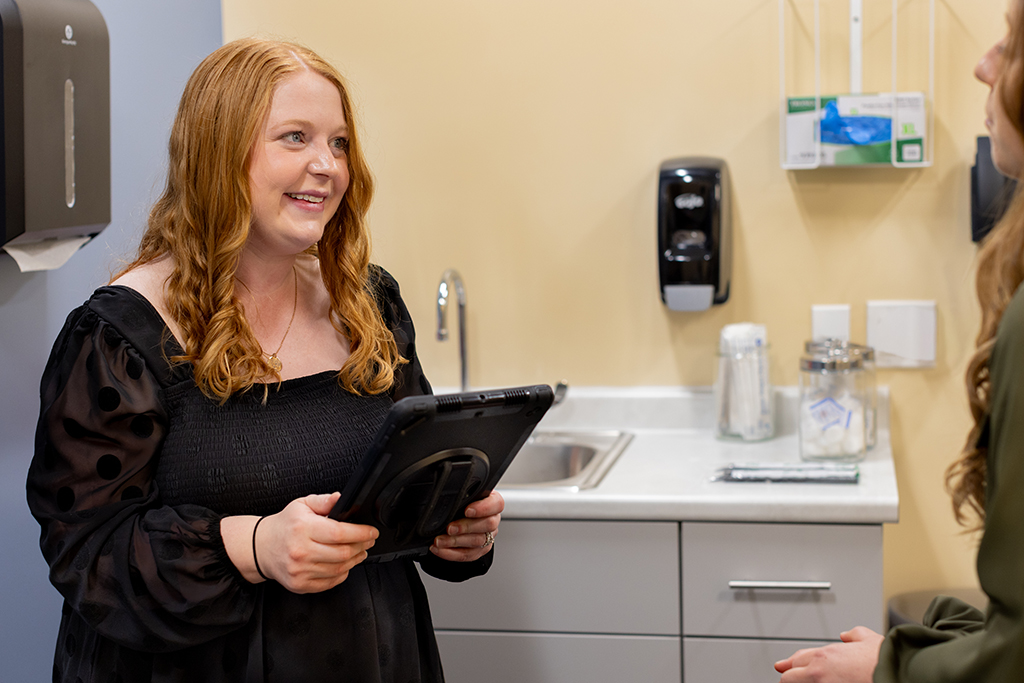
“Emma, Bianca, and I can take a more holistic approach because we have the time to spend with our patients. We’re not being told that we have a certain number of minutes to see each patient,” says Schumacher. “Our patients are getting something they’re not used to.”
In its first few months, the clinic has seen both patients who are uninsured and patients who are insured but can’t find adequate access to care at traditional hospital settings, either due to long waits or difficulty scheduling a timely appointment.
For example, Bellissimo recently saw a woman who was in pain from an ear infection. She had visited two urgent cares that day, waiting for hours, and eventually left before seeing a doctor, frustrated as the wait dragged on. Desperate, she tried a visit to Fitchburg Family Clinic.
“We were able to get everything taken care of in less than an hour,” says Bellissimo, who prescribed her medication to help with the infection. “She was so happy and relieved.”
In the past, when Schumacher explained how collaborative practice agreements work, he would often use what he thought was a jokingly far-fetched example — a surgeon could enlist pharmacists to remove sutures post-surgery. So just a few months ago, it was a full-circle moment when a patient arrived at clinic needing sutures removed. Her surgeon told her to ask a primary care physician to remove them, but when she tried to schedule a visit, the doctor couldn’t see her for weeks. With itchy sutures and a wound that needed to fully heal, she came to the clinic, and the pharmacists were able to remove those for her immediately.
“As pharmacists, we can do these things,” says Hickmann. “We have the training and we have the knowledge. So it’s rewarding to see pharmacists expand the scope of their practice outside of the limited settings, like the VA, where pharmacists have already been doing this work for decades.”
The future of community pharmacy
As Schumacher looks to the future of pharmacist-powered clinics, he anticipates expanding into vision care, acupuncture, mental health services, and more. Updated federal regulations now permit Health Savings Accounts to be used to cover direct primary care, positioning this model — and the opportunities it offers pharmacists — for continued growth.
“For decades, people have had a specific idea of what pharmacists do, so when we talk about pharmacists offering primary care, patients might have a very small window of what they think that means,” Schumacher says. “We have an uphill battle with that as a profession. We need to teach people that pharmacists can do a lot more than you might think.”
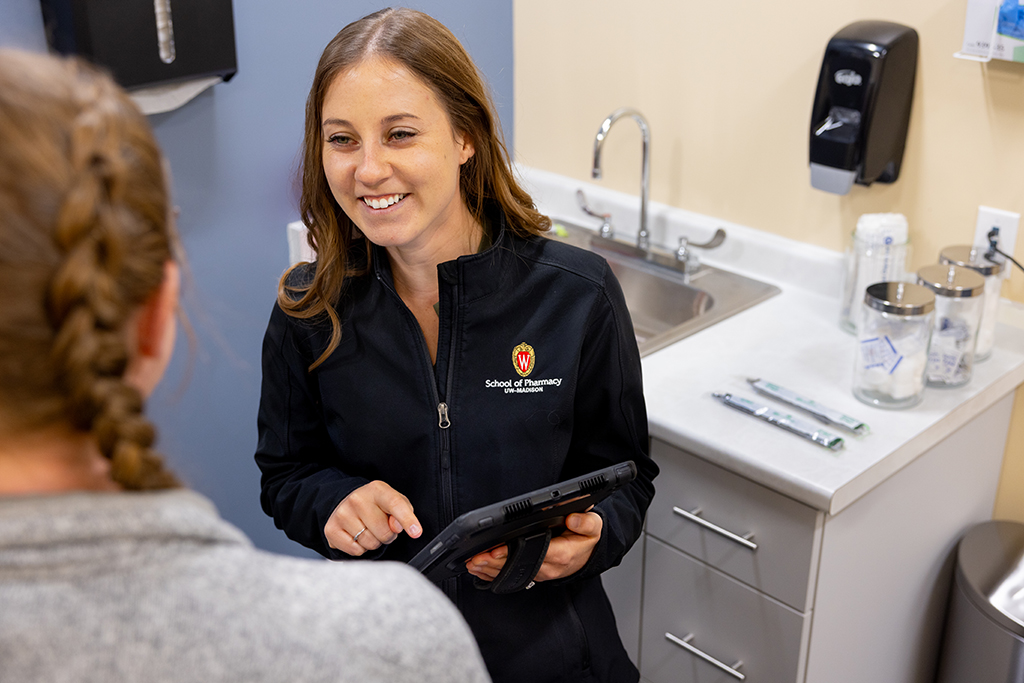
That mindset starts in the classroom. When Hickmann is on campus teaching the next generation of pharmacists, her leading-edge work at Fitchburg Family Clinic brings real-world perspective and helps inspire future graduates about the expanding opportunities available to pharmacists.
“Being at the clinic makes me 10,000 times better in the classroom,” she says, noting that her role exposes her to pharmacy practice, interprofessional collaboration, and the not-quite-as-enjoyable bureaucratic necessities like billing — all crucial for her students to understand.
PharmD students at the UW–Madison School of Pharmacy can also experience this unique care model firsthand, through Introductory and Advanced Pharmacy Practice Experience (IPPE and APPE) rotations. Schumacher has been precepting the School’s student pharmacists since 2009.
“I am excited to see the School giving students exposure to what clinical pharmacy can look like in a community pharmacy setting,” she says. “It can, and increasingly does, mean working in a clinic space like we have here.”
Connect with Emma Hickmann Connect with Thad Schumacher Connect with Bianca Bellissimo