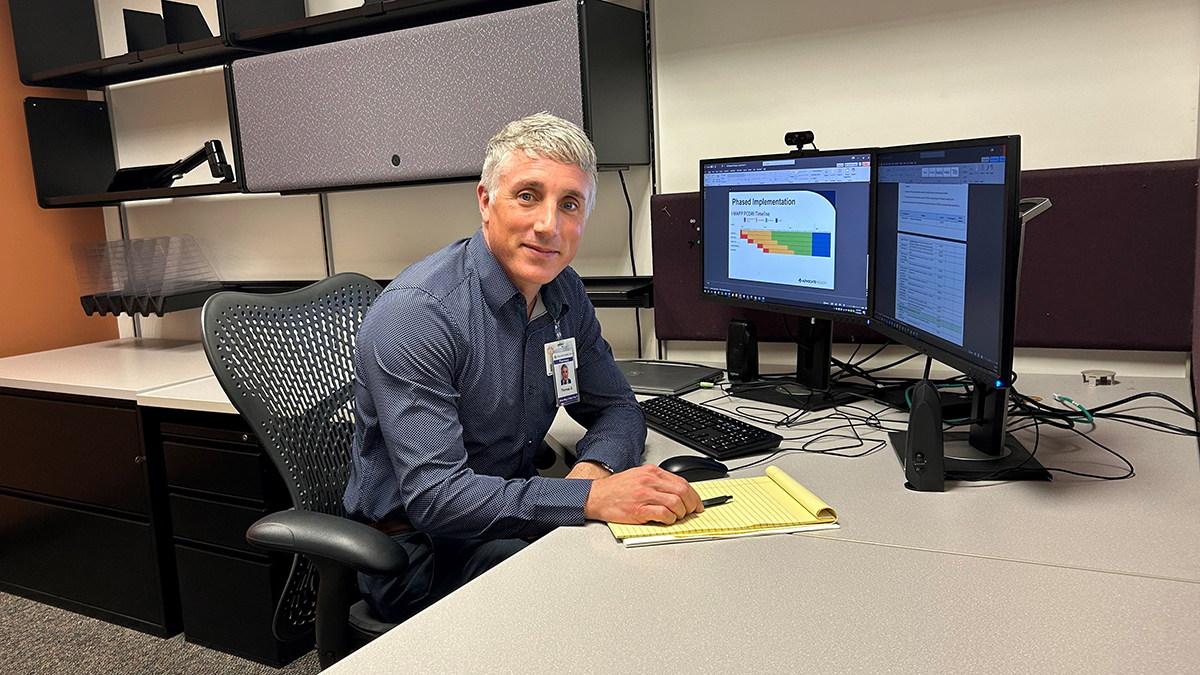
Alum Tom Dilworth is co-leading a $2.5M PCORI project to accelerate adoption of best practices for pediatric antibiotic prescribing
By Jennifer LW Fink
As a student at the University of Wisconsin–Madison School of Pharmacy, Tom Dilworth (PharmD ’10) thought he’d work as a community pharmacist. But today, he’s shaping healthcare on a broader scale as the associate vice president of pharmacy clinical services at Advocate Health, based in Milwaukee, by co-leading a Patient-Centered Outcomes Research Institute (PCORI)-funded project to implement improved antibiotic prescribing for children with acute respiratory tract infections in outpatient settings.
The $2.5 million project is part of PCORI’s Health Systems Implementation Initiative, an effort to advance the uptake of practice-changing comparative clinical effectiveness research results in care delivery settings. Dilworth’s involvement is significant because while pharmacists have long played a role in antibiotic stewardship, “few pharmacists are co-primary investigators on these kinds of awards,” Dilworth says. “I’m excited to represent the profession in this way.”
A change in focus
Dilworth, a Wisconsin native, studied Spanish as an undergraduate. He also worked as a pharmacy technician while in college — an experience that fed into his decision to pursue pharmacy as a professional career. He imagined working in community settings, interacting directly with patients.
A fourth-year clinical rotation at the University of Wisconsin Hospital and Clinics shifted his focus.
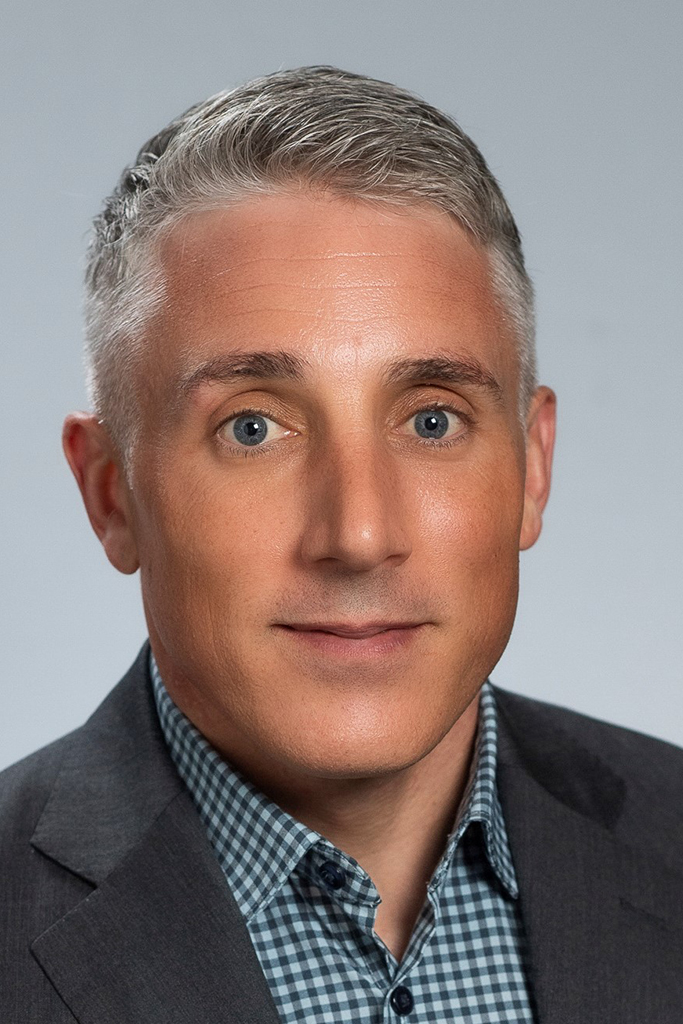
“I decided I wanted to do inpatient acute care pharmacy,” Dilworth explains. So, he applied for and accepted a residency at the University of New Mexico, where he focused on infectious disease and later completed an infectious disease research fellowship.
“That really jump-started my understanding of data analysis and research methods,” he says, “and led to several publications.”
Dilworth and his wife moved back to Wisconsin when his fellowship ended. At the time, there weren’t many infectious disease pharmacy jobs in the area, so he accepted a supervisory role at a smaller community hospital. There, he learned essential management skills and developed a residency program. In 2016, he moved to Aurora St. Luke’s Medical Center in Milwaukee, where he worked as an infectious disease pharmacist. When his boss retired a few years later, Dilworth decided to apply for his job.
“I didn’t think I’d get it; I thought it would be a nice signal to our leadership team that I’d be interested in leadership at some point,” he says. When he was offered the job, he almost declined.
“I took a night to think about it,” Dilworth says. “The next morning, it was very clear to me that it was the right role for me, so I stepped into it.”
He served in that capacity for three years, and after Advocate Aurora combined with Atrium Health to become Advocate Health in 2022, he stepped into his current role.
Improving pediatric prescribing
As associate vice president of pharmacy clinical services, Dilworth oversees all the pharmacists who manage infectious disease and antimicrobial stewardship across the enterprise. Still, he did not expect to be integrally involved in the PCORI project.
“I thought I would be peripherally involved, perhaps as a subject matter expert,” he says. But after Dilworth shared some of his experience with research and antibiotic stewardship — including creating practice alerts to support appropriate antibiotic prescribing for ambulatory adults with respiratory infections — they suggested he serve as co-primary investigator.
The Advocate-led project is one of approximately 30 PCORI-funded projects focused on improving antibiotic prescribing for children with acute respiratory infections in outpatient settings.
“PCORI is aimed at taking the science we know and implementing it,” says Dilworth, noting there’s often a more than 15-year gap between identification of best clinical practices and their implementation at the bedside. “Our project is about how we actually connect with 262 sites of care and do the right thing.”
“Pharmacists are an indispensable part of acute care antibiotic stewardship. We have to take our expertise and scale it into the community.”
–Tom Dilworth
The Advocate team is building clinical decision support into the medical record and collaborating with an external company to create a mobile app for clinicians to consult when prescribing antibiotics.
“The physicians and subject matter experts I’m working with feel very strongly that the younger generation of prescribers frequently use their phones in practice, so they want to take all the best practice recommendations we have and put them into an app so providers have it all in their hands,” Dilworth says.
Pilot testing will begin in February 2026 and continue through April. Rollout will then proceed in stages.
“We’re going to start with our pediatric outpatient clinics in May. Urgent care will start in August of ’26, family and internal medicine will start in January 2027, and then our emergency department will start in April ’27,” Dilworth says.
Will an app coupled with clinical decision support in the electronic medical record significantly improve pediatric antibiotic prescribing practices? That’s one of the research questions Dilworth’s team and PCORI are trying to answer. Collectively, the researchers and PCORI hope to identify the most impactful interventions and expand their use.
Dilworth is excited to continue the work.
“It’s been a really good learning opportunity for me,” he says. “Pharmacists are an indispensable part of acute care antibiotic stewardship. We have to take our expertise and scale it into the community.”