Assistant Professor Sin Yin Lim uses pharmacokinetic modeling and collaborative clinical research to advance drug safety for neonates and aging adults
By Jennifer LW Fink
The very young and the very old are often excluded from clinical trials, for ethical and logistical reasons, leaving clinicians to rely on limited evidence and professional judgement for drug dosing.
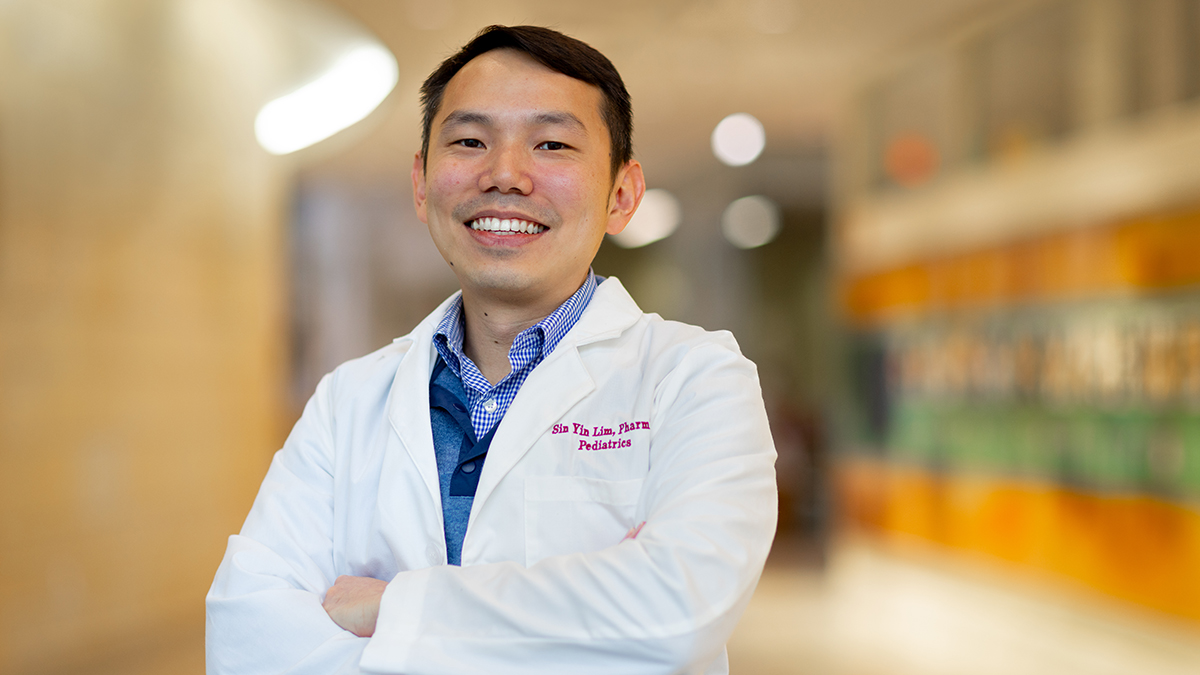
Sin Yin (Sean) Lim, assistant professor of pharmacy at the University of Wisconsin–Madison School of Pharmacy, is helping to address this vexing medication safety issue.
“A lot of the medications that we use in children are not approved by the FDA for use in that population,” Lim says. “That doesn’t mean it’s not appropriate to use those drugs; it just means we don’t have enough information to say with certainty that it’s efficacious and safe.”
“My goal is to try to understand how those differences affect their pharmacokinetics and therefore their overall drug exposure.”
–Sin Yin Lim
Physiologically based pharmacokinetic (PBPK) modeling and simulation can help close those evidence gaps. In a recent study published in the Journal of Clinical Pharmacology, Lim and colleagues at the School of Pharmacy and School of Medicine and Public Health demonstrated the predictive power of modeling by showing that preterm infants may need lower weight-based dosing than term neonates to avoid excessive drug exposure and potential toxicity.
His work illustrates the role pharmacists can play in generating the evidence needed to guide safer, more individualized therapy.
The path to UW–Madison
Born and raised in Malaysia, Lim earned his PharmD degree and a master’s degree in clinical and translational science from the University of Oklahoma Health Sciences Center. He also completed his pharmacy residency and a pediatric pharmacotherapy fellowship there.
“My interest has always been trying to put out more information in the literature to show, if we use this drug in children, this is what their pharmacokinetics are like,” he says. “Based on that information, we can then try to identify optimal dosing to balance the benefits and risks from the medication.”

Because he enjoys both research and teaching, Lim decided to pursue an academic career. He was impressed by the range of research conducted within the UW–Madison School of Pharmacy — and by the city of Madison itself.
“I was sold pretty quickly,” says Lim. “The research activity here is very impressive, and of course, Madison is charming.”
He joined the faculty in July 2020 and shortly after won a 2021 New Investigator Award from the American Association of Colleges of Pharmacy. The award supported his efforts to improve the care of critically ill pediatric patients who require opioid medication for pain control.
In 2022, Lim won a 2022 Christensen Memorial Young Investigator Award from the Pediatric Pharmacy Association for his work to improve the respiratory outcomes of premature infants by refining the dosing of caffeine, a medication commonly used to treat apnea of prematurity.
Special attention to special populations
The Lim Research Group — which includes PharmD students Max Blumenthal, Nolan Thomas, Grace Hawig, and Kyley McCollum — aims to advance the translation and clinical use of drugs for various disease states in special populations, including pediatrics and older adults.
Approximately 10% of infants are born prematurely — and at varying degrees of development. That’s a significant factor because the organ systems of an infant born at 24 weeks are not as mature as those of a child born at 32 weeks or 40 weeks. The pace of organ maturation also varies depending on the child’s age at birth, with the kidneys of premature babies maturing more slowly than the kidneys of full-term infants, for instance.
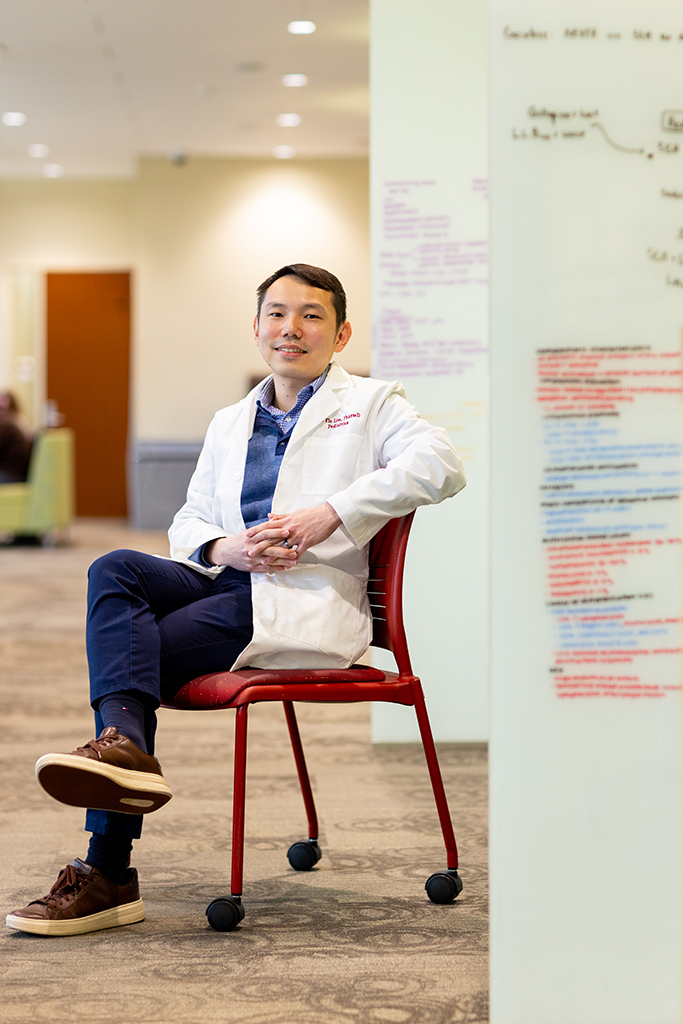
“My goal is to try to understand how those differences affect their pharmacokinetics and therefore their overall drug exposure,” Lim says.
He hopes his research will ultimately help clinicians tailor drug dosing to the physiologic needs of special populations, instead of relying on commonly used methods that fail to account for varying degrees of organ function.
Lim is now using PBPK modeling to sharpen dosing strategies — and eventually, he hopes, to improve outcomes — for premature infants.
Like premature infants, older adults also experience wide variability in organ function, which can significantly alter drug exposure. Lim is a co-investigator on a federally funded study examining how older adults process mTOR inhibitors, which can be used as treatments for conditions ranging from cancer to organ transplants and are now being explored for potential anti-aging or functional-support benefits. As with neonates, age-related changes in organ function can alter drug exposure, making PK research essential for safe use in elderly patients.
He’s also leading pharmacokinetic and pharmacodynamic analyses for clinician–researchers at the UW School of Medicine and Public Health on two additional National Institutes of Health-funded studies: one to identify the optimal duration of shortened tuberculosis treatment for children, and another to evaluate the impact of caffeine on renal oxygenation in preterm infants.
“What we hope to show is that caffeine can also prevent kidney injuries,” Lim says. “As we move into clinical trials, we can use the model to inform dosing and then refine our model based on the data we get from patients. Then we can look further into drug effects. We’re moving from pharmacokinetics to pharmacodynamics.”