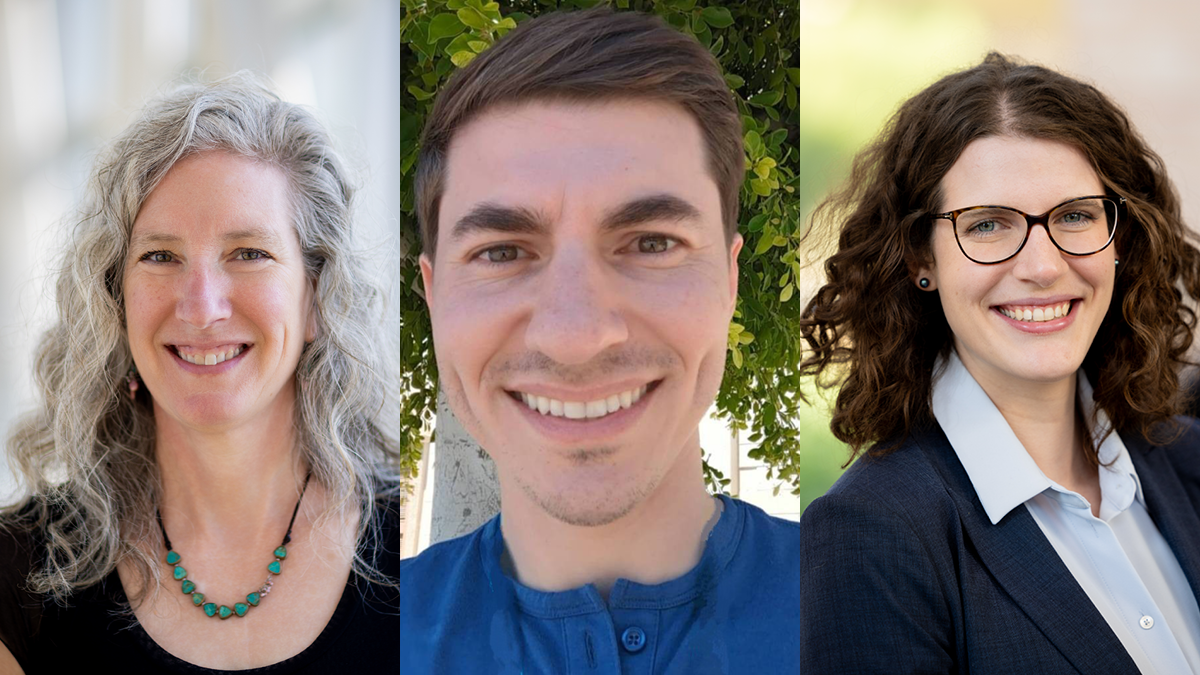
The American College of Clinical Pharmacy is recognizing Associate Professors Marina Maes and Lisa Holle honored for their national impact in oncology, primary care, and education
By Katie Ginder-Vogel
Clinical pharmacy leadership spans many settings, from advancing research and teaching to delivering care in clinics and at the bedside. Reflecting that breadth, two University of Wisconsin–Madison School of Pharmacy faculty members are receiving national recognition this year from the American College of Clinical Pharmacy (ACCP) for their wide-ranging impact.
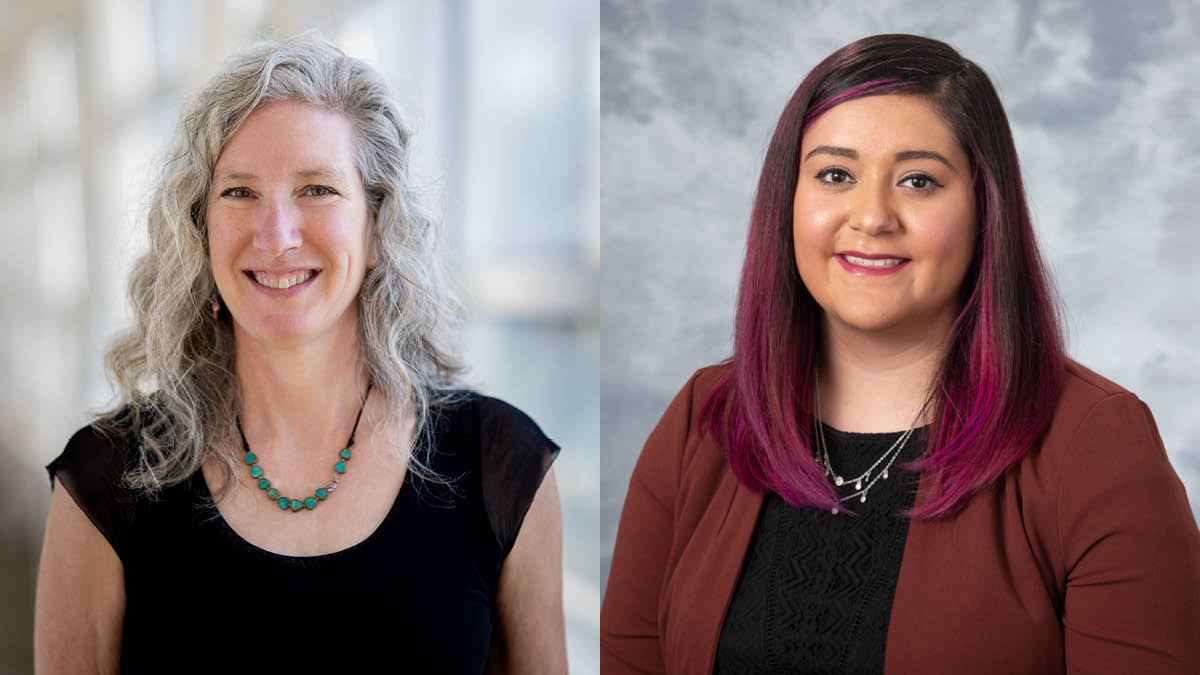
Associate Professor of Pharmacy Lisa Holle (BS ’93, PharmD ’95), a nationally recognized oncology pharmacist and clinical innovator, is being inducted as a 2025 ACCP Fellow, and Associate Professor of Pharmacy Marina Maes, a leader in primary care practice and clinical pharmacy education, is being honored with a 2025 New Educator Award.
“The honors reflect their sustained commitment to excellence and innovation in clinical practice and teaching, which inspires both colleagues and students alike.”
–Beth Martin
“We are incredibly proud of this national recognition that Dr. Holle and Dr. Maes are receiving,” says Professor Beth Martin (BS ’90, MS ’03, PhD ’06), chair of the Clinical Practice, Innovation, and Research Division at the School of Pharmacy. “The honors reflect their sustained commitment to excellence and innovation in clinical practice and teaching, which inspires both colleagues and students alike.”
Lisa Holle: ACCP Fellow
Holle, who joined the UW–Madison School of Pharmacy faculty in September, has been a trailblazer in clinical pharmacy since her first professional role. After graduating from the School and completing an oncology pharmacy residency at UT MD Anderson Cancer Center, she became the first clinical pharmacist hired by a county hospital in San Antonio, Texas, to develop clinical pharmacy services and expertise in oncology as an integrated member of the healthcare team.
“My goal was to provide benefits beyond getting medications to patients, which was the responsibility of the pharmacists at that time,” Holle says. “I educated the care team — physicians and nurses — gave patients discharge medication information, provided information to the care team to make better choices for patients’ medications and care, and rounded with the team, which allowed real-time recommendations.”
When Holle joined the VA system, where she could extend her scope to include prescribing, she says, “I went from creating an innovative role, which was limited to making recommendations, to a role in which I could practice at the top of my license, using the skills and knowledge gained during my training in the UW–Madison PharmD program.”
In 2009, the University of Connecticut hired Holle as a faculty member, and she collaborated with an independent pharmacy to expand oncology services in the community.
“New orally administered cancer treatments had just come on the market and the number of patients experiencing cancer continued to grow. As community pharmacists are the most accessible healthcare providers in the country, I wanted to incorporate oncology in a unique way in the community pharmacy setting,” Holle says. “I developed a clinical pharmacy service in an independent community pharmacy, which focused on screening for chronic diseases, medication reviews to minimize the number of prescriptions each patient took and their potential interactions, and outreach programs on cancer risk reduction and the safe disposal of medications.”
After that collaboration, UConn Health’s Carole and Ray Neag Comprehensive Cancer Center pharmacy hired Holle to bring it up to the national standards for oncology.
“It was a really incredible opportunity to be able to work with medical, nursing, and pharmacy staff and figure out what we could do to get everything up to national standards,” Holle says.
Holle co-developed a module within their electronic medical records for writing chemotherapy orders to prevent errors, launched their first clinical pharmacy services, and was embedded within an oncology team to visit patients.
“I’d go in to see the patients first, reviewing medications and the initial interview to determine if any problems were present, and the oncologist did the physical exam and a more targeted interview, and then we’d collaborate in real time to adjust their therapies,” Holle recalls. “I’d also provide patient and caregiver education at the end of the visit, and we evaluated our work to show we made a difference in outcomes.”

Holle also developed a program to improve consistency in ordering, prescribing, and educating patients on their oral anticancer medications and developed a program in collaboration with the state to safely dispose of oral anticancer drugs.
Her varied work has led to many publications and presentations, and she has remained active in national organizations, such as through ACCP and the Hematology Oncology Pharmacy Association, where she also served as president.
“It’s really an exciting opportunity to learn so much about the pharmacy profession from an advocacy standpoint and advance the roles of oncology pharmacists to ultimately help patients,” she says.
When Holle was an undergraduate at UW–Madison her work-study job was in the UW Health director of pharmacy’s office, where she learned about the breadth of opportunities available to pharmacists. Many of her colleagues there now serve in prestigious national leadership roles, including on the School of Pharmacy’s Board of Visitors.
“They were amazing mentors, and the impact they had on me has really resonated throughout my time in academia and patient care,” Holle says. “They helped me understand how pharmacists improve the care of patients in all settings, to see the benefits of reaching beyond what you think is possible for yourself, and to do the best you can for other people.”
Marina Maes: New Educator Award
Since joining the School of Pharmacy in 2019, Maes has made transformational contributions, starting with developing the School’s Pharmacy Families program in 2020, which served as not only a point of connection at the height of COVID-19 lockdowns but also as a tight-knit community that links PharmD students across grade years with faculty and staff.
Maes also helped lead the revision of the School’s Introductory Pharmacy Practice Experience (IPPE) curriculum for third-year PharmD students, which focused on shifting hours into the third-year IPPE to allow students to better apply what they were learning in the classroom to clinical care.

She is currently co-leading a school-wide curricular change focused on integrating pharmacology and pharmacotherapy courses to give students a holistic view of disease states, treatments, and how the treatments work on a molecular level.
“After getting feedback from external preceptors, students, and faculty, we concluded that the current curriculum had an opportunity to make better connections for students in the pharmacotherapy and pharmacology course sequence, and that reordering topics would prepare students better for their third-year IPPE rotations,” says Maes.
Her career has also had a significant clinical component, as a board-certified pharmacotherapy specialist and ambulatory care pharmacist. In addition to her work at the School, Maes also serves as a primary care pharmacist at the UW Health Belleville Clinic, with a focus on diabetes, weight management, and women’s health.
Maes says her background in primary care allows her to work on bigger schoolwide initiatives and gives her a broad perspective. She was drawn to primary care because it takes the whole person into account, and the primary care pharmacist’s role is to coordinate care across disciplines and address the whole person.
“Just like the patients we care for in a complex healthcare system, every student has their own unique needs and circumstances when it comes to learning, and it’s important to me to influence things on a systems level, foster positive change directly with students, and create a welcoming environment,” she says. “That’s where the Pharmacy Families Program comes into play. How can we connect with students who bring diverse experiences and have different learning styles?”
That commitment to fostering connection also shapes her work with student organizations. As faculty advisor to the Wisconsin Society of Pharmacy Students’ Operation Reproductive Health since its 2019 launch, Maes has helped the chapter earn two awards from the American Pharmacists Association Academy of Student Pharmacists.
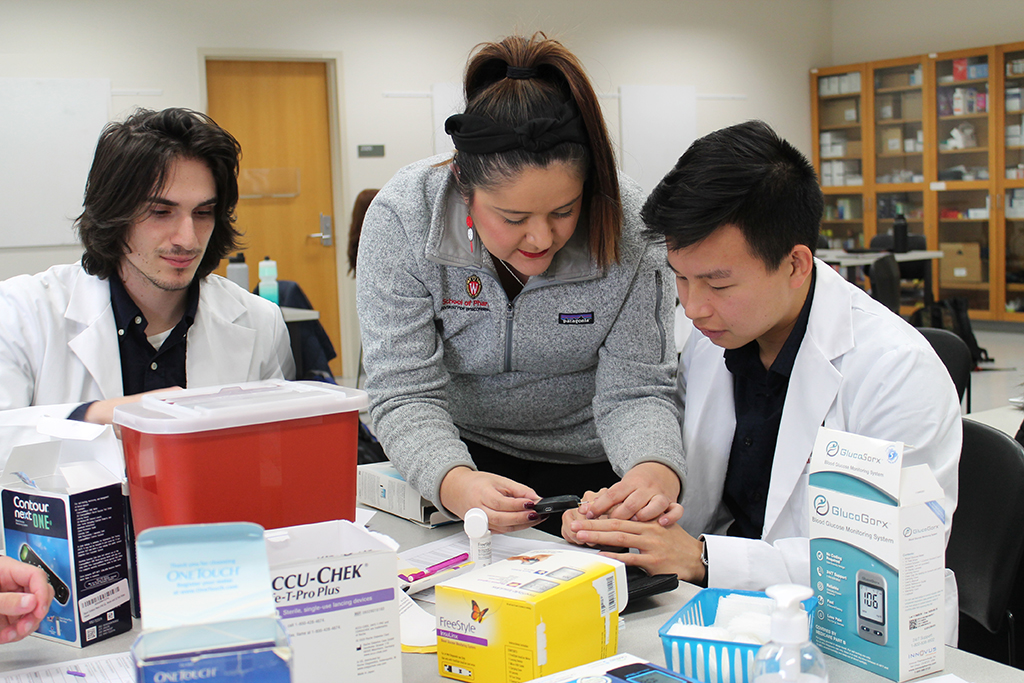
Maes appreciates having the opportunity to publish findings from her educational and clinical projects, sharing what she has learned to help advance the field.
“That dissemination helps expand evidence-based practices beyond our institution,” she says. “As educators, we often don’t see the ripple effects of what we do, but they’re there — carried forward in every learner we teach, every patient they help, and every community they touch. I’m grateful to those who have taught me and for the chance to pass that forward.”
Maes says she is “deeply honored and surprised” by the ACCP New Educator Award, which recognizes contributions to clinical pharmacy education by professionals in the first six years of their careers. The ACCP Women’s Health Practice Research Network, with whom Maes has worked closely for many years, nominated Maes, in recognition of her leadership in the School of Pharmacy. Her selection for ACCP’s Professional Leadership Development Program in 2024 further reflects her trajectory as an emerging leader in clinical pharmacy education.
“It’s a huge honor, and of all the things I do in my faculty position, the teaching part of my job keeps me the most motivated and is why I do what I do,” she says. “To be recognized for that is just affirmation that I’m exactly where I’m supposed to be.”