Through the Senior Chats Program, PharmD students combat older adult loneliness, building skills and friendships
By Logan Underwood
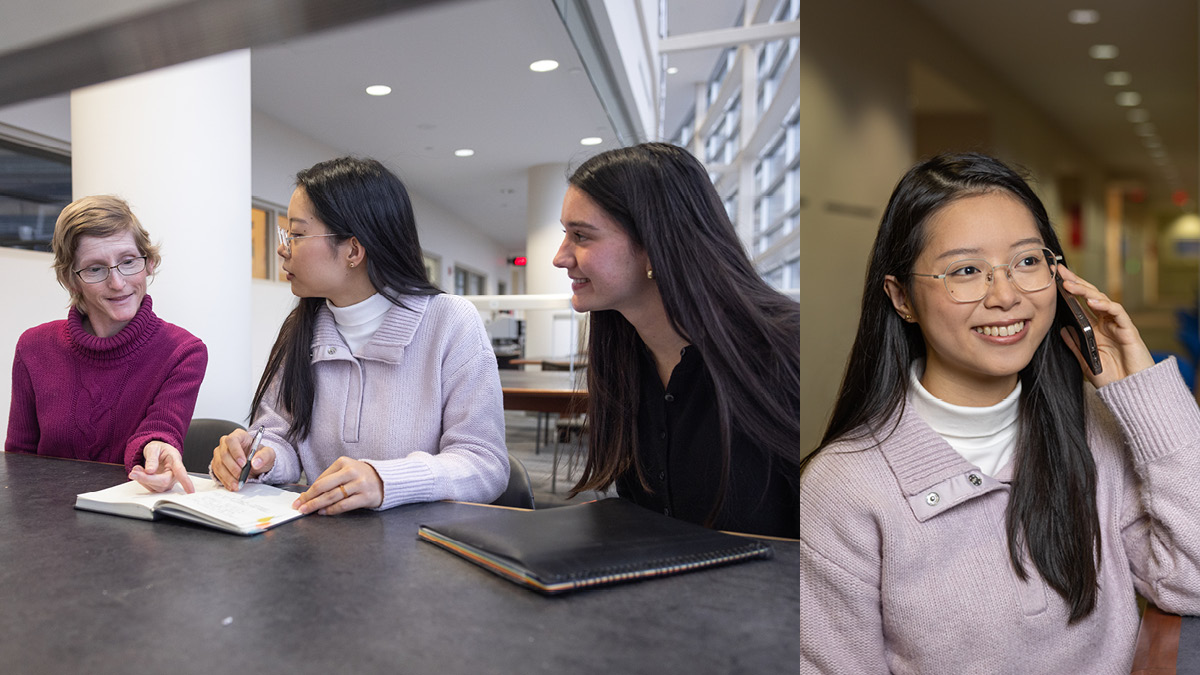
Jessica Liu didn’t expect one of the most broadly meaningful lessons of her pharmacy school experience to come during a simple phone call. While chatting with her senior match through the Senior Chats Program, she asked, “If you could relive any decade of your life, which would it be?”
Her match didn’t hesitate: “My 40s,” she said. “I’d go back and live my 40s over and over again.”
“That was such a powerful message to me,” says Liu, now a second-year PharmD student at the University of Wisconsin–Madison School of Pharmacy. “I’m still in my 20s, and hearing that made me realize that life is so worth pushing through to see what’s next. I love my life as it is now, and she’s telling and showing me that it can get even better as I grow older.”
“This is a story I really wanted to share because working with these seniors is really meaningful to me as a person. […] I think a lot of times we try to switch between being a professional and being a person, but they blend more than we imagine.”
–Jessica Liu
For Liu, that moment encapsulates the heart of Senior Chats, a program organized through the UW–Madison School of Medicine and Public Health to help combat isolation among seniors by pairing them with a health sciences student for regular check-ins. And although the conversations are designed to be purely social, they can offer medical benefits: Loneliness and isolation increase risks of heart disease, stroke, and dementia in older adults. A 2021 study even found that social interactions improve cognitive function for seniors age 70 to 90.
“From our first call, we really hit it off,” says Liu. “We’ve had great conversations, and it’s such a nice opportunity to be able to connect with somebody.”
Building a bridge to connection
The Senior Chats program traces back to the height of the COVID-19 pandemic, when everyone — particularly seniors — was facing unprecedented isolation due to lockdowns. Kristi Jones, the director of community services programs at the School of Medicine and Public Health, was looking for a way to make a positive impact on lonely older adults in Madison. With other community service programs paused at the time, Jones developed a program that merely involved simple phone calls. While the program was initially launched with medical students, in 2022 it expanded to include UW–Madison nursing, physician assistant, and pharmacy students as well.
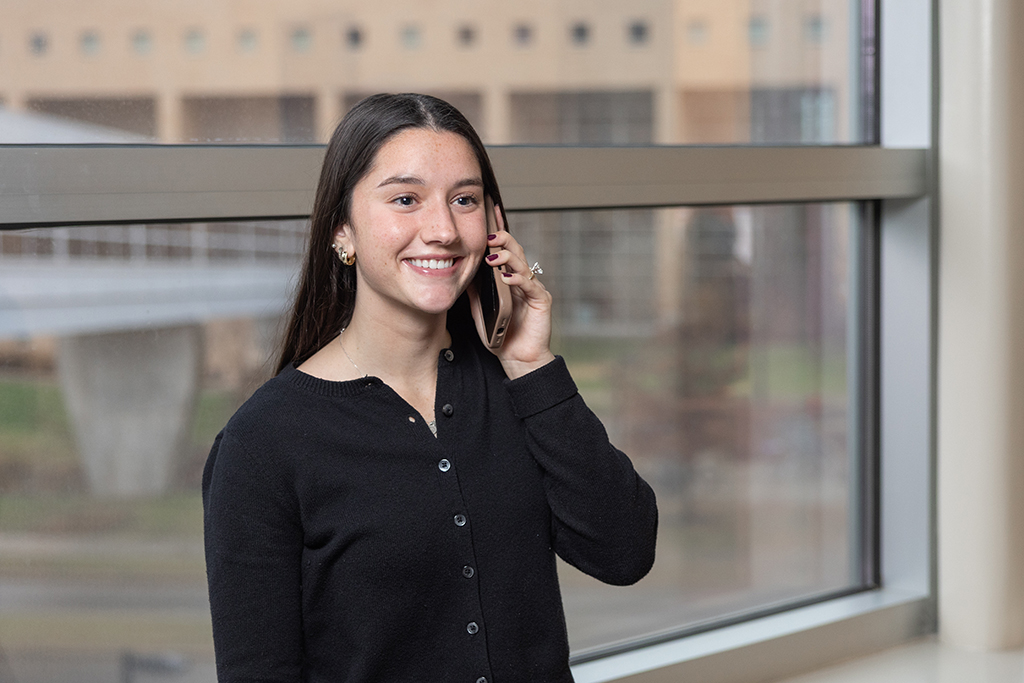
The Senior Chats program partners with senior living facilities and UW Health clinics across Madison to find participants at risk for isolation. Upon receiving a referral from a facility and learning more about the senior’s hobbies and interests, the program pairs the senior with a UW–Madison student volunteer.
From there, the students are encouraged to keep in contact with the seniors through weekly or bi-weekly social phone calls.
“It’s really important for seniors who are isolated to have phone conversations and be able to talk about their interests, their hobbies, news, and whatever is going on,” says Jones.
Even though the program was born from the social isolation of the pandemic, Jones recognizes the persistent need for older adults to socialize, saying loneliness is a public health crisis.
“We’ve kept it going, because we know that seniors are a population that’s still at risk for isolation,” says Jones. “If short phone conversations with students can help to make things a little easier and a little more social for those seniors — as we know it has — then it’s a good thing.”
Forging friendships
As Liu began her second year of pharmacy school, she became program coordinator for Senior Chats, working to match students and seniors with similar interests while also maintaining her relationship with her original match.
“It’s so nice to be able to connect and help people form friendships,” says Liu. “When you get a match that works out, it’s a really rewarding experience for both the student pharmacist and the senior.”
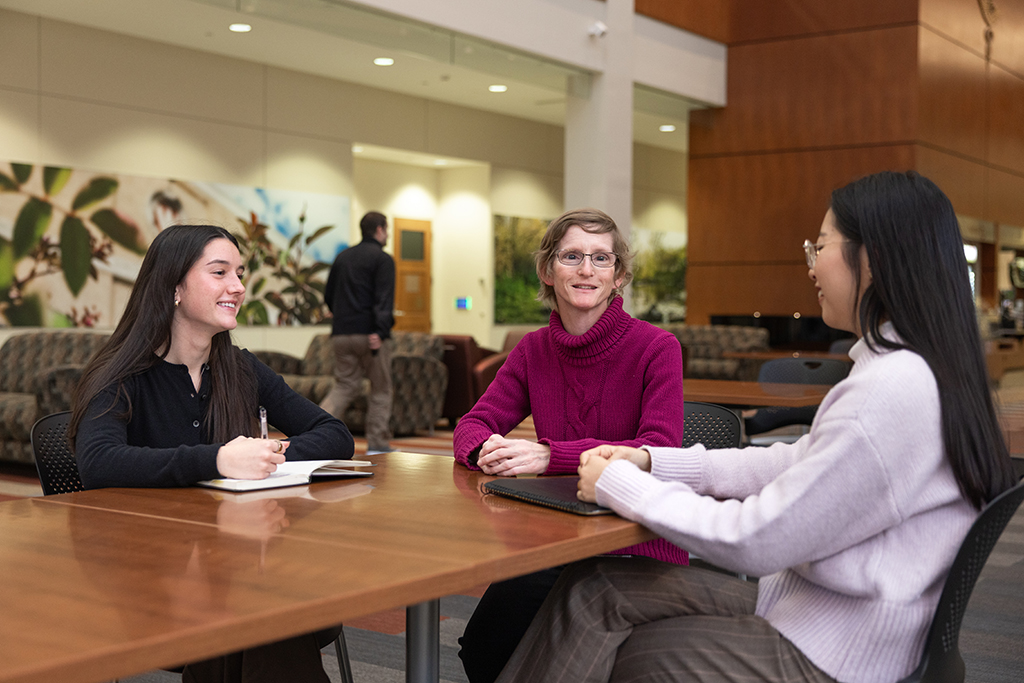
The program is open to all School of Pharmacy students, and while initial matches are made at the beginning of each semester, students and seniors can join anytime. The program is designed to be flexible, with the senior and student pairs deciding the length and frequency of the calls.
“It’s a regular conversation and an interaction that seniors can count on,” says Jones. “The students aren’t there every week in person, but I think the phone conversations are just as important.”
Like Liu, second-year PharmD student Kira Kirsch also made a lasting connection with her senior match. Initially joining as a first-year PharmD student, Kirsch was searching for a way to get involved with the geriatric community in Madison.
Kirsch quickly bonded with her match, deciding to keep in contact during her second year in the program. The pair even met in person, with Kirsch giving her senior a tour of the UW–Madison campus.
“There’s never any pressure, just easy, meaningful conversations that often leave me learning something new from someone with a completely different life perspective,” says Kirsch.
Growing as providers, and people
Liu entered the School of Pharmacy with a passion for working with the geriatric community. After volunteering at the Madison Senior Center, Liu was looking for another way to explore her interest in geriatric pharmacy. In addition to the Senior Chats program, Liu is also partnering with the School’s chapter of the Student National Pharmaceutical Association to host a holiday card-making event, where PharmD students created personalized Christmas cards for senior matches.
“These social experiences and professional experiences I have with geriatric patients really shape me as a provider,” she says. “When I’m able to engage in a conversation and establish rapport in one meeting with a patient — understanding the challenges they might be going through, how they might approach problems, and how I can best help them — that’s what makes all of these volunteering efforts worth it.”
Jones agrees that the Senior Chats Program helps future healthcare providers — like physicians, pharmacists, and physician assistants — build key communication skills with a community they often serve. Additionally, the program exposes students to seniors dealing with the earlier stages of cognitive impairment.
“It’s a skill that really any future health professional needs to know, because you’re going to see it in this population,” says Jones. “Our student participants get to learn those skills, and they also get to learn from seniors who have a lot of life experience and wisdom.”
Liu is thankful for the real-world experience of the Senior Chats program as she looks forward to a career in pharmacy. On top of building skills as a future pharmacist, Liu recognizes that her personal life, too, is being enriched by the reflections of her senior match.
“This is a story I really wanted to share because working with these seniors is really meaningful to me as a person,” she says. “Through my match, I really learned a lot of things that I would have learned from my grandparents if we’d had more time. I think a lot of times we try to switch between being a professional and being a person, but they blend more than we imagine.”